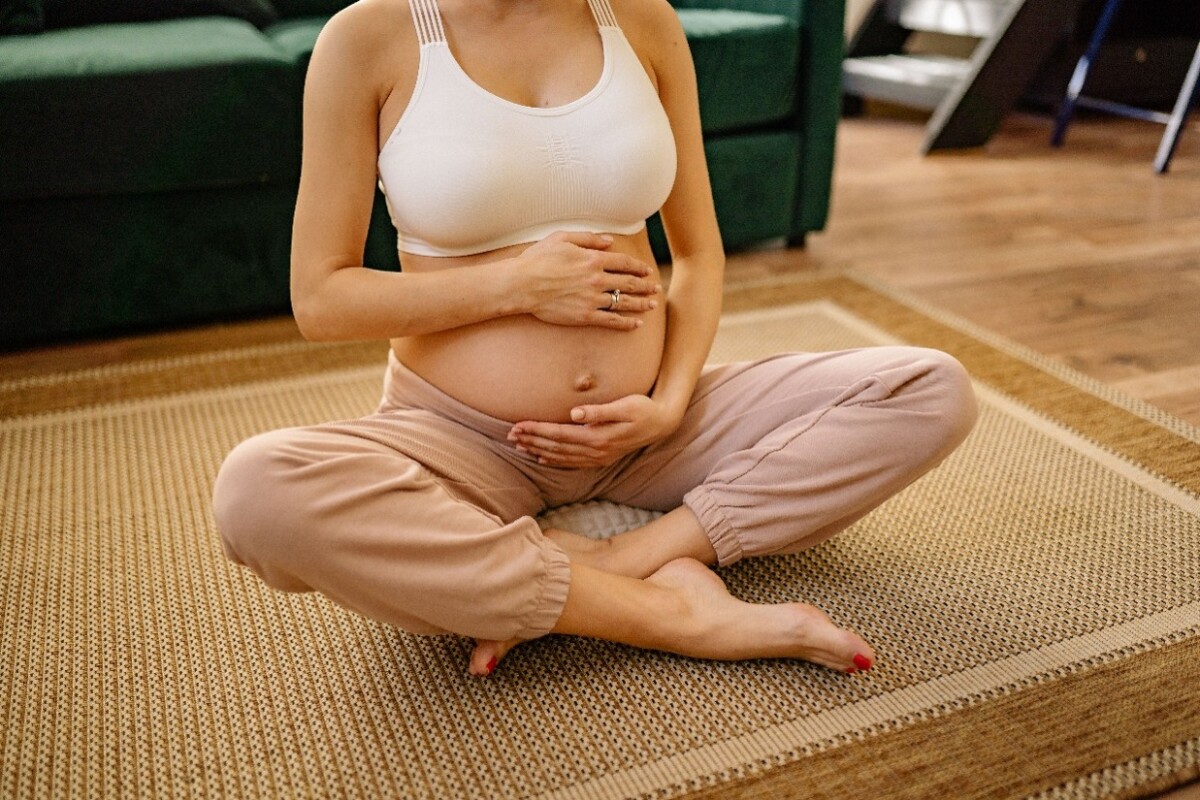
Savonia Article Pro: Does antenatal pelvic floor muscle training have an effect on postpartum urinary incontinence?
Savonia Article Pro is a collection of multidisciplinary Savonia expertise on various topics.
This work is licensed under CC BY-SA 4.0


Introduction
Urinary incontinence is common among women, even though you don’t must get used to it. Risk factors for urinary incontinence are pregnancies, giving birth, obesity and diabetes. Usually, urinary incontinence after pregnancies and giving birth is stress urinary incontinence, which appears while jumping, coughing, sneezing and lifting something, for example the baby. (Tarnanen, Mikkola, Ala-Nissilä and Raudasoja 2026.)
In Finland there are about 45 000 births in a year (Tilastokeskus 2026), and about 30-60% of women suffers from it during pregnancy and about 26-33% postnatal (Ryhtä 2026, 9-20). Many of those are searching for help either from public healthcare and maternity clinics, but also from private practices and self-help publications. As a physiotherapist, we can offer evidence-based physiotherapy treatment for them and help improve their quality of life.
This article was prepared within the Professional in Physiotherapy course included in the physiotherapy degree programme. The article represents students’ work completed as part of the evidence-based physiotherapy component of the course. During the course, students work collaboratively in small groups to practice the key stages of a systematic review process by conducting a mini review. This includes systematic literature searching, critical appraisal using the PEDro scale (n.d.) data synthesis, and reporting the findings in the form of a scientific manuscript.
The aim of this mini review is to investigate the effects of pelvic floor muscle training during pregnancy on postnatal urinary incontinence.
Methods
We structured the research question by using the PICO framework. Population (P) consisted of pregnant women and postpartum women, the intervention (I) was pelvic floor muscle training (PFMT) during pregnancy, the comparison (C) was standard care and the outcome (O) was urinary incontinence. The literature search was conducted using the PubMed and CINAHL databases and the search focused on the following keywords: urinary incontinence, pregnancy, antenatal, pelvic floor muscle training and postpartum. The eligibility criteria included studies published in the 2020s that used randomized controlled trial (RCT) design or reported follow-up data from an RCT. Finally, we included three studies in our mini literature review. The methodological quality of the included studies was assessed using the PEDro scale (n.d.).
Results
The selected three studies investigated pelvic floor muscle training in relation to urinary incontinence during pregnancy and after childbirth. The studies were conducted in Europe and included comparisons between intervention and control groups. Although the studies shared a common research focus, they differed in study design, follow-up duration and intervention characteristics, allowing comparison of different approaches to antenatal PFMT. Across the included studies, methodological quality evaluated by the PEDro scale was fair-to-moderate, ranging from 5/10 to 6/10 (Johannessen et al., 2021: 6/10; Stafne et al., 2022: 5/10; MacArthur et al., 2025: 6/10).
Johannessen et al. (2021) examined the effects of a 12-week antenatal exercise programme including pelvic floor muscle training (PFMT). The programme consisted of weekly supervised group sessions and two home exercise sessions per week. Urinary incontinence was assessed using self-reported questionnaires during pregnancy and 3 months postpartum. In the short term, antenatal exercise provides clear protection against urinary incontinence (UI). This immediate therapeutic benefit was particularly pronounced among women with pre-existing UI prior to or early in pregnancy, highlighting early UI as a key clinical marker for targeted intervention.
Stafne et al. (2022) used questionnaire data collected 7 years after the original RCT to investigate the long-term effects of antenatal exercise including PFMT on urinary incontinence. This study was a follow-up of the original RCT reported by Johannessen et al. (2021). Evaluating long-term outcomes, Stafne et al. (2022) found no statistically significant differences between the intervention and control groups 7 years postpartum, indicating that the preventive effects of a 12-week antenatal program do not persist independently over time. Although a low response rate limited firm conclusions, the findings underscore that experiencing UI during pregnancy acts as a primary clinical marker for long-term pelvic floor dysfunction.
MacArthur et al. (2025) conducted a feasibility and pilot cluster-randomized controlled trial in which midwives were trained to support pregnant women in performing pelvic floor muscle exercises (PFME). The study aimed to assess the feasibility and acceptability of the intervention and explore its potential effect on postpartum urinary incontinence. Outcomes were assessed using self-reported questionnaires. Regarding delivery and feasibility, MacArthur et al. (2025) demonstrated that integrating PFMT advice into routine antenatal care via trained community midwives over a 3-month period was highly acceptable and feasible. While time constraints remain a primary structural barrier in primary care, midwife-led delivery successfully enhances engagement and adherence. However, due to a low questionnaire response rate, preliminary effect estimates from this trial must be interpreted with caution.
Conclusions
Across all three studies, the evidence demonstrates that antenatal pelvic floor muscle training (PFMT) is effective in the short term and feasible to deliver within standard care, but its benefits dissipate over time without ongoing maintenance. Antenatal PFMT, whether paired with general exercise or instructed directly, provides clear, statistically significant protection against urinary incontinence in late pregnancy and early postpartum (3 months). Women who experience UI early in pregnancy gain the greatest immediate therapeutic benefit from structured antenatal regimens.
Although the included studies demonstrated fair-to-moderate methodological quality on the PEDro scale, their overall validity was constrained by high attrition and low response rates in long-term follow-ups and feasibility trials. To address these evidence gaps, future research should focus on targeted interventions for women with pre-existing UI prior to pregnancy to better evaluate the therapeutic impact of structured antenatal PFMT. Furthermore, additional studies are required to determine how overall physical activity and exercise intensity influence pelvic floor muscle function and long-term UI management.
Authors
Heini Korpisaari, Physiotherapy student, Savonia University of Applied Sciences
Johanna Lillvis, Physiotherapy student, Savonia University of Applied Sciences
Iida Miettinen, Physiotherapy student, Savonia University of Applied Sciences
Marja Äijö PhD, Principal lecturer of gerontology and rehabilitation, Savonia University of Applied Sciences
This article was prepared with the help of AI.
References
Johannessen, H.H., Frøshaug, B.E., Lysåker, P.J.G., Salvesen, K.Å., Lukasse, M., Mørkved S. & Stafne, S.N. 2021. Regular antenatal exercise including pelvic floor muscle training reduces urinary incontinence 3 months postpartum-Follow up of a randomized controlled trial. Acta Obstet Gynecol Scand. 2021 Feb;100(2):294-301. DOI: 10.1111/aogs.14010.
MacArthur C., Bick D., Salmon V., Jones E., Hay-Smith J., Bishop J., Gkini E., Hemming K., Webb S., Pearson M., Coleman T., Terry R., Edwards E., Frawley H., Oborn E. & Dean S. 2025. Antenatal pelvic floor muscle exercise intervention led by midwives in England to reduce postnatal urinary incontinence: APPEAL feasibility and pilot randomised controlled cluster trial. BMJ Open. 2025 Jan 20;15(1):e091248. doi: 10.1136/bmjopen-2024-091248. PMID: 39832969; PMCID: PMC11751916.
PEDro Physiotherapy Evidence Database. n.d. https://pedro.org.au/. Cited 27.10.2026.
Ryhtä I. 2026. The role of physical activity in maternal health. Effectiveness of physical activity on urinary incontinence and quality of life during the perinatal period. Doctoral Dissertation. University of Turku. Cited 12.10.2026. https://www.utupub.fi/server/api/core/bitstreams/3d7fdc8f-38c2-468e-bcb8-0180ae4a3057/content.
Stafne, S.N., Dalbye, R., Kristiansen, O.M., Hjelle Y.E., Åsmund Salvesen K., Mørkved S. & Hølmo Johannessen H. 2022. Antenatal pelvic floor muscle training and urinary incontinence: a randomized controlled 7-year follow-up study. Int Urogynecol J 33, 1557–1565 (2022). https://doi.org/10.1007/s00192-021-05028-x
Tarnanen K., Mikkola T., Ala-Nissilä S. & Raudasoja A. 2026. Virtsankarkailu naisilla. Suomalainen Lääkäriseura Duodecim: Käypähoitosuositus. Cited 12.10.2026. https://www.kaypahoito.fi/khp00063.
Tilastokeskus 2026. Syntyneet. Cited 12.10.2026. https://stat.fi/fi/tilasto/synt.
Yan Krukau/Pexels. 2021. https://www.pexels.com/photo/a-pregnant-woman-touching-her-baby-pump-7155528/. Cited 27.10.2026.
An artificial intelligence tool (Google Gemini, 2026) supported the writing process through language polishing, translation of English literature, and summarization of key article findings.