Savonia Article Pro: Evidence-Based Practice in Physiotherapy in Action: Insights from an International BIP
Savonia Article Pro is a collection of multidisciplinary Savonia expertise on various topics.
This work is licensed under CC BY-SA 4.0


Introduction
Evidence-based practice (EBP) is an essential component of contemporary physiotherapy, supporting clinical decisions through the integration of the best available research evidence, professional expertise, and patients’ values, preferences, and individual circumstances (World Physiotherapy, 2023; Roos, 2025). Developing the ability to find, critically appraise, and apply scientific evidence is therefore a key objective of physiotherapy education. Research also suggests that evidence-based healthcare education can improve healthcare professionals’ knowledge and skills, particularly when it incorporates active and blended learning approaches (Hill et al., 2024). These principles provided the foundation for an international Blended Intensive Programme (BIP) designed to strengthen students’ understanding of EBP and explore its application in different areas of physiotherapy practice.
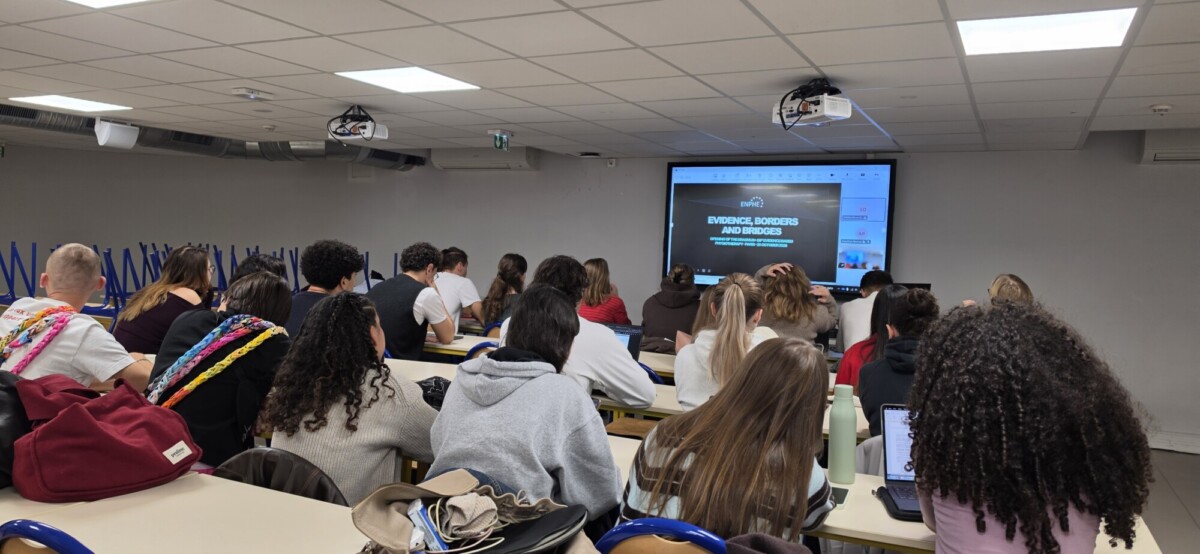
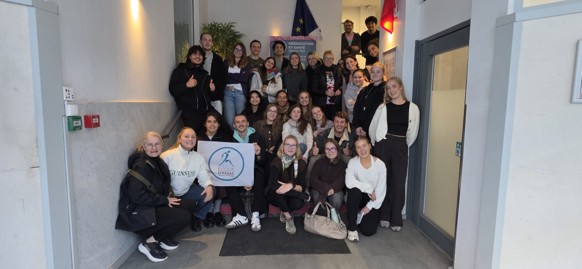
During week 44 of 2026, the BIP on evidence-based physiotherapy brought together physiotherapy students and academic staff (Picture 1) at École d’Assas (Établissement d’enseignement supérieur en kinésithérapie et en podologie) in Paris, France. Participants from France, the Czech Republic, Portugal, and Finland engaged in an international learning experience focused on the principles of EBP and the challenges of translating scientific knowledge into clinical practice. The programme combined online preparation with on-site lectures, collaborative activities, and opportunities for exchanging professional experiences and perspectives.
Following an opening address by the President of the European Network of Physiotherapy in Higher Education (ENPHE), the programme introduced the foundations of evidence-based practice (EBP), with a particular focus on evidence-based medicine (EBM), research methodology, statistics, and critical appraisal of scientific evidence. A substantial part of the lectures was devoted to these methodological foundations, providing students with insights into how research evidence is generated, analysed, interpreted, and applied in clinical practice. The programme also covered a broad range of topics in physiotherapy and sport, exploring the application of evidence-based approaches in different professional contexts. These included neurological rehabilitation, musculoskeletal conditions, geriatric care, sports physiotherapy, and communication with patients, highlighting the importance of integrating scientific evidence, clinical expertise, and patient values in informed clinical decision-making.
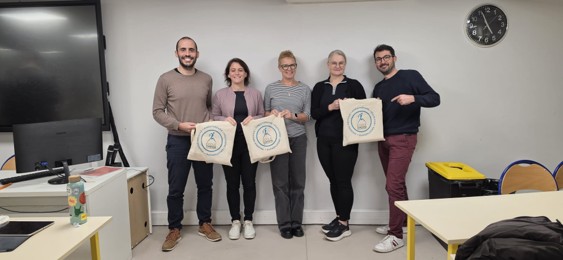
Physiotherapy students from four universities and academic staff (Picture 2) representing seven institutions contributed to the programme through lectures, international group work, and social activities. Working collaboratively across institutional and national contexts enabled students to exchange ideas, reflect on different professional perspectives, and connect theoretical knowledge with practical questions relevant to physiotherapy.
During the BIP, students from different participating countries were divided into eight international groups, each of which prepared a mini-review on a selected topic related to evidence-based medicine and physiotherapy under the supervision of the teachers. This blog article presents the topics explored by the student groups and summarises the key findings of their reviews, highlighting the importance of critical appraisal of scientific evidence and its application in physiotherapy practice.
1-Musculoskeletal Physiotherapy
The first group of students focused on musculoskeletal topic related to the management of displaced proximal humeral fractures in adults. Their mini-review compared surgical and non-surgical treatment leading to better functional recovery based on the evidence. Their work involved a literature search in three databases (PubMed, Science Direct, and SCOPUS) and a critical appraisal of four randomized controlled trials. The findings suggested that, a surgery may offer an early statistical advantage in the short term, such as at 3 months (Olerud et al. 2011), this benefit completely equalizes and disappears within the first year (Rangan et al., 2015; Launonen et al., 2019). Oliver et al. (2025) provided indirect evidence, as their study focused on humeral shaft fractures rather than proximal humeral fractures. These findings should be interpreted with caution, as outcomes may vary based on fracture type, severity and other limits. The students concluded that conservative management may be considered an appropriate first-line treatment option for many patients, while emphasizing the need for individualized clinical decision-making.
2-Neurological Physiotherapy
One group of students focused on a paediatric physiotherapy topic, specifically the effectiveness of virtual reality (VR) and exergaming interventions in the rehabilitation of children with obstetric brachial plexus palsy (OBPP). They conducted a mini systematic review to investigate whether VR- and exergaming-based rehabilitation, when added to conventional physiotherapy, leads to greater improvements in upper-limb function than conventional physiotherapy alone, particularly as assessed by the Mallet score. By conducting a structured literature search in PubMed, Scopus, and the Cochrane Library, and assessing methodological quality and risk of bias using the PEDro scale, the group evaluated four randomized controlled trials involving 117 participants (El-Shamy & Alsharif, 2017; Alsakhawi & Atya, 2019; Yeves-Lite et al., 2020; Karas et al., 2021). The findings suggested that VR, exergaming, and augmented biofeedback interventions may provide additional benefits in upper-extremity function, range of motion, and selected functional outcomes when combined with conventional physiotherapy. Specialized rehabilitation technologies, such as E-LINK and Armeo® Spring, appeared to produce the most consistent improvements across functional measures, whereas commercial exergaming platforms showed more selective benefits related to motivation, adherence, and task-specific performance. However, the limited number of trials, small sample sizes, heterogeneity of interventions, and differences in outcome measures highlight the need for further high-quality research before the superiority of VR-based rehabilitation can be firmly established. Throughout the project, the students critically evaluated the available evidence, considered methodological limitations, and discussed the clinical relevance of their findings, thereby developing their skills in scientific literature appraisal, evidence-based practice, and collaborative work.
3-Respiratory Physiotherapy
One group of students focused on a cardiorespiratory physiotherapy topic, specifically the effectiveness of respiratory muscle training (RMT) following burn injury. They conducted a mini systematic review to investigate whether adding RMT to usual care improves inspiratory muscle strength, lung function, and walking capacity in people recovering from burns. By conducting a structured literature search in PubMed and checking additional sources including PEDro, Cochrane CENTRAL, ClinicalTrials.gov, and reference lists, and assessing methodological quality using the PEDro scale (scores ranging from 3/10 to 8/10), the group evaluated five randomized controlled trials involving 258 participants (Abazarnejad et al., 2022; El-Sayed Attalla et al., 2023; Basha et al., 2024; Abdel-Aal et al., 2025; Al-Amiri et al., 2026). The findings suggested that RMT may provide modest improvements in inspiratory muscle strength and lung function, while clinically meaningful gains in walking capacity were reported in the highest-quality sham-controlled trials. Overall, most between-group comparisons favoured RMT, supporting its potential value as an adjunct to conventional rehabilitation after burn injury. However, the included studies were generally small, conducted within a single geographical region, lacked long-term follow-up, and showed methodological limitations, highlighting the need for larger, high-quality randomized controlled trials to establish the effectiveness of RMT more definitively. Throughout the project, the students critically evaluated the available evidence, considered methodological limitations, and discussed the clinical relevance of their findings, thereby developing their skills in scientific literature appraisal, evidence-based practice, and collaborative work.
4-Cardiac Rehabilitation and Metabolic Care
This group of students conducted a mini-review examining whether active mobilisation initiated within 24 hours or on the first postoperative day improves recovery after cardiac surgery via median sternotomy. Five randomised controlled trials involving 704 patients were included (Liu et al., 2026; Afxonidis et al., 2021; Han et al., 2022; Gama Lordello et al., 2020; Cui et al., 2020). Effects on intensive care unit length of stay were modest and inconsistent, whereas improvements in early functional independence and walking ability were more evident (Afxonidis et al., 2021; Han et al., 2022; Cui et al., 2020). Some studies also reported shorter hospital stays. Overall, the findings suggest that ultra-early mobilisation may support functional recovery when appropriate safety criteria are met. However, small studies, short follow-up periods and a single-database search limit the conclusions.
5-Pediatric Physiotherapy
One group of students focused on a paediatric physiotherapy topic, specifically the use of Microsoft Kinect technology in the rehabilitation of children and adolescents with cerebral palsy (CP). They conducted a mini systematic review to investigate whether incorporating Kinect-based exercises into functional rehabilitation programmes leads to greater improvements in functional abilities than conventional physiotherapy alone. By conducting a structured literature search in PubMed and Google Scholar, and assessing methodological quality using the PEDro scale (scores ranging from 3/10 to 8/10) and risk of bias using the Cochrane RoB 2 tool, the group evaluated four randomized controlled trials involving 114 participants (Jung et al., 2021; Shih et al., 2023; Fidan & Genç, 2023; Chou et al., 2026). The findings suggested that Kinect-based rehabilitation may provide additional benefits in selected areas, particularly balance, trunk motor control and short-term manual dexterity. However, the results were inconsistent across functional outcomes, and some studies reported comparable or even greater improvements following conventional physiotherapy. The limited number of trials, relatively small sample sizes, methodological differences and concerns regarding risk of bias highlight the need for further high-quality research before the effectiveness of Kinect-based rehabilitation can be established. Throughout the project, the students critically evaluated the available evidence, considered methodological limitations, and discussed the clinical relevance of their findings, thereby developing their skills in scientific literature appraisal, evidence-based practice, and collaborative work.
6-Geriatric Physiotherapy
One group of students focused on geriatric physiotherapy. Based on the Pagan et al., 2024 and Bean et al. (2009) studies to maintain mobility is essential for independence and quality of life in older adults, but age-related declines in muscle strength and physical function can increase mobility limitations and fall risk (Pagan et al., 2024; Bean et al., 2009). They noticed that weighted vests may provide an accessible and affordable way to add resistance to exercise, particularly in home-based training (Mierzwicki, 2019). Five RCTs were included in this mini-review, with methodological quality ranging from 4/10 to 7/10 on the PEDro scale (PEDro, n.d.). The results suggest that weighted vest training may improve walking endurance and speed and, in some studies, lower-limb strength and functional performance (Bean et al., 2009; Mierzwicki, 2019; Srisaphonphusitti et al., 2022; Pagan et al., 2024; Nithisup et al., 2024). However, effects on TUG, sit-to-stand performance and overall physical function were inconsistent. The group sum-up that due to small sample sizes, differences between interventions and methodological limitations, current evidence is insufficient to conclude that weighted vest exercise is superior to comparable exercise without additional loading. Nevertheless, weighted vests may offer a practical option for adding resistance to functional and home-based exercise in older adults.
7-Pelvic Health Physiotherapy
Next group of physiotherapy students conducted a mini-review examining the effectiveness of pelvic floor muscle training and supervised exercise programs in women with endometriosis experiencing pelvic pain, dyspareunia, or sexual dysfunction. Following a structured search of PubMed and Scopus, five randomized controlled trials of good methodological quality were included. The review found that exercise programs incorporating pelvic floor muscle training may reduce current pelvic pain and dyspareunia, particularly in the short term. Significant improvements in pain outcomes were reported by Gabrielsen et al. (2025) and Artacho-Cordón et al. (2023), although some benefits diminished during long-term follow-up. In contrast, evidence regarding sexual function was less consistent. While some studies reported short-term improvements in Female Sexual Function Index scores, these effects were generally not sustained, and no clear superiority of pelvic floor muscle training comparison interventions was demonstrated (Gabrielsen et al., 2026; Raisian et al., 2026; Salinas-Asensio et al., 2025). Overall, the students concluded that supervised exercise programs including pelvic floor muscle training may represent a useful strategy for reducing pain in women with endometriosis, whereas current evidence does not support a meaningful long-term effect on sexual function. Further high-quality trials are needed to clarify the optimal role of pelvic floor muscle training in this population.
8-Sports Physiotherapy
One group of students focused on a musculoskeletal topic, specifically the management of lateral elbow tendinopathy (LET) using blood flow restriction (BFR) combined with low-load resistance training. They conducted a mini systematic review to investigate whether adding BFR to wrist extensor exercises is more effective than conventional low-load training in improving upper-limb function, pain-free grip strength, and pain in adults with LET. By conducting a structured literature search in PubMed, Scopus, and Google Scholar, and assessing methodological quality using the PEDro scale (scores ranging from 6/10 to 9/10), the group evaluated three randomized controlled trials (Karanasios et al., 2022; Park et al., 2026; Karanasios et al., 2026). The findings suggested that BFR combined with low-load resistance training may improve short-term upper-limb function and pain-free grip strength, although the overall functional improvement did not clearly exceed the minimal clinically important difference, and no significant additional effect on pain was observed. The intervention was generally well tolerated, with no adverse events reported. However, the limited number of participants, methodological differences between studies, and short follow-up periods highlight the need for further high-quality research before BFR can be routinely recommended in LET rehabilitation. Throughout the project, the students critically evaluated the available evidence, considered methodological limitations, and discussed the clinical relevance of their findings, thereby developing their skills in scientific literature appraisal, evidence-based practice, and collaborative work.
Conclusion
Bringing teachers and students together to explore evidence-based physiotherapy creates valuable opportunities for shared learning, critical discussion, and the exchange of perspectives. By working collaboratively on mini-reviews, students developed their skills in searching for, evaluating, and interpreting scientific evidence, while exploring its relevance to different areas of physiotherapy practice. This experience highlighted the importance of critical thinking, research literacy, and the ability to translate scientific findings into informed clinical decision-making. The international and collaborative nature of the BIP also encouraged the exchange of knowledge and experiences across institutions and countries. Such initiatives provide a valuable foundation for the continued development of evidence-based practice in physiotherapy and for strengthening future international collaboration between students and educators.
Authors
Marja Äijö, PT, PhD Principal Lecturer of gerontology and rehabilitation, Savonia, University of Applied Sciences, Kuopio, Finland
Carlos Filipe Barbosa Crasto PT. Assoc. Prof., Escola Superior de Saúde de Santa Maria, Portugal
Adrien Pallot, PT, MSc, Lecturer at École D´Assas, France
Dagmar Pavlu, PT. Assoc. Prof. Charles University, Czech Republic
Ivana Vláčilová, PhD., PT. Charles University, Czech Republic
Reference
Abazarnejad, E., Froutan, R., Ahmadabadi, A., & Mazlom, S. R. (2022). Improving respiratory muscle strength and health status in burn patients: A randomized controlled trial. Quality of Life Research, 31(3), 769-776. 10.1007/s11136-021-02996-x
Abdel-Aal, N. M., Basha, M. A., Aloraini, S. M., Azab, A. R., & Kamel, F. H. (2025). Would integrating inspiratory muscle training into pulmonary rehabilitation of adults with burn injuries have any advantageous effects? A randomized, double-blind, sham-controlled study. Annals of Rehabilitation Medicine, 49(1), 30-39. 10.5535/arm.240092
Afxonidis G, Moysidis DV, Papazoglou AS, Tsagkaris C, Loudovikou A, Tagarakis G, et al. Efficacy of Early and Enhanced Respiratory Physiotherapy and Mobilization after On-Pump Cardiac Surgery: A Prospective Randomized Controlled Trial. Healthcare. 15 déc 2021;9(12):1735. doi:10.3390/healthcare9121735 PubMed PMID: 34946461; PubMed Central PMCID: PMC8701754.
Al-Amiri, Z. F. A. H., Kadhim, A. J., Ahmadi Chenari, H., & Baumann, S. L. (2026). The effect of inspiratory muscle training on fatigue among burn patients in Iraq. Nursing Science Quarterly. Advance online publication. 10.1177/08943184261461048
Alsakhawi, R. S., & Atya, A. M. (2019). Effect of augmented biofeedback for improvement of range of motion and upper extremity functionality in obstetric brachial plexus injury: a randomised control trial. Somatosensory & Motor Research, 36(4), 259-264.
Artacho-Cordón, F., Salinas-Asensio, M. D. M., Galiano-Castillo, N., Ocón-Hernández, O., Peinado, F. M., Mundo-López, A., et al. (2023). Effect of a multimodal supervised therapeutic exercise program on quality of life, pain, and lumbopelvic impairments in women with endometriosis unresponsive to conventional therapy: A randomized controlled trial. Archives of Physical Medicine and Rehabilitation, 104(11), 1785–1795. https://doi.org/10.1016/j.apmr.2023.06.020
Basha, M. A., Azab, A. R., Elnaggar, R. K., Aboelnour, N. H., Kamel, N. M., Aloraini, S. M., & Kamel, F. H. (2024). Inspiratory muscle training impact on respiratory muscle strength, pulmonary function, and quality of life in children with chest burn: A randomized controlled trial. Burns, 50(7), 1916-1924. 10.1016/j.burns.2024.05.007
Bean JF, Kiely DK, LaRose S, O’Neill E, Goldstein R, Frontera WR. Increased velocity exercise specific to task training versus the National Institute on Aging’s strength training program: changes in limb power and mobility. J Gerontol A Biol Sci Med Sci. 2009;64(9):983–991. doi: https://doi.org/10.1093/gerona/glp056
Chou, C.Y., Chen, H.C., Lin, Y.J., Chen, C.W., Wu, K.P.H., Huang, Y.Y. et al. (2026) Augmented effects of a Kinect-based virtual reality on constraint-induced movement therapy for upper extremity function in children with cerebral palsy: a randomized controlled trial. Virtual Reality. doi:10.1007/s10055-026-01427-x
Cui Z, Li N, Gao C, Fan Y, Zhuang X, Liu J, et al. Precision implementation of early ambulation in elderly patients undergoing off-pump coronary artery bypass graft surgery: a randomized-controlled clinical trial. BMC Geriatr. 2020;20(1):404. doi:10.1186/s12877-020-01823-1 PubMed PMID: 33054724.
El-Sayed Attalla, A. F., Ahmed, K. T., & Abd El Monem, M. (2023). Effects of inspiratory muscle training on clinical predictors of respiratory muscle strength and lung function in burned patients with inhalation injury. Journal of Burn Care & Research, 44(1), 140-145. 10.1093/jbcr/irac163
El-Shamy, S., & Alsharif, R. (2017). Effect of virtual reality versus conventional physiotherapy on upper extremity function in children with obstetric brachial plexus injury. Journal of Musculoskeletal and Neuronal Interactions, 17(4), 319-326.
Fidan, Ö., Genç, A. (2023) Effect of virtual reality training on balance and functionality in children with cerebral palsy: a randomized controlled trial. Turk J Physiother Rehabil. 34(1):64-72. doi:10.21653/tjpr.1017679
Gabrielsen, R., Tellum, T., Bø, K., Engh, M. E., Frawley, H., Nedregård Tveito, S., & Tennfjord, M. K. (2025). Supervised exercise and pelvic floor muscle training eases current pelvic and genital pain but not worst pelvic and genital pain in women with endometriosis: A randomised trial. Journal of Physiotherapy, 71(4), 246–253. https://doi.org/10.1016/j.jphys.2025.09.012
Gabrielsen, R., Tellum, T., Bø, K., Engh, M. E., & Tennfjord, M. K. (2026). Effect of pain management, supervised exercise, and pelvic floor muscle training on sexual function in women with endometriosis: A randomized controlled trial. Acta Obstetricia et Gynecologica Scandinavica, 105, 2248–2255. https://doi.org/10.1111/aogs.70318
Gama Lordello GG, Gonçalves Gama GG, Lago Rosier G, Viana PAD, Correia LC, Fonteles Ritt LE. Effects of cycle ergometer use in early mobilization following cardiac surgery: a randomized controlled trial. Clin Rehabil. 2020;34(4):450‑9. doi:10.1177/0269215520901763 PubMed PMID: 31994405.
Han P, Yu H, Xie F, Li M, Chen X, Yu X, et al. Effects of early rehabilitation on functional outcomes in patients after coronary artery bypass graft surgery: a randomized controlled trial. J Int Med Res. 2022;50(3):3000605221087031. doi:10.1177/03000605221087031 PubMed PMID: 35301878.
Hill, J., et al. (2024) The effectiveness of evidence-based healthcare educational interventions on healthcare professionals’ knowledge, skills, attitudes, professional practice and healthcare outcomes: Systematic review and meta-analysis. Journal of Evaluation in Clinical Practice, 30(6), 909–935. https://doi.org/10.1111/jep.14001
Jung, S.H., Song, S.H., Lee, D.G., Lee, K., Lee, G. (2021) Effects of Kinect video game training on lower extremity motor function, balance, and gait in adolescents with spastic diplegia cerebral palsy: a pilot randomized controlled trial. Dev Neurorehabil 24(3):159-65. doi:10.1080/17518423.2020.1819458
Karanasios, S., Korakakis, V., Moutzouri, M. et al. (2022) Low-load resistance training with blood flow restriction is effective for managing lateral elbow tendinopathy: a randomized, sham-controlled trial. J Orthop Sports Phys Ther. 52(12):803–825. doi:10.2519/jospt.2022.11211
Karanasios, S., Sampsonis, T., Lignos, I., Gioftsos, G. (2026) The immediate effects of wrist extensor training with blood flow restriction on pain perception in middle-aged patients with lateral elbow tendinopathy: a cross-over randomized controlled trial. Sports Med Health Sci. 2025; 8:449–456. doi:10.1016/j.smhs.2025.03.003
Karas, G., Karadağ-Saygı, E., & Mansız-Kaplan, B. (2021). The effects of virtual reality on upper extremity in patients with obstetric brachial plexus injury. Journal of Pediatric Rehabilitation Medicine, 14(4), 619-626.
Launonen, A. P., Sumrein, B. O., Reito, A., Lepola, V., Paloneva, J., Jonsson, K. B., Wolf, O., Ström, P., Berg, H. E., Felländer-Tsai, L., Jansson, K. Å., Fell, D., Mechlenburg, I., Døssing, K., Østergaard, H., Märtson, A., Laitinen, M. K., & Mattila, V. M. (2019). Operative versus non-operative treatment for 2-part proximal humerus fracture: A multicenter randomized controlled trial. PLoS Medicine, 16(7), e1002855. https://doi.org/10.1371/journal.pmed.1002855
Liu J, Jiang M, Zhao X, Liang Y, Liu Y, Pan R. Impact of an early, graduated mobilization program on recovery and postoperative outcomes after cardiac revascularization with extracorporeal circulation. Front Cardiovasc Med. 2026; 13:1801971. doi:10.3389/fcvm.2026.1801971 PubMed PMID: 42529237.
Mierzwicki JT. Weighted vest training in community-dwelling older adults: a randomized, controlled pilot study. Phys Act Health. 2019;3(1):108–116. doi: https://doi.org/10.5334/paah.43
Nithisup P, Manimmanakorn A, Hamlin MJ, Maneesai P, Manimmanakorn N, Khaengkhan C, et al. Exercise with weight vest plus chicken protein supplementation delayed muscle and bone loss in older female adults. Phys Act Nutr. 2024;28(4):15–23. doi: https://doi.org/10.20463/pan.2024.0028
Olerud, P., Ahrengart, L., Ponzer, S., Saving, J., & Tidermark, J. (2011). Internal fixation versus nonoperative treatment of displaced 3-part proximal humeral fractures in elderly patients: A randomized controlled trial. Journal of Shoulder and Elbow Surgery, 20(5), 747–755. https://doi.org/10.1016/j.jse.2010.12.018
Oliver, W. M., Bell, K. R., Carter, T. H., Graham, C., White, T. O., Clement, N. D., Duckworth, A. D., & Molyneux, S. G. (2025). Operative vs nonoperative management of fractures of the humeral diaphysis: The Humeral Shaft Fracture Fixation randomized clinical trial. JAMA Surgery, 160(5), 508–516. https://doi.org/10.1001/jamasurg.2025.0301
Pagan JI, Bradshaw BA, Bejte B, Hart JN, Perez V, Knowles KS, et al. Task-specific resistance training adaptations in older adults: comparing traditional and functional exercise interventions. Front Aging. 2024;5:1335534. doi: https://doi.org/10.3389/fragi.2024.1335534
Park, J.H., Kim, H., Lee, M.M. (2026) Effects of blood flow restriction training combined with conventional physical therapy on pain, muscle architecture, strength, function, and psychosocial outcomes in chronic lateral epicondylitis: a pilot randomized controlled trial. Med Sci Monit. 32: e951969. doi:10.12659/MSM.951969
PEDro. (n.d.). PEDro scale. PEDro – PEDro scale. In available: https://pedro.org.au/english/resources/pedro-scale/
Raisian, Z., Farajkhoda, T., Javaheri, A., Sarebanhassanabadi, M., & ZareMobini, F. (2026). Comparative effectiveness of motivational interviewing versus pelvic floor muscle training on sexual function in women with endometriosis: An active-controlled randomized trial. BMC Women’s Health. https://doi.org/10.1186/s12905-026-04856-7
Rangan, A., Handoll, H., Brealey, S., Jefferson, L., Keding, A., Martin, B. C., Goodchild, L., Chuang, L.-H., Hewitt, C., Torgerson, D., & PROFHER Trial Collaborators. (2015). Surgical vs nonsurgical treatment of adults with displaced fractures of the proximal humerus: The PROFHER randomized clinical trial. JAMA, 313(10), 1037–1047. https://doi.org/10.1001/jama.2015.1629
Roos, R. (2025) Current state of evidence-based practice in clinical physiotherapy. South African Journal of Physiotherapy, 81(1), 2139. https://doi.org/10.4102/sajp.v81i1.2139
Salinas-Asensio, M. D. M., Álvarez-Salvago, F., Mundo-López, A., Ocón-Hernández, O., Lozano-Lozano, M., López-Garzón, M., et al. (2025). Changes in fatigue, health-related fitness, sleep quality, mental health, gastrointestinal complaints and sexual function after a multimodal supervised therapeutic exercise program in women with endometriosis unresponsive to conventional therapy: A secondary analysis of a randomized controlled trial. European Journal of Obstetrics & Gynecology and Reproductive Biology, 312, Article 114083. https://doi.org/10.1016/j.ejogrb.2025.114083
Shih, T.Y., Wang, T.N., Shieh, J.Y., Lin, S.Y., Ruan, S.J., Tang, H.H. et al. (2023) Comparative effects of Kinect-based versus therapist-based constraint-induced movement therapy on motor control and daily motor function in children with unilateral cerebral palsy: a randomized controlled trial. J Neuroeng Rehabil. 20:13. doi:10.1186/s12984-023-01135-6
Srisaphonphusitti L, Manimmanakorn N, Manimmanakorn A, Hamlin MJ. Effects of whole body vibration exercise combined with weighted vest in older adults: a randomized controlled trial. BMC Geriatr. 2022;22:911. doi: https://doi.org/10.1186/s12877-022-03593-4
Yeves-Lite, A., Zuil-Escobar, J. C., Martínez-Cepa, C., Romay-Barrero, H., Ferri-Morales A., & Palomo-Carrión, R. (2020). Conventional and virtual reality mirror therapies in upper obstetric brachial palsy: a randomized pilot study. Journal of Clinical Medicine, 9(9), 3021.
World Physiotherapy (2023) Policy statement: Evidence-based practice. London, UK: World Physiotherapy. Available from: https://world.physio/policy/ps-ebp