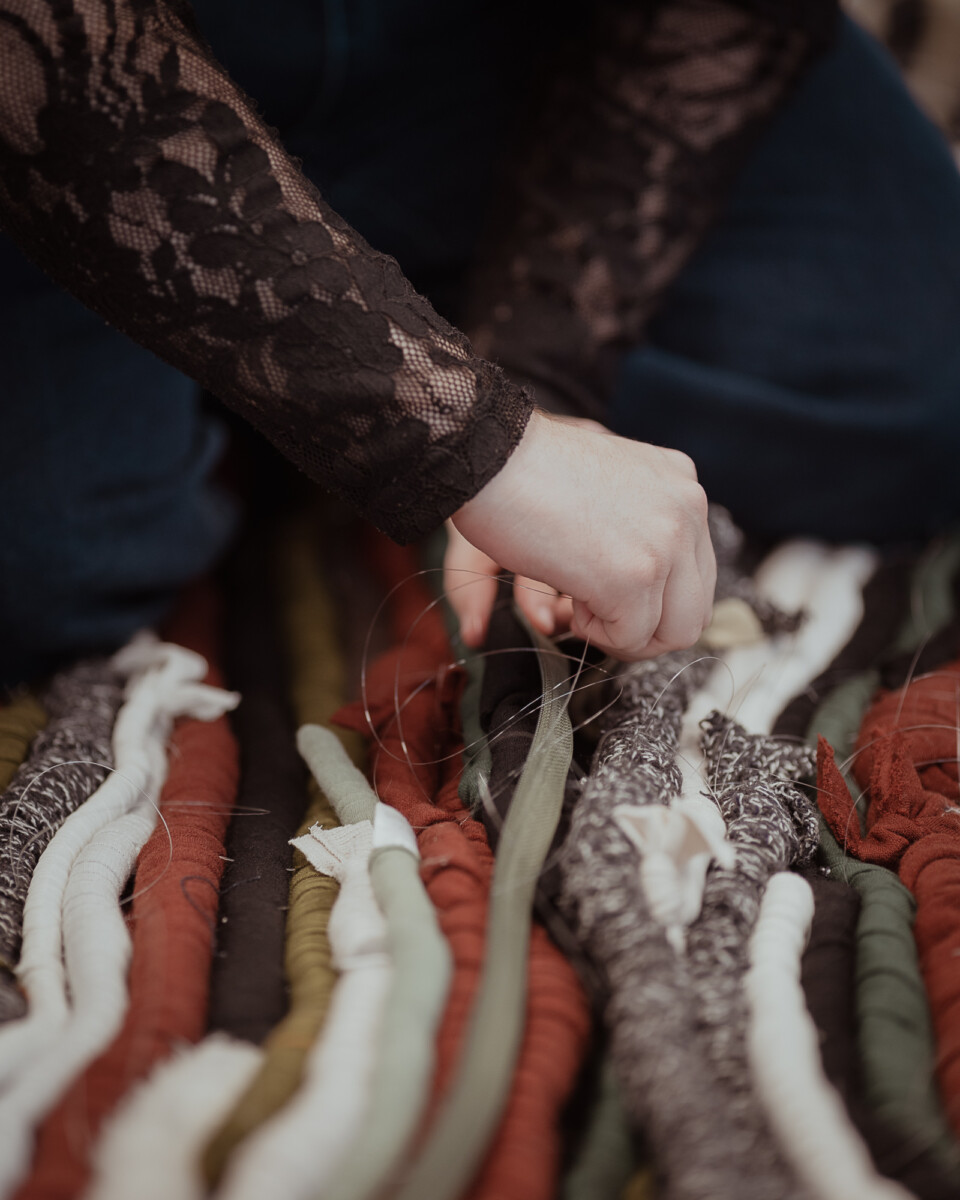
Savonia Article Pro: From “I” to “We”: International Collaboration through Textile, Art and Design. The Story Behind “We Must Go On”
Savonia Article Pro is a collection of multidisciplinary Savonia expertise on various topics.
This work is licensed under CC BY-SA 4.0


What happens when international collaboration is not simply about moving between countries and universities, but about bringing people, materials and ways of thinking together?
In October 2026, Anna Szklińska, Professor and Vice Dean for Education at the Faculty of Architecture and Design at Koszalin University of Technology, Poland, visited Savonia University of Applied Sciences to lead the Experiential Laboratory of Textile Side-Streams. The masterclass for design students explored textile waste through co-creation, artistic practice and experiential learning.
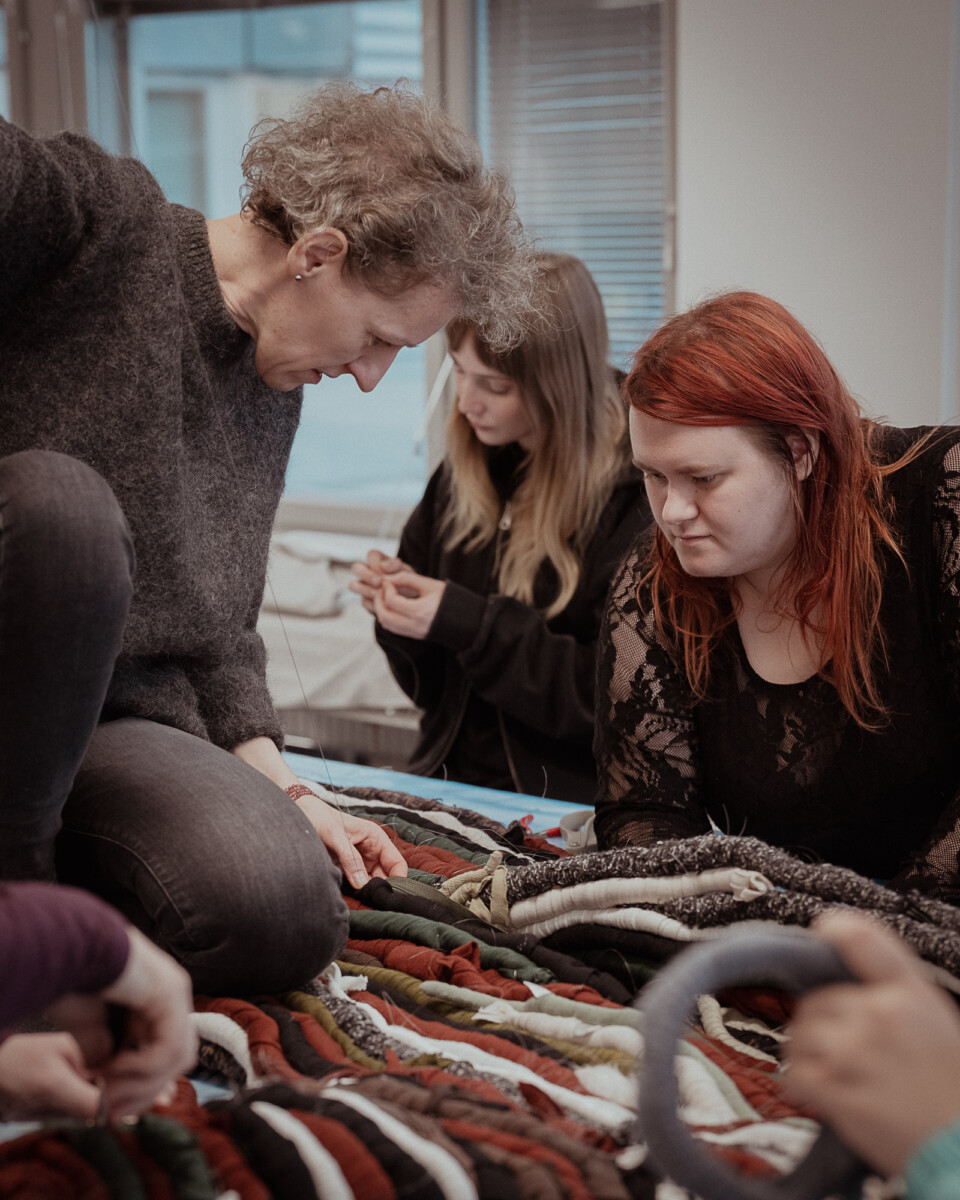
The process began before Szklińska arrived in Kuopio. Savonia design students had already prepared textile materials, while Szklińska brought material elements she had worked on in Poland. Materials shaped in different places and by different hands began to merge into the same artwork.
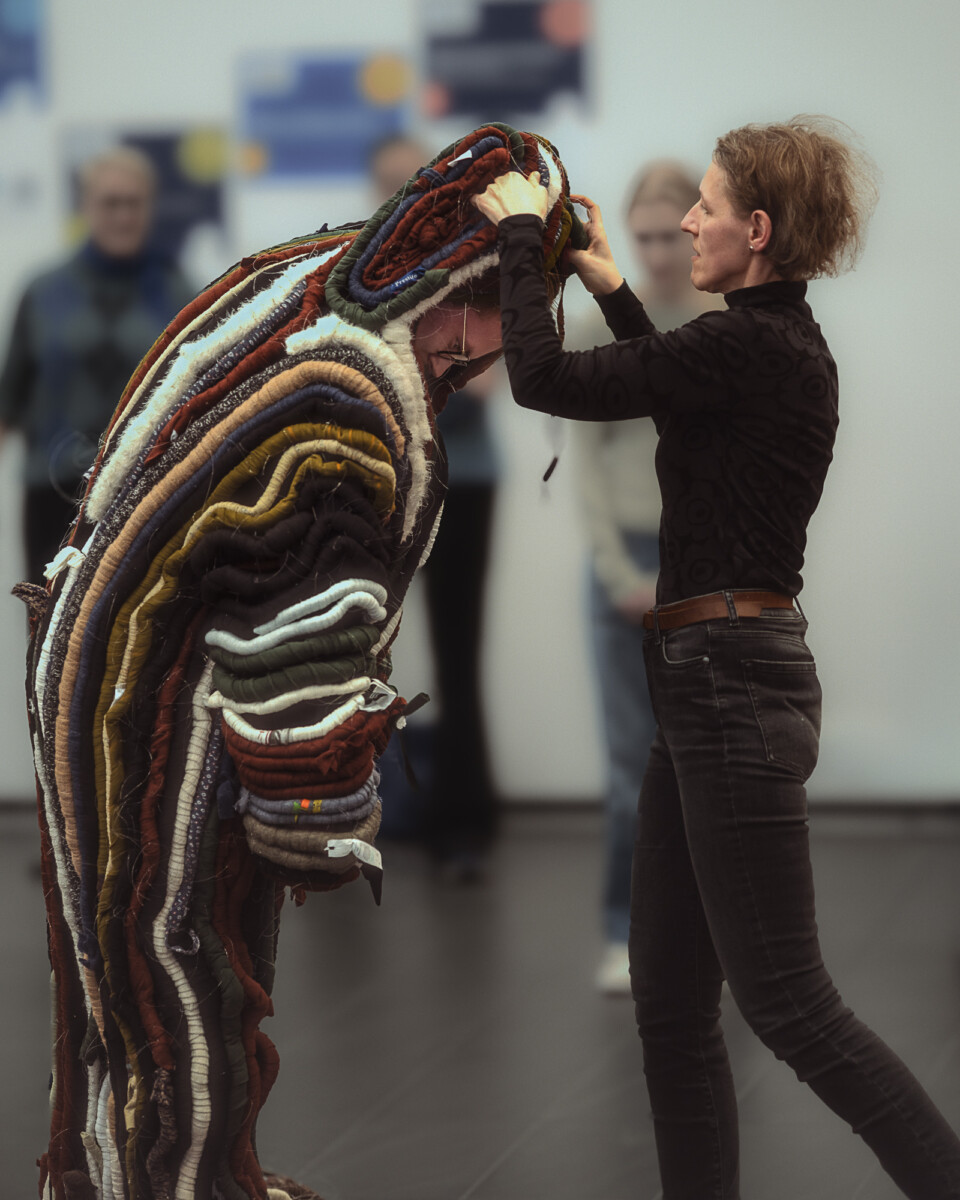
The process culminated in We Must Go On…, a collaborative artwork and performance presented at Campus Heart on 22 October 2026. The artwork was worn and activated by Szklińska, students involved in making it, and teachers from design and dance.
International collaboration through EU4Dual
Savonia and Koszalin University of Technology are partners in the European EU4Dual alliance. Koszalin University of Technology is also one of Savonia’s iDual student mobility destinations.
According to Solja Ryhänen, International Coordinator at Savonia, the partnership creates diverse opportunities for students and teachers to learn and work together internationally through mobility, joint programmes and collaborative learning.
The masterclass offered another perspective on international exchange. Instead of knowledge moving in only one direction, it created a two-way learning process. Students encountered Szklińska’s artistic thinking and methods, while their participation influenced the development of the collective work.
For Szklińska, this also meant reconsidering her own artistic process. Her earlier works based on the concept of “empty forms” and I Must Go On had largely been created independently. By sharing her method of working with second-hand textiles with future designers, she discovered new potential for dialogue and collective creation.
Students similarly reflected on sharing ideas and responsibilities, making compromises and learning to communicate within a larger group. Some found that using English became easier through working together. International collaboration thus became tangible through making, communicating and solving problems together.
Material journeys between Kuopio and Koszalin
The materials themselves became an important part of the story. Discarded textiles and cutting waste were collected in both Kuopio and Koszalin, connecting the two locations through material as well as through people.
These different material journeys came together in Kuopio. Materials from two countries, shaped by different hands, gradually became part of one collective work. The material itself became part of the international exchange.
For students, working with discarded textiles also opened new perspectives on textile waste. Their reflections show how the process encouraged them to recognise unexpected possibilities in materials that might otherwise be considered waste and to reconsider familiar ways of working with textiles. The experience also led to broader reflections on different ways of making and understanding art.
Instead of asking only “What new product can we make from this material?”, the process opened another question: “What can this material communicate, evoke or make us experience?”
Learning through uncertainty
One of the central pedagogical aspects of the masterclass was that students did not know exactly what the final work would become.
This differs from many design assignments, where the brief and expected outcome are defined in advance. Here, making preceded certainty. The meaning and form of the work emerged through the process.
Students experienced this openness in different ways. They described the process as interesting, exciting and freeing, but also at times confusing or difficult. Not having a predetermined outcome created freedom to experiment, and seeing the separate elements eventually come together as one work was particularly rewarding.
Uncertainty was not simply an obstacle in the learning process. It became part of what was being learned. Students had to continue making, communicating and deciding before they could clearly see where the process was leading.
Szklińska also recognised the learning potential of this approach. She observed that collaboration accelerated some stages of the project and created space for other aspects to emerge. For her, important questions and answers did not always need to be verbalised. They could arise through making itself, as participants found their roles within the process.
This has particular relevance in design education. Creative processes rarely proceed linearly from a defined problem to a predictable outcome. Learning to remain engaged while the direction is still open can support experimentation, adaptability and confidence in one’s own creative process.
Between art, design and embodied experience
The masterclass also explored the space between art and design. Artistic experimentation can offer designers a way to explore materials and meanings before ideas are translated into products or concepts.
Here, the emphasis shifted from designing a predetermined product towards exploration. Materials were rolled, cut, joined, sewn, rearranged and tested. The process was tactile and physical. The final work was not simply something to look at. It was worn, carried and activated through the body in performance.
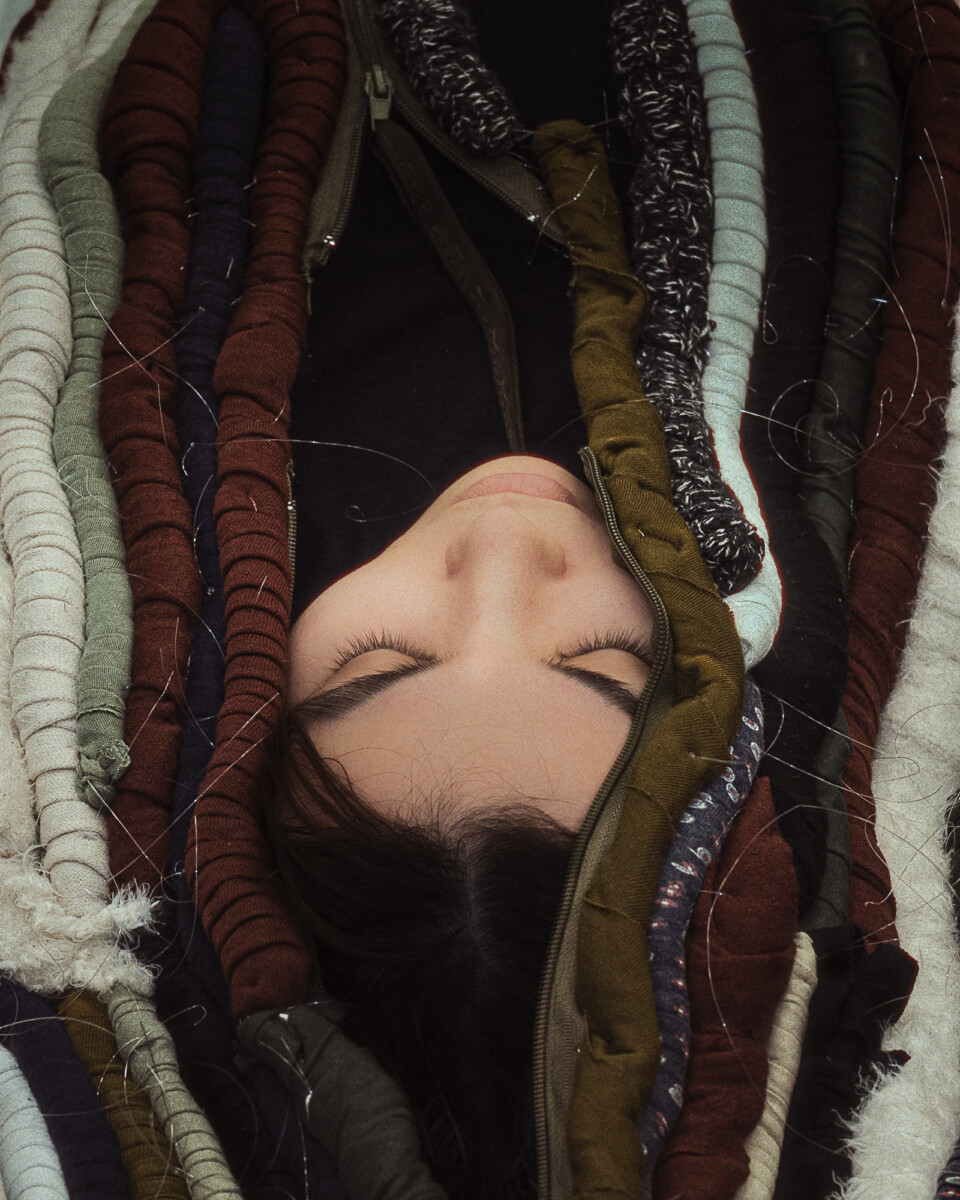
This embodied dimension added another level to learning. Material, scale, weight, movement and collaboration were not only discussed but physically experienced.
For Szklińska, the students’ involvement in the performance was an important extension of the making process. They participated not only in preparing materials and constructing the work, but also in activating it through performance. She sees this kind of experience as opening new possibilities for working with students in both artistic practice and education.
Students’ reflections also suggest that the experience challenged previous assumptions. Some began to think what art can mean, while others highlighted collaboration, new working methods and the possibilities hidden in discarded textiles.
From “I” to “We”
The title We Must Go On… developed from Szklińska’s earlier work I Must Go On. The shift from I to we captures something essential about the masterclass.
A process originating in one artist’s practice became collective. Materials arrived with previous lives and their own journeys. Students and teachers added their hands, decisions, interpretations and bodies. The work was shaped not by one author alone, but through shared making.
Szklińska’s own reflection adds another dimension to this transition. By opening a method she had previously developed independently to students and teachers, collaboration became part of the artistic method itself. The experience transformed not only the artwork but also the process through which it was created.
This may be one of the most valuable dimensions of international collaboration in design education. Its value can lie in creating a shared space where different people, practices and materials meet, allowing something to emerge that none of the participants could have created in quite the same way alone.
From “I” to “We” is therefore more than a change in the title of an artwork. It describes a movement from individual authorship towards shared making, from predetermined outcomes towards discovery, and from international exchange as mobility towards international collaboration as a lived and material experience.
Authors
Sirpa Ryynänen. Lecturer. Savonia University of Applied Science
This article was prepared with the help of AI.