
Savonia Article Pro: From Research to Practice: How Evidence-Based Practice Shapes Future Nurses
Savonia Article Pro is a collection of multidisciplinary Savonia expertise on various topics.
This work is licensed under CC BY-SA 4.0


1 Introduction
Evidence-based practice is fundamental to nursing care and clinical decision-making, ensuring that care is based on the best available evidence rather than tradition or professional experience alone. Contemporary evidence-based healthcare integrates the best available evidence with professional expertise, patients’ in-dividual needs and preferences, and the context of care to support effective, meaningful and appropriate healthcare practices (Hotus 2025; JBI 2024). As a result evidence-based practice has become one of the most important skills a nursing student can develop today recognized as a core competency for nurses across Europe including Finland (Saunders, Gallagher-Ford & Vehviläinen, 2019).Coming from Sri Lanka, where I first grew interested in traditional Ayurveda Medicine and now studying nursing at Savonia Univer-sity of Applied Sciences in Finland, I have become interested in how research reaches the bedside and how nursing students like myself can learn to use it with confidence. This article shares what I have learned about evidence-bases practice, why it matters for future nurses and how students can build this during their education.
The purpose of this article is to describe the role and significance of evidence-based practice in nursing education and future nursing practice from a nursing student’s perspective. The aim is to deepen nursing students’ understanding of evidence-based practice and encourage them to develop and apply evidence-based practice skills throughout their education and future professional practice.
2 My first encounter with research
Before starting my nursing studies, I had already taken part in research in other fields including laboratory work in Ayurveda medicine where gas chromatography was used to analyze the chemical composition of herbal decoction, clinical research in obesity and divorce in family Law. Ayurveda, still widely practiced in Sri Lanka and relies on generations of careful observation (Seneviratne, 2021) but working with modern analytical methods showed me how that traditional knowledge can be tested and refined by science. Nursing research asked something different again. My first experience with nursing specific research came through a systematic review on cancer care in nursing built using the PRISMA methodology (Page, et al. 2021). Screening studies and constructing a PRISMA flow chart felt difficult at first but working through the process step by step taught me how to ask focused questions, search databases systematically and separate strong evidence from weak evidence.

3 What is Evidence-Based Practice
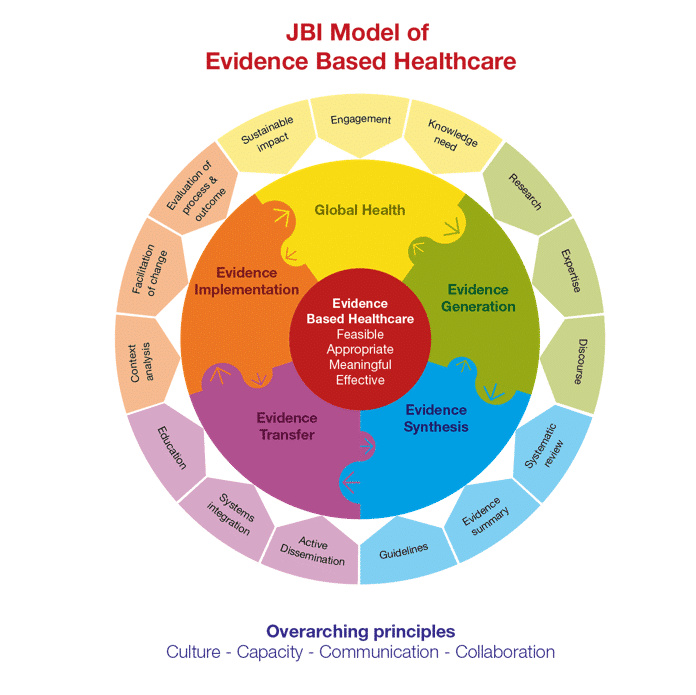
Based on the JBI Model of Evidence Based Healthcare shown in the Figure 2, the model places evidence-based healthcare at its core defined by four qualities-feasible, appropriate, meaningful and effective and organizes the work of achieving it into five interconnected components; evidence generation, evidence syn-thesis, evidence transfer, evidence implementation and global health all supported by the over-arching principles of culture, capacity, communication and collaboration (JBI, 2024).
4 Why Evidence-Based Practice matters for Nursing Students
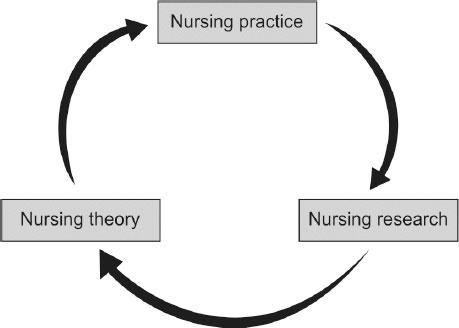
Learning evidence-based practice early has several benefits. First, it strengthens critical thinking since students learn to question assumptions rather than accept them automatically. A recent study found that critical thinking levels strongly predict how well nursing students adopt evidence-based practice explaining almost half of the difference between students (Abdi et al., 2026). Second, it supports safer clinical deci-sion making grounded in the best available knowledge rather than habit alone (Fiset, Graham, & Davies, 2017). Finland supports this nationally. The Nursing Research Foundation hosts the Finnish Centre for Evi-dence-Based Health Care, a JBI Centre of Excellence and the Health Care Act itself requires that care be based on the best available evidence. Learning these skills is therefore a genuine professional expectation, and it prepares students for lifelong learning. Figure 3. Is showing the process of interrelationship among practice, theory, and research (Jain, 2021).
5 Challenges and opportunities of Evidence-Based Practice
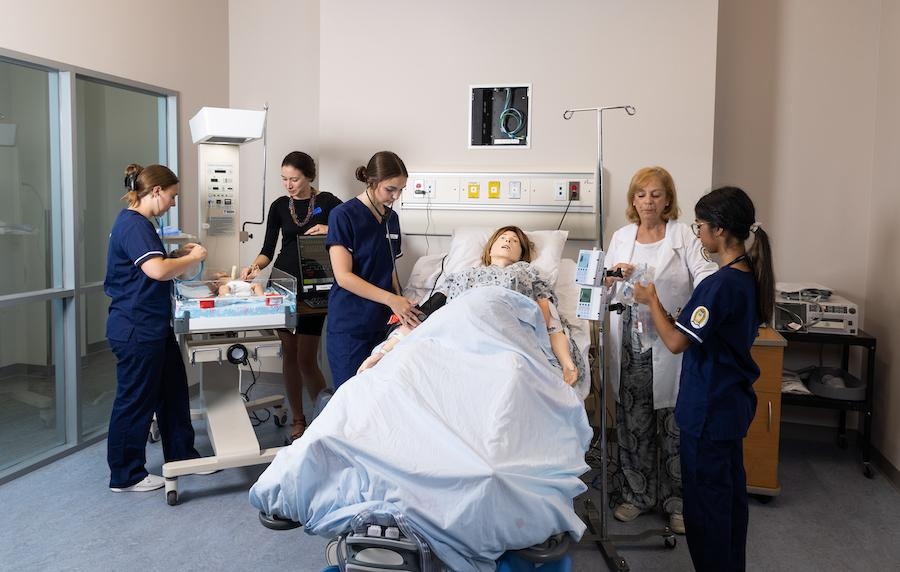
Despite its importance many nursing students find evidence-based practice difficult to apply. Common barri-ers include difficulty understanding research articles, limited confidence in searching for evidence and a lack of time during clinical placements (Madhavanprabhakaran, Arulappan, Achora, & Alsaraireh, 2023.) A recent meta-analysis found that focused evidence-based practice education meaningfully improved students’ compe-tency, critical thinking and problem-solving ability (Jeong et al., 2024). As per Figure 4, Case based learning and mentorship from clinical staff also help students move from theory into practice (Horntvedt, Nordsteien, Fermann, & Severinsson, 2018).
6 From student to future nurse
The skills developed during nursing studies do not stay in the classroom. At Savonia University of Applied Sciences, evidence-based practice is integrated throughout the 3.5-year nursing programme within a multi-cultural, practice-oriented learning environment (Savonia University of Applied Sciences, 2025). Students begin developing evidence-based practice skills in the first year, strengthen them through a dedicated re-search course and field-specific studies in the second year, and further apply them in specialty courses and thesis planning during the third year. Every literature search and discussion of clinical evidence contributes to professional judgement (Savonia University of Applied Sciences, 2025). Evidence-based practice is not a single course to complete but a habit of mind that supports lifelong learning and enables nurses to adapt to evolving healthcare (Melnyk & Fineout-Overholt, 2023).
7 Conclusion
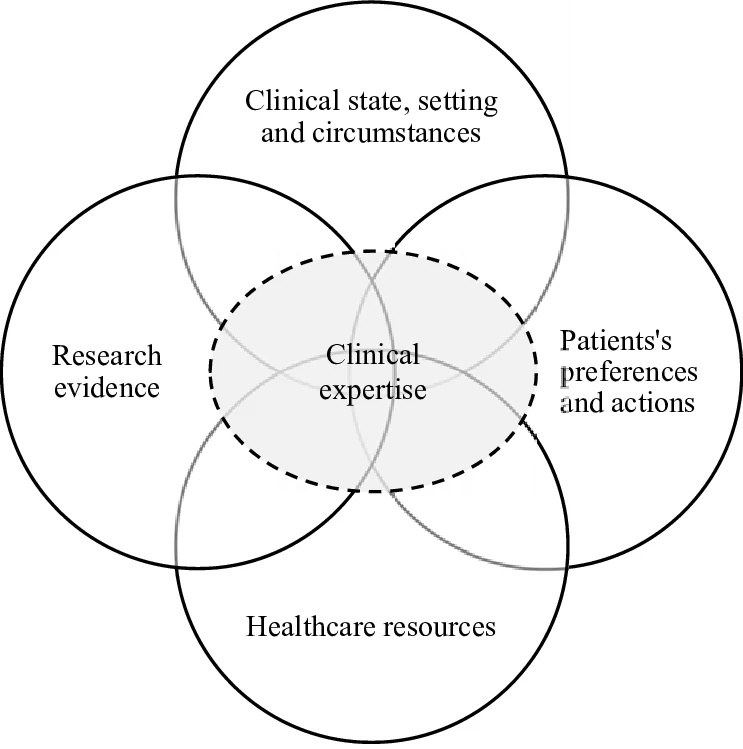
Research is not reserved only for ACADEMICS; it belongs to every nurse who wants to give the best possible care. My own path from clinical research in Sri Lanka to a nursing literature review in Finland, showed me that engaging with evidence builds skills that matter far beyond the classroom. Nursing students should be encouraged from the very beginning to see evidence-based practice as a tool that connects research, clinical expertise and the needs of real patients. As Figure 5 shows, evidence-based practice sits at the intersection of research evidence, clinical setting, patient preferences and healthcare resources with clinical expertise trying them together into sound decisions (Haynes, Devereaux & Guyatt, 2002).
“This experience taught me that evidence-based practice is a skill nursing students can begin building today not one reserved for later in a career. Moving forward, I hope to apply this same careful, patient-centered judgment throughout my professional life”.
Authors
Dushyantha Jayasena, Nursing student, Savonia University of Applied Sciences.
Supervisor: Leena Koponen, Senior lecturer, Savonia University of Applied Sciences
References
Abdi, A., Mohammadi, M. & Mohammadi, A. 2026. Predicting the adoption of evidence-based practice (EBP) based on critical thinking levels among nursing students. BMC Nursing. Available: https://doi.org/10.1186/s12912-026-04323-6
Fiset, V. J., Graham, I. D. & Davies, B. L. 2017. Evidence-based practice in clinical nursing education: A scoping review. Journal of Nursing Education 56 (9), 534–541. Available: https://doi.org/10.3928/01484834-20170817-04
Haynes, R. B., Devereaux, P. J. & Guyatt, G. H. 2002. Clinical expertise in the era of evidence-based med-icine and patient choice. ACP Journal Club 136 (2), A11–A14. Available: https://doi.org/10.1136/ebm.7.2.36
Horntvedt, M. T., Nordsteien, A., Fermann, T. & Severinsson, E. 2018. Strategies for teaching evidence-based practice in nursing education: A thematic literature review. BMC Medical Education 18 (1), 172. Available: https://doi.org/10.1186/s12909-018-1278-z
Hotus – Hoitotyön tutkimussäätiö. 2025. Evidence-based Healthcare (EBHC). Available: https://hotus.fi/en/evidence-based-healthcare-ebhc/
Jain, A. 2021. A review article on interrelationship among science, theory, practice and research in nurs-ing: Rising evidence based nursing practice. Journal of Emerging Technologies and Innovative Research (JETIR) 8 (10), d891–d897.
JBI. 2016. JBI Model of Evidence-Based Healthcare (EBHC). JBI Global. Available: https://jbi.global/jbi-model-of-EBHC
Jeong, D., Park, C., Sugimoto, K., Jeon, M., Kim, D. & Eun, Y. 2024. Effectiveness of an evidence-based practice education program for undergraduate nursing students: A systematic review and meta-analysis. International Journal of Environmental Research and Public Health 21 (5), 637. Available: https://doi.org/10.3390/ijerph21050637
Madhavanprabhakaran, G., Arulappan, J., Achora, S. & Alsaraireh, A. 2023. Evidence-based practice com-petency and barriers among undergraduate nursing students in a Middle Eastern country. Teaching and Learning in Nursing. Available: https://doi.org/10.1016/j.teln.2023.07.009
Melnyk, B. M. & Fineout-Overholt, E. 2023. Evidence-Based Practice in Nursing & Healthcare: A Guide to Best Practice. 5th ed. Philadelphia: Wolters Kluwer.
Page, M.J. et al. 2021. The PRISMA 2020 statement: an updated guideline for reporting systematic re-views. BMJ, 372, n71. Available: https://doi.org/10.1136/bmj.n71
Savonia University of Applied Sciences. 2025. Registered Nurse (Bachelor of Health Care). Available: https://www.savonia.fi/en/study-with-us/degree-studies/bachelors/registered-nurse
Saunders, H., Gallagher-Ford, L. & Vehviläinen-Julkunen, K. 2019. Endorsement and validation of the essen-tial evidence-based practice competencies for practicing nurses in Finland: An argument Delphi study. Worldviews on Evidence-Based Nursing 16 (4), 281–288. Available: https://doi.org/10.1111/wvn.12377
Seneviratne, S. L. 2021. Sri Lanka: Delivering ‘Medical Services for Health and Not for Disease’ – Striving for Equity. In: Case Studies in Global Health: World Bank/NCBI Bookshelf. Available: NCBI Bookshelf – Ayurveda and healthcare provision in Sri Lanka
Southern Connecticut State University 2026. Nurse Educator, M.S.N. Available: https://inside.southernct.edu/nursing/graduate-programs/nurse-educator.