
Savonia Article Pro: Impact of Ultra-Early Active Mobilization in the ICU Following Cardiac Surgery via Median Sternotomy
Savonia Article Pro is a collection of multidisciplinary Savonia expertise on various topics.
This work is licensed under CC BY-SA 4.0


Introduction
Evidence-Based Practice (EBP) in physiotherapy combines the best available research evidence with clinical expertise and patients’ values and preferences to support informed clinical decision-making and high-quality care.
In week 44 of 2026, an international Blended Intensive Programme (BIP) focusing on EBP brought together physiotherapy students and academic staff at École d’Assas (Établissement d’enseignement supérieur en kinésithérapie et en podologie) in Paris, France. The programme introduced participants to the principles of EBP and addressed key challenges in applying scientific evidence across different areas of physiotherapy practice. Students and teachers from 4 universities in France, Czech Republic, Portugal and Finland took part in collaborative learning activities, sharing their knowledge, experiences, and professional perspectives.
As part of the programme, students worked in international teams under the guidance of academic staff to explore topics relevant to evidence-based physiotherapy. Each team conducted a mini-review, developing practical skills in searching for, critically appraising, and synthesising scientific literature. The resulting blog-style articles present the teams’ findings and discuss their relevance to physiotherapy practice.
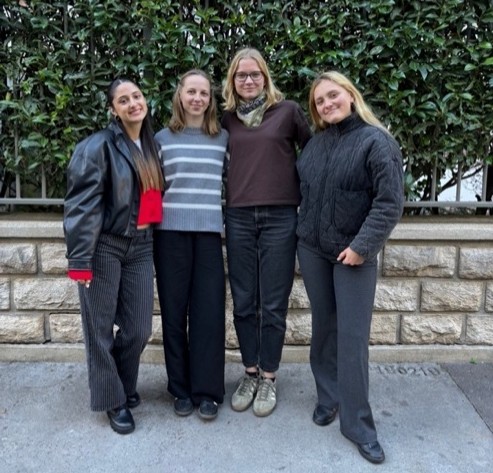
The student team shown in Picture 1 focused on cardiorespiratory, with particular attention to the timing of the first active mobilization after heart surgery during the ICU placements. Under the guidance of the teachers, the students worked collaboratively to examine the available scientific evidence on whether active mobilization started within 24 hours after cardiac surgery reduces ICU length of stay and consider its implications for physiotherapy practice. The work involved a literature search and critical appraisal of relevant research findings. This article presents the main findings of the mini-review and discusses their relevance to evidence-based clinical decision-making, with particular emphasis on not clearly reduce a lot ICU length of stay but big improvement on functional autonomy.
Background
Cardiac surgery via median sternotomy remains the standard approach for coronary and valve procedures worldwide (1). Postoperative immobility in the ICU causes rapid muscle loss, orthostatic intolerance, loss of functional capacity, and pulmonary complications that prolong hospital stay (2, 3), alongside delirium affecting up to 52% of patients (4). Early mobilization safely counters these effects when safety criteria are met (5). However, optimal timing remains debated: traditional sternal precautions may unnecessarily delay recovery (1), whereas less restrictive guidelines facilitate safe discharge home without increasing complications (6). Previous reviews pooled interventions starting within 5 days, showing functional gains (7) but no clear reduction in length of stay (LOS) (8). This review specifically examines whether starting active mobilization within the first 24 hours in the ICU provides additional benefits.
Methods
Research question: In adults following cardiac surgery via median sternotomy, does ultra-early active physical mobilization (first active sitting, standing, walking, or cycling within 24 hours or on postoperative day 1 [POD 1] in the ICU) reduce ICU length of stay and improve functional autonomy compared to standard care?
Search strategy & selection: PubMed was searched on 29 October 2026 for randomized controlled trials (RCTs) published between 2020 and 2026 (building on prior reviews (7, 8)). Search terms combined sternotomy surgery, early mobilization, and RCT filters (78 records retrieved). We included RCTs involving adults after elective coronary artery bypass grafting (CABG) or valve surgery, comparing ultra-early active mobilization with usual or delayed care, and reporting length of stay or functional autonomy. Passive/breathing-only programs, complex recovery bundles, and non-functional endpoints were excluded. Five RCTs matching the criteria were retained and appraised using the PEDro scale (9, 14).
Results
Included studies: Five RCTs (704 patients) from Greece (3), Brazil (10), and China (11, 12, 13) were appraised. Methodological quality was good (mean PEDro score: 7.0/10, range: 6–8; lack of blinding was inherent to the exercise intervention). Three trials initiated mobilization within 24 hours postoperatively (3, 10, 12) and two on POD 1 (11, 13).
ICU length of stay: ICU stays were shorter in the early mobilization group in four trials, but reached statistical significance in only two (an approximate 2-hour reduction in Afxonidis et al. (3) and 7 hours in Han et al. (11)). Specifically, isolating rehabilitation protocols confined to the ICU confirmed a direct benefit on earlier ICU discharge (11), whereas two other trials found no significant difference (12, 13).
Functional autonomy and safety: Early mobilization markedly improved autonomy in three of the four trials assessing it (higher Barthel Index scores (11, 12), Short Physical Performance Battery [SPPB] scores (12), and 83% vs. 55% of patients reaching day-3 walking goals (13)). Total hospital length of stay was reduced by 0.4 to 2 days in the early mobilization groups (3, 11, 12, 13), alongside fewer pulmonary and 30-day postoperative complications. No serious adverse events were reported across approximately 700 patients when established safety criteria were followed (5).
Discussion
The minimal effect on ICU stay is expected: CU discharge depends primarily on extubation, chest tube removal, ventilatory and hemodynamic weaning, and bed availability, which physiotherapy cannot directly alter (8). The key value of ultra-early intervention is rapid recovery of functional autonomy, where timing appears more crucial than the specific exercise type (10, 11). Limitations of the evidence include small single-center trials, lack of therapist and patient blinding, and short in-hospital follow-up, while our review is limited by its single-database search scope.
Conclusion
Ultra-early active mobilization within 24 hours (or POD 1) in the ICU is safe post-cardiac surgery. While it yields modest reductions in ICU stay, it significantly improves early functional autonomy and reduces overall hospital stay by 0.5 to 2 days. Physiotherapists should verify safety criteria after extubation and target out-of-bed activity within 24 hours (POD 0 or POD 1) to maximize early independence.
Authors
Carolina Pacheco, physiotherapy student, Santa Maria Health School, Portugal.
Vendula Janovska, physiotherapy student, FTVS UK, Czech Republic.
Magdalena Flasikova, physiotherapy student, FTVS UK, Czech Republic.
Juliette Pieterwas, physiotherapy student, Ecole d’Assas, France.
Dagmar Pavlu, PT. Assoc. Prof. Charles University, Czech Republic
Ivana Vláčilová, PhD., PT. Charles University, Czech Republic
Marja Äijö, PT, PhD Principal Lecturer of gerontology and rehabilitation, Savonia, University of Applied Sciences, Kuopio, Finland.
Adrien Pallot, PT, MSc, Lecturer at École D´Assas, France.
Carlos Filipe Barbosa Crasto PT. Assoc. Prof., Escola Superior de Saúde de Santa Maria, Portugal
References
1.Katijjahbe MA, Denehy L, Granger CL, Royse A, Royse C, Bates R, et al. The Sternal Management Accelerated Recovery Trial (S.M.A.R.T) – standard restrictive versus an intervention of modified sternal precautions following cardiac surgery via median sternotomy: study protocol for a randomised controlled trial. Trials. 23 juin 2017;18(1):290. doi:10.1186/s13063-017-1974-8 PubMed PMID: 28645301; PubMed Central PMCID: PMC5481951.
2.Brown CJ, Redden DT, Flood KL, Allman RM. The underrecognized epidemic of low mobility during hospitalization of older adults. J Am Geriatr Soc. sept 2009;57(9):1660‑5. doi:10.1111/j.1532-5415.2009.02393.x PubMed PMID: 19682121.
3.Afxonidis G, Moysidis DV, Papazoglou AS, Tsagkaris C, Loudovikou A, Tagarakis G, et al. Efficacy of Early and Enhanced Respiratory Physiotherapy and Mobilization after On-Pump Cardiac Surgery: A Prospective Randomized Controlled Trial. Healthcare. 15 déc 2021;9(12):1735. doi:10.3390/healthcare9121735 PubMed PMID: 34946461; PubMed Central PMCID: PMC8701754.
4.Cai S, Li J, Gao J, Pan W, Zhang Y. Prediction models for postoperative delirium after cardiac surgery: Systematic review and critical appraisal. Int J Nurs Stud. déc 2022;136:104340. doi:10.1016/j.ijnurstu.2022.104340 PubMed PMID: 36208541.
5.Hodgson CL, Stiller K, Needham DM, Tipping CJ, Harrold M, Baldwin CE, et al. Expert consensus and recommendations on safety criteria for active mobilization of mechanically ventilated critically ill adults. Crit Care. 4 déc 2014;18(6):658. doi:10.1186/s13054-014-0658-y PubMed PMID: 25475522; PubMed Central PMCID: PMC4301888.
6.Gach R, Triano S, Ogola GO, da Graca B, Shannon J, El-Ansary D, et al. « Keep Your Move in the Tube » safely increases discharge home following cardiac surgery. PM R. déc 2021;13(12):1321‑30. doi:10.1002/pmrj.12562 PubMed PMID: 33527697.
7.Kanejima Y, Shimogai T, Kitamura M, Ishihara K, Izawa KP. Effect of Early Mobilization on Physical Function in Patients after Cardiac Surgery: A Systematic Review and Meta-Analysis. Int J Environ Res Public Health. 28 sept 2020;17(19):7091. doi:10.3390/ijerph17197091 PubMed PMID: 32998202; PubMed Central PMCID: PMC7578990.
8.Chen B, Xie G, Lin Y, Chen L, Lin Z, You X, et al. A systematic review and meta-analysis of the effects of early mobilization therapy in patients after cardiac surgery. Medicine (Baltimore). 16 avr 2021;100(15):e25314. doi:10.1097/MD.0000000000025314 PubMed PMID: 33847630; PubMed Central PMCID: PMC8051976.
9. Page MJ, McKenzie JE, Bossuyt PM, Boutron I, Hoffmann TC, Mulrow CD, et al. The PRISMA 2020 statement: an updated guideline for reporting systematic reviews. BMJ. 2021;372:n71. doi:10.1136/bmj.n71 PubMed PMID: 33782057.
10. Gama Lordello GG, Gonçalves Gama GG, Lago Rosier G, Viana PAD, Correia LC, Fonteles Ritt LE. Effects of cycle ergometer use in early mobilization following cardiac surgery: a randomized controlled trial. Clin Rehabil. 2020;34(4):450‑9. doi:10.1177/0269215520901763 PubMed PMID: 31994405.
11. Han P, Yu H, Xie F, Li M, Chen X, Yu X, et al. Effects of early rehabilitation on functional outcomes in patients after coronary artery bypass graft surgery: a randomized controlled trial. J Int Med Res. 2022;50(3):3000605221087031. doi:10.1177/03000605221087031 PubMed PMID: 35301878.
12. Liu J, Jiang M, Zhao X, Liang Y, Liu Y, Pan R. Impact of an early, graduated mobilization program on recovery and postoperative outcomes after cardiac revascularization with extracorporeal circulation. Front Cardiovasc Med. 2026; 13:1801971. doi:10.3389/fcvm.2026.1801971 PubMed PMID: 42529237.
13. Cui Z, Li N, Gao C, Fan Y, Zhuang X, Liu J, et al. Precision implementation of early ambulation in elderly patients undergoing off-pump coronary artery bypass graft surgery: a randomized-controlled clinical trial. BMC Geriatr. 2020;20(1):404. doi:10.1186/s12877-020-01823-1 PubMed PMID: 33054724.
14. Maher CG, Sherrington C, Herbert RD, Moseley AM, Elkins M. Reliability of the PEDro scale for rating quality of randomized controlled trials. Phys Ther. 2003;83(8):713‑21. doi:10.1093/ptj/83.8.713 PubMed PMID: 12882612.
Main picture: Tumisu. (2020). Health day [Illustration]. Pixabay. https://pixabay.com/fi/illustrations/terveytt%C3%A4-p%C3%A4iv%C3%A4-terveys-p%C3%A4iv%C3%A4-syd%C3%A4n-4748928/