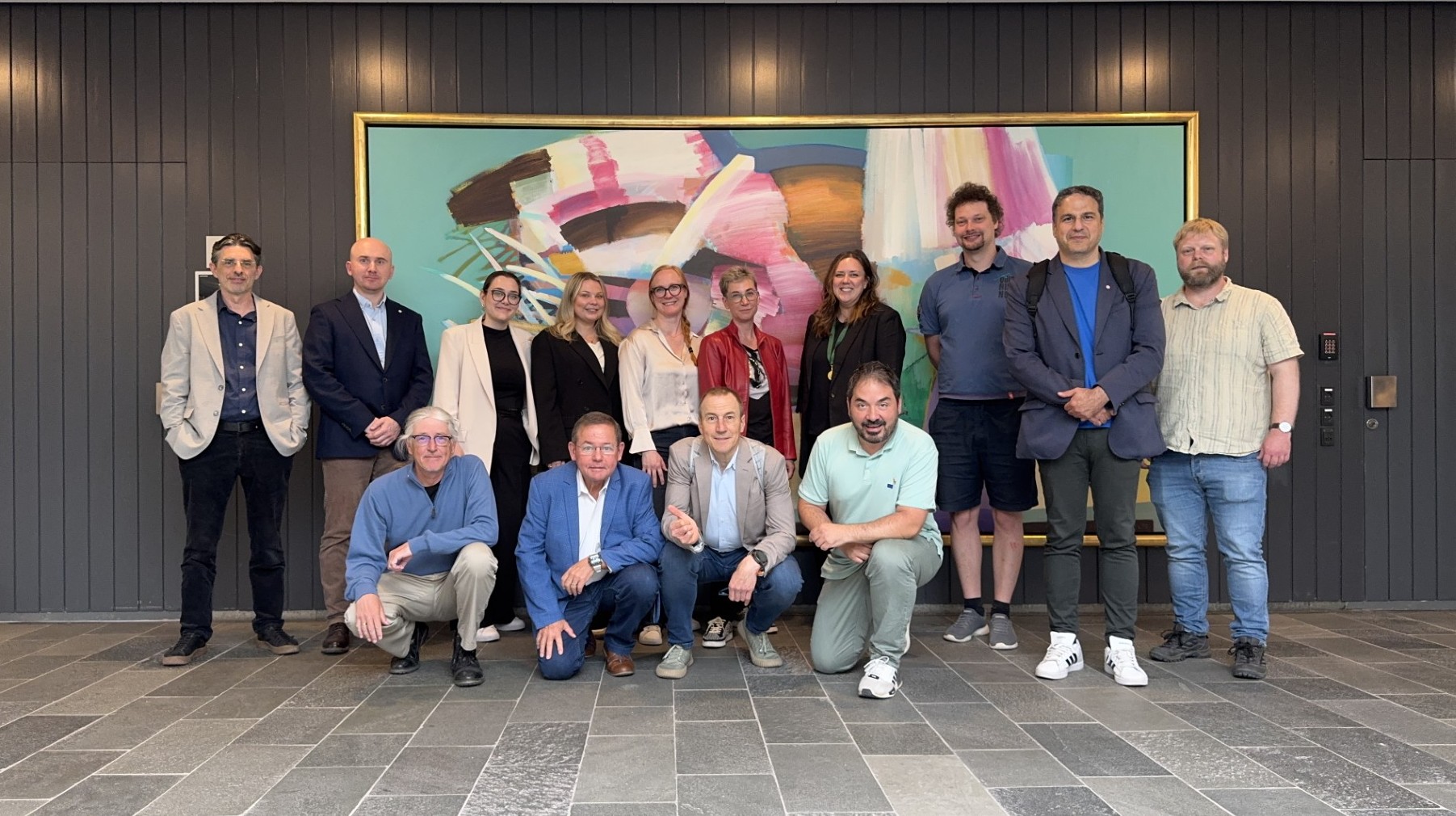
Savonia Article: Can Robotics Make Mining More Sustainable? BOREAS Brings Technology, Environment and Society Together
This work is licensed under CC BY-SA 4.0


The green transition depends heavily on critical raw materials. Minerals used in batteries, renewable energy technologies, digital infrastructure and defence systems are essential for Europe’s future competitiveness and security. At the same time, mining activities often raise concerns related to environmental impacts, water quality, biodiversity and community acceptance.
How can we increase the supply of critical raw materials while reducing environmental risks and maintaining public trust? This question lies at the heart of the Horizon Europe project BOREAS (Beyond Outreach: Robotised Exploration and Mining in the Arctic Subsurface, Grant number: 101294680), which explores how robotics, environmental intelligence and sustainability frameworks can contribute to more responsible mining practices in sensitive Arctic environments. The project integrates autonomous technologies, environmental monitoring and socio-economic governance approaches to support low-impact extraction of critical raw materials.
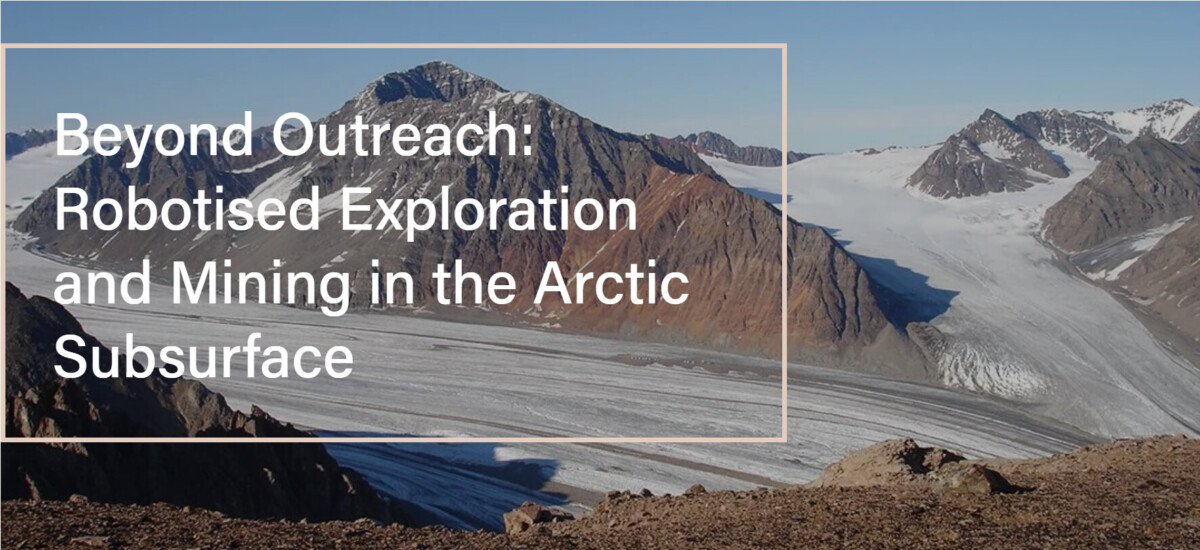
Mining in Sensitive Arctic Environments
Arctic regions contain significant deposits of strategic minerals that are increasingly important for Europe’s green and digital transitions. At the same time, these environments are particularly vulnerable to ecological disturbances. Mining activities may affect surrounding ecosystems through issues such as acid rock drainage, metal contamination, wastewater generation, dust emissions and landscape alteration. Addressing these challenges requires not only better technologies but also improved understanding of environmental processes and stronger stakeholder engagement practices.
BOREAS aims to support this transition by combining autonomous robotics, advanced sensing technologies and digital twins with environmental, social and governance (ESG) considerations. The project seeks to demonstrate how mining operations can become more targeted, data-driven and environmentally responsible.
From Robotics to Environmental Intelligence
Robotics is often associated with improved productivity and safety. In BOREAS, however, the technology also serves a sustainability purpose.
Autonomous aerial and ground-based systems can help identify ore bodies, detect contaminants and support selective extraction practices. Instead of disturbing large areas, future mining operations may increasingly rely on precise, targeted interventions supported by real-time data and artificial intelligence.
Environmental intelligence is equally important. Reliable monitoring data is needed to detect early signs of acid rock drainage, assess water quality risks and evaluate downstream environmental impacts. Trusted sensor data and validation methodologies are crucial for ensuring that digital decision-making tools reflect real-world conditions accurately.
Society Must Be Part of the Solution
Technology alone is not enough. Successful and responsible mining requires consideration of people, communities and societal expectations. Public acceptance, transparent decision-making and meaningful stakeholder engagement have become central elements of sustainable resource management.
Within BOREAS, social impact assessment and stakeholder consultation are recognised as key components of responsible innovation. The project seeks to develop methods for understanding and monitoring social impacts alongside environmental and technical performance indicators. This reflects a broader shift towards viewing local communities not as obstacles to development but as essential partners in sustainable transition processes. As demands for transparency increase, future mining projects will need to demonstrate not only technical efficiency but also clear environmental and social value.
Savonia’s Strength Lies in Multidisciplinary Collaboration
Savonia University of Applied Sciences plays a leading role in the project’s sustainability-related activities and demonstrates how multidisciplinary expertise can create innovative solutions for complex challenges. During the BOREAS kick-off meeting in Copenhagen in June 2026, RDI Specialist Rosa Sartjärvi presented Savonia’s contributions from the research areas working together towards common goals.
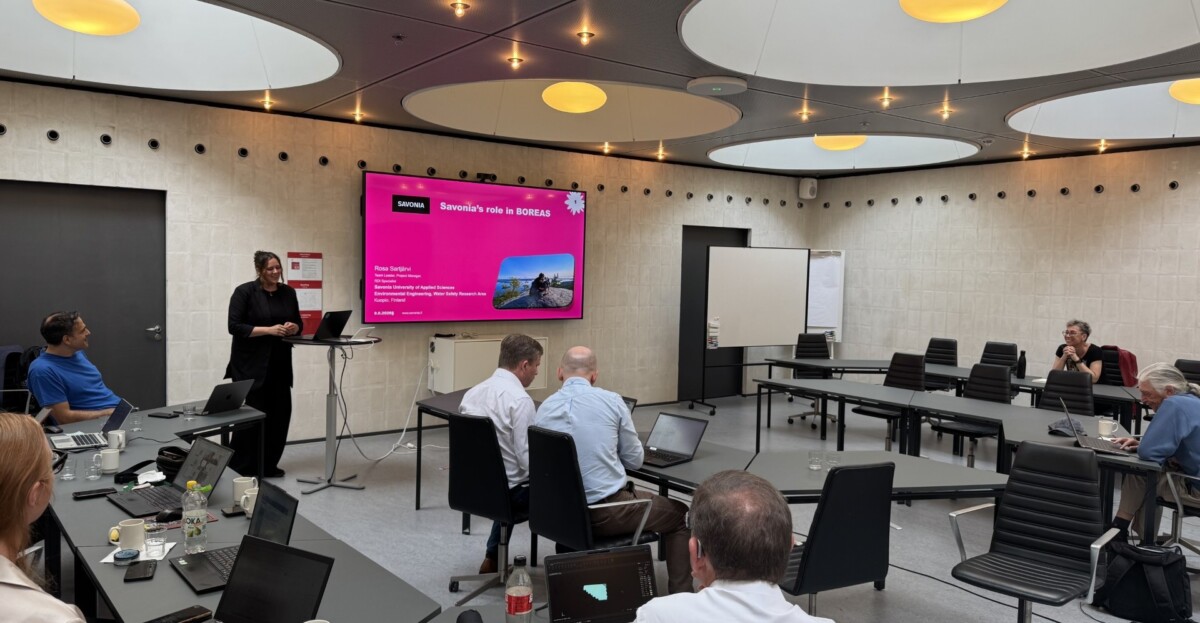
Water Safety Research Area contributes expertise in water quality monitoring, environmental assessment, sensor validation and the interpretation of monitoring data. These competencies are particularly important for identifying and mitigating mining-related environmental risks.
DigiCenter North Savo brings knowledge in digitalisation, artificial intelligence, data management and digital solutions that support real-time monitoring and decision-making.
Sustainable Societies Research Area contributes perspectives related to governance, stakeholder engagement and the social dimensions of sustainable development. These aspects are increasingly important in ensuring that technological innovations generate benefits for both industry and society.
Bio and Circular Economy Research Group adds expertise related to environmental sustainability, resource efficiency and circular economy approaches that help minimise environmental impacts and maximise resource value.
By combining expertise from these areas, Savonia can address technological, environmental and societal challenges simultaneously, an approach that is becoming increasingly necessary in large international projects.
More information and news on the project you can find on BOREAS website: https://www.boreas-mining.eu/ and by following us on LinkedIn.

Project Manager from Savonia (Water Safety Research Area): RDI Specialist Rosa Sartjärvi, rosa.sartjarvi@savonia.fi

Author
Rosa Sartjärvi, RDI Specialist, Project Manager, Team Leader, Water Safety Research Area, Savonia University of Applied Sciences
This article was prepared with the help of AI.