Savonia Article Pro: Can Pilates Help People with Chronic Low Back Pain? – What Does the Research Tell Us?
Savonia Article Pro is a collection of multidisciplinary Savonia expertise on various topics.
This work is licensed under CC BY-SA 4.0


Introduction
Have you ever experienced back pain that seems to stay longer than expected? For many people, low back pain can become a long-term problem that affects everyday activities, physical activity, and quality of life. Chronic low back pain is one of the most common musculoskeletal conditions and is a major cause of disability worldwide (World Health Organization, 2023).
For people living with persistent back pain, finding suitable ways to stay active can be challenging. Physiotherapy has an important role in supporting movement, function, and participation in everyday life. Exercise therapy is also an important part of the non-surgical management of chronic low back pain (George et al. 2021).
But what kind of exercise should a person choose?
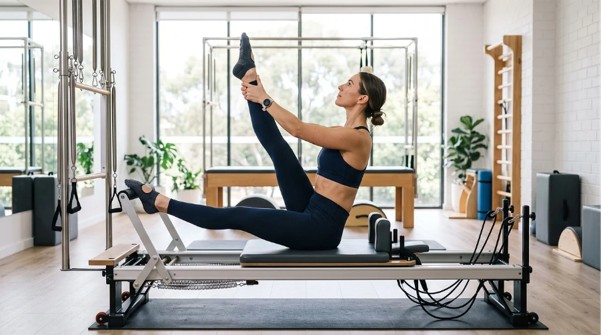
There is no single exercise programme that is suitable for everyone. One option that has received attention in physiotherapy research is Pilates. Pilates focuses on controlled movements, muscle activation, flexibility, and body control. The exercises can also be adapted to different levels of physical ability and individual needs.
This article was prepared as part of the Professional in Physiotherapy course within the physiotherapy degree programme. The article represents students’ work completed as part of the evidence-based physiotherapy component of the course. During the course, students work collaboratively in small groups to practise the key stages of a systematic review process by conducting a mini review. This includes systematic literature searching, critical appraisal using the PEDro Scale, data synthesis, and reporting the findings in the form of a scientific manuscript.
The aim of this mini literature review was to examine the effects of Pilates-based exercise on pain, disability, and physical function in adults with chronic non-specific low back pain. We focused on findings from randomized controlled trials to explore whether Pilates-based exercise could be a useful approach in the physiotherapy management of chronic low back pain.
Methods
The literature search was conducted on 26 August 2026 using the PubMed and PEDro databases. The search strategy was developed using the PICO framework, which was used to define the population, intervention, comparison, and outcomes relevant to the research question: Population (P): Adults with chronic non-specific low back pain, Intervention (I): Pilates-based exercise, Comparison (C): Usual care or other minimal interventions, such as advice or information and Outcomes (O): Pain, disability, physical function, flexibility, balance, and quality of life.
The search included terms such as “Pilates”, “Pilates-based exercise”, “chronic low back pain”, “non-specific low back pain”, and “randomized controlled trial”. The search terms were selected to identify studies relevant to Pilates-based exercise and the management of chronic low back pain. The PubMed search yielded 34 records. Studies were screened according to predefined inclusion and exclusion criteria. Eligible studies had to be randomized controlled trials involving adults aged 19 or older with chronic non-specific low back pain. They also had to include a Pilates-based exercise intervention, a comparison group, and relevant outcomes related to health or physical function.
Studies focusing on acute low back pain, specific spinal disorders, and neurological conditions were excluded. Reviews, case reports, observational studies, and studies without a comparison group were also excluded. Only studies published in English were considered. Following the screening process, 25 studies were considered eligible. Four randomized controlled trials were selected for detailed appraisal. The selection was based on the relevance of the studies to our research question and the requirements of the mini literature review assignment. The selected studies were conducted by Rydeard et al. (2006), Natour et al. (2015), Valenza et al. (2017), and Miyamoto et al. (2018).
Randomized controlled trials were selected because this study design allows the effects of an intervention to be compared with those of a control condition and can provide useful evidence about the potential effects of exercise interventions. This was considered relevant to the present review because the aim was to examine whether Pilates-based exercise may influence pain, disability, and physical function in people with chronic non-specific low back pain. Exercise is also recognised as an important component of non-surgical management for chronic primary low back pain, supporting the relevance of examining exercise-based approaches from a physiotherapy perspective (World Health Organization, 2023). The methodological quality of the trials included was therefore considered important when interpreting their findings.
The methodological quality of the included studies was assessed using the PEDro Scale (Physiotherapy Evidence Database). The scale is designed to assess important aspects of the methodological quality of randomized controlled trials, including random allocation, allocation concealment, baseline comparability, blinding, intention-to-treat analysis, follow-up, and statistical reporting (PEDro, n.d.). The PEDro Scale was used to support systematic appraisal of the included studies and to consider the methodological quality of the evidence when interpreting the results.
Results
Across the four randomized controlled trials, Pilates-based exercise was associated with improvements in pain and disability in adults with chronic non-specific low back pain. These were the most consistent findings across the included studies. Some studies also reported improvements in physical function, flexibility, balance, and quality of life. One study additionally reported a reduction in the use of anti-inflammatory medication. The four studies included a total of 449 participants. The intervention periods ranged from four to twelve weeks. The comparison groups received different interventions, including usual care, medication alone, an information leaflet, or an advice booklet.
Rydeard et al. (2006) investigated the effects of a four-week Pilates-based therapeutic exercise programme. Compared with usual care, participants in the Pilates group showed greater improvements in pain and functional disability. Improvements in disability were also maintained during follow-up assessments up to twelve months after the intervention. Natour et al. (2015) examined Pilates combined with medication and compared this with medication alone. The Pilates group showed greater improvements in pain, physical function, and quality of life. The study also reported reduced use of anti-inflammatory medication among participants who completed the Pilates programme. Valenza et al. (2017) investigated the effects of an eight-week Pilates programme. Compared with participants who received an information leaflet, those who participated in Pilates showed improvements in pain, disability, flexibility, and balance. Miyamoto et al. (2018) investigated whether the frequency of Pilates training influenced the outcomes. Participants were assigned to Pilates training once, twice, or three times per week for six weeks, or to an advice booklet group. The Pilates groups showed improvements in pain and disability compared with the booklet group. Greater improvements were observed in the groups exercising two or three times per week.
The methodological quality of all four studies was assessed using the PEDro Scale. Each study received a score of 8/10, indicating good methodological quality. Participant and therapist blinding were not achieved in the included studies. Blinding can be difficult to implement in exercise-based interventions because participants and therapists are generally aware of the treatment being provided.
Conclusion
The aim of this mini literature review was to examine the effects of Pilates-based exercise on pain, disability, and physical function in adults with chronic non-specific low back pain. Based on the four randomized controlled trials included in our review, Pilates-based exercise may help reduce pain and disability. Some studies also reported improvements in physical function, flexibility, balance, and quality of life. These findings suggest that Pilates-based exercise may be a useful option in the physiotherapy management of chronic non-specific low back pain.
However, the results should be interpreted with some caution. Only four studies were included in our review, and the studies differed in their exercise programmes, intervention duration, frequency, and comparison groups. This makes direct comparisons between the studies difficult. Furthermore, the limited number of studies and follow-up periods restrict the conclusions that can be drawn about the long-term effects of Pilates-based exercise.
From a physiotherapy perspective, it is important to consider both research evidence and individual needs when planning rehabilitation. Exercise programmes should be adapted to the person’s goals, preferences, physical abilities, and everyday circumstances.
Another important aspect to consider is the need for longer follow-up periods after exercise interventions. Longer follow-up could help us understand whether the benefits of rehabilitation are maintained over time and whether people continue exercising after the supervised programme has ended. The goal of rehabilitation should not only be to reduce pain during a treatment programme, but also to encourage people to maintain an active lifestyle in the long term. Whether it is Pilates, another form of exercise, or a combination of different activities, finding an enjoyable and suitable way to stay active is essential for long-term well-being and functional ability.
Authors
References
George, S. Z., Fritz, J. M., Silfies, S. P. et al. 2021. Interventions for the Management of Acute and Chronic Low Back Pain: Revision 2021. Journal of Orthopaedic & Sports Physical Therapy 51 (11), CPG1–CPG60. Interventions for the Management of Acute and Chronic Low Back Pain: Revision 2021 – PMC
Miyamoto, G. C., Franco, K. F. M., van Dongen, J. M. et al. 2018. Different doses of Pilates-based exercise therapy for chronic low back pain: a randomised controlled trial with economic evaluation. British Journal of Sports Medicine 52 (13), 859–868. Different doses of Pilates-based exercise therapy for chronic low back pain: a randomised controlled trial with economic evaluation | British Journal of Sports Medicine
Natour, J., Cazotti, L. A., Ribeiro, L. H., Baptista, A. S. & Jones, A. 2015. Pilates improves pain, function and quality of life in patients with chronic low back pain: a randomized controlled trial. Clinical Rehabilitation 29 (1), 59–68. Pilates improves pain, function and quality of life in patients with chronic low back pain: a randomized controlled trial – Jamil Natour, Luciana de Araujo Cazotti, Luiza Helena Ribeiro, Andréia Salvador Baptista, Anamaria Jones, 2015
PEDro. n.d. Physiotherapy Evidence Database. Available at: https://pedro.org.au/
Rydeard, R., Leger, A. & Smith, D. 2006. Pilates-based therapeutic exercise: effect on subjects with nonspecific chronic low back pain and functional disability: a randomized controlled trial. Journal of Orthopaedic & Sports Physical Therapy 36 (7), 472–484. Pilates-Based Therapeutic Exercise: Effect on Subjects With Nonspecific Chronic Low Back Pain and Functional Disability: A Randomized Controlled Trial | Journal of Orthopaedic & Sports Physical Therapy
Valenza, M. C., Rodríguez-Torres, J., Cabrera-Martos, I., Díaz-Pelegrina, A., Aguilar-Ferrándiz, M. E. & Castellote-Caballero, Y. 2017. Results of a Pilates exercise program in patients with chronic non-specific low back pain: a randomized controlled trial. Clinical Rehabilitation 31 (6), 753–760. (PDF) Results of a Pilates exercise program in patients with chronic non-specific low back pain: a randomized controlled trial
World Health Organization. 2023. WHO guideline for non-surgical management of chronic primary low back pain in adults in primary and community care settings. Geneva: World Health Organization. WHO guideline for non-surgical management of chronic primary low back pain in adults in primary and community care settings
Image source: Pixabay
Artificial intelligence (ChatGPT) was used for language editing, translating English-language articles, and summarizing their key points.
Authors
Jesse Hakala, Physiotherapy student, Savonia University of Applied Sciences
Saga Melander, Physiotherapy student, Savonia University of Applied Sciences
Jecilia Taavitsainen, Physiotherapy student, Savonia University of Applied Sciences
Heidi Kotilainen, Physiotherapy student, Savonia University of Applied Sciences
Marja Äijö, PhD, Principal lecturer of gerontology and rehabilitation, Savonia University of Applied Sciences
This article was prepared with the help of AI.