Savonia Article Pro: From SoilHealth research and innovation to lasting impact
Savonia Article Pro is a collection of multidisciplinary Savonia expertise on various topics.
This work is licensed under CC BY-SA 4.0


Lessons from Waste4Soil and SOILPROM at the Soils for Europe Conference 2026
Healthy soils require more than promising technologies. Evidence presented at the Soils for Europe Conference in Coimbra shows that research, co-creation, sustainable business models, stakeholder trust, investment readiness and enabling policy are needed to translate SoilHealth research into solutions that can be adopted and sustained beyond individual projects [2–6,15,18,24–27].
A European meeting point for SoilHealth solutions
SoilHealth refers to the continued capacity of soil to function as a living ecosystem that sustains biodiversity, supports food and biomass production, regulates water and nutrient cycles, stores carbon, filters pollutants and contributes to climate resilience, human well-being and wider ecosystem services [1].
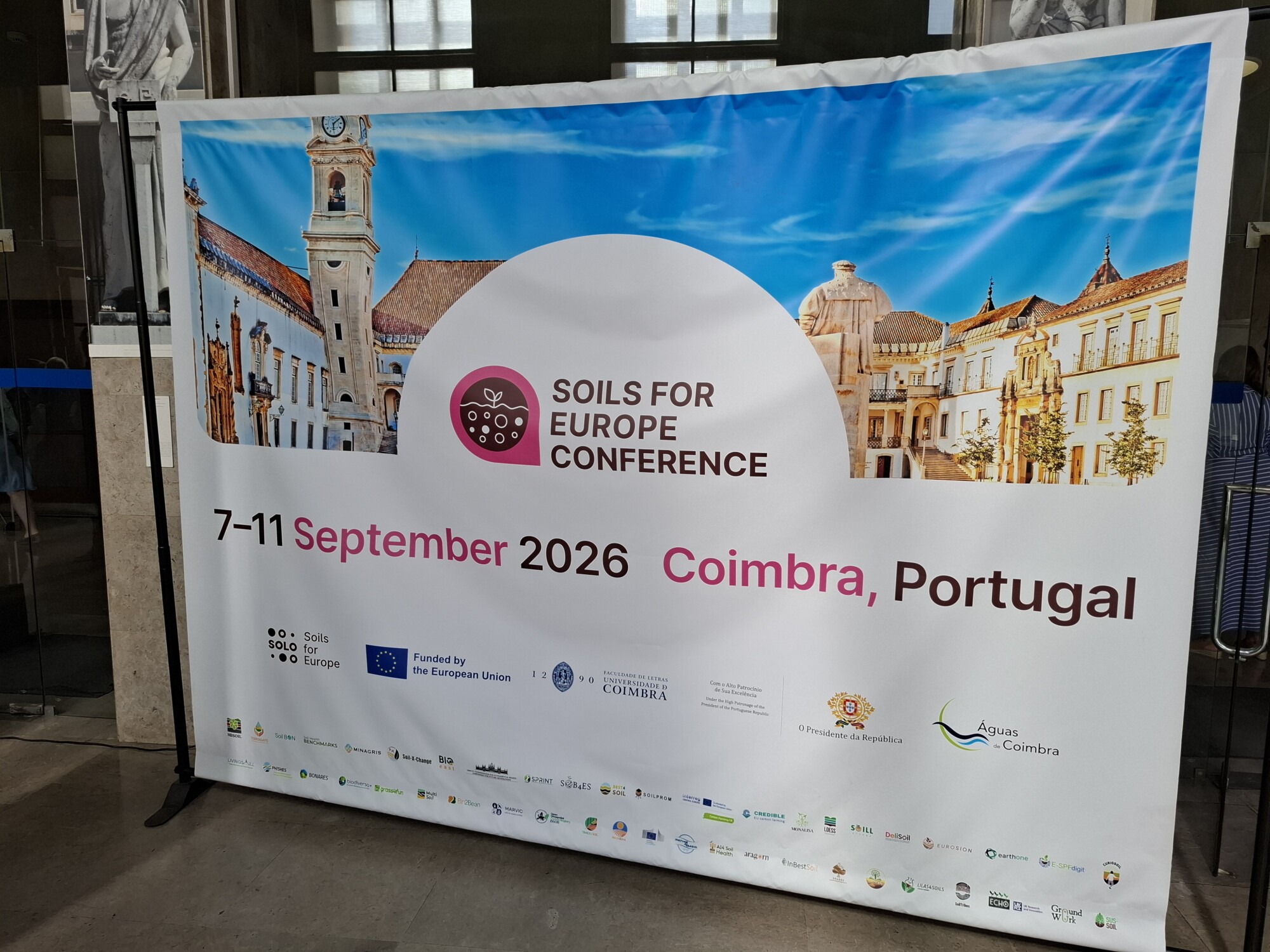
The Soils for Europe Conference was held at the University of Coimbra from 7 to 11 September 2026 and was co-organised by multiple Mission Soil projects [2,25,26,28, and it engaged more than 60 European soil-related projects and initiatives. The programme addressed all Mission Soil objectives; and a dedicated Living Labs and Project Fair created space for exchange among researchers, policymakers, farmers, land managers, civil-society organisations, industry representatives and practitioners [28–30]. The Mission Soil Platform described the conference as a forum for pan-European knowledge exchange and collaboration, while the EUSO newsletter extended event information to its European community of soil experts and stakeholders [26,31]. These sources substantiate broad cross-project and cross-sector reach.
Waste4Soil: business-model readiness needs to be improved
Waste4Soil develops technological and methodological solutions for recycling food-processing residues into local, bio-based soil improvers. The project combines ten solutions with seven Emerging European Living Labs, creating a setting in which technology development, stakeholder engagement and circular business models can advance together [3,9].
The Coimbra oral presentation, “Developing SoilHealth Business Models: Learnings from the DeliSoil-Waste4Soil Joint Workshop”, described a structured co-creation pathway. Business cases clarify their context and draft an initial Business Model Canvas. Ideation with the case owner is followed by expert assessment, model refinement and the development of a Value Proposition Canvas [4,10]. A post-conference Waste4Soil update highlighted the same core message: viable business models, new value chains and co-creation are needed to turn circular soil innovations into lasting impact [18].
The workshop’s business-model discussion also connects with the EU Soil Observatory (EUSO) Stakeholders Forum [24]. EUSO is the European Commission’s EU Soil Observatory, coordinated through the Joint Research Centre and the European Soil Data Centre. It serves as an EU-level platform for harmonised soil data, knowledge, monitoring, research and innovation, and policy support. Its annual Stakeholders Forum brings together policymakers, scientists, practitioners, local actors, civil-society organisations and citizens to exchange evidence and practical approaches for safeguarding and restoring soils. The 2026 Forum included an in-person component at the Soils for Europe Conference in Coimbra, creating a relevant European setting for linking the Waste4Soil–DeliSoil business-model workshop lessons on investment readiness, stakeholder trust, policy conditions and the scaling of Living Lab solutions.
The workshop showed that readiness is multidimensional: a soil improver or digital tool must be technologically credible, commercially meaningful, institutionally feasible and socially acceptable. Early business-model work helps test assumptions, identify missing capabilities and clarify the value offered to users, buyers, investors and public actors [4,10,11,18].
From barriers to policy action
A second Waste4Soil contribution formed part of the Bin2Bean Final Event. Ahead of the event, Waste4Soil communication introduced the participating experts and framed the session around waste valorisation, nutrient recovery, circular business models, Living Labs and SoilHealth solutions [17].
Bin2Bean presented a Policy Brief closing the policy gap from organic waste collection to soil health: Bio-waste valorisation will not succeed through collection targets alone. It requires a policy framework that supports clean feedstock, reliable processing, trusted products, and practical uptake by farmers. The intervention itself identified regulatory uncertainty and fragmentation, trust and quality concerns, limited market acceptance, weak business and investment readiness, and economic risk for adopters as central uptake barriers [5,6].
This diagnosis leads to a combined policy and market-uptake agenda. Harmonised guidance can make market entry for recovered nutrients more predictable. Policy (Common Agriculture Policy CAP of the European Union) can support circular fertilisers and regional nutrient-circularity infrastructures. At the market level, independent quality evidence, clear labelling, field trials, farm visits and Living Lab demonstrations can make benefits visible. Co-creation should include farmers, processors, advisers, public authorities, investors and industry from the beginning [5,6].
Waste4Soil and Bin2Bean contributions indicate that circularity must be expressed as concrete user value—such as improved SoilHealth, productivity, compliance, reduced dependency on imported inputs and climate benefits—and supported by financing arrangements that reduce adoption risk [5,6,17,18].
SOILPROM: designing tools with users and for continuity
SOILPROM approaches SoilHealth through modelling and decision support. It develops an open Modelling Platform for scientists and a Decision Support Tool for practitioners, with attention to pollutant transport, scenario development and decisions across the soil-water-air continuum [7,8].
The project is organised around nine pilot use cases across Europe, selected to represent different soil, water, land-use and pollution contexts. These cases address pollution challenges linked to PFAS, microplastics, pesticides, nutrients and metals, and they are used to validate modelling approaches under field conditions while connecting scientific outputs with the needs of local stakeholders [7,8,13].
Within SOILPROM, the Sustainable Societies and Food System Research Fields contributes stakeholder engagement and sustainable business modelling. Structured mapping identifies relevant users and actors. Repeated workshops for each use case create dialogue around needs, scenarios and validation. An adaptable engagement toolbox supports partners operating in different local contexts [7,8,14].
Long-term sustainability is addressed through PREPSOIL business model and value proposition. Rather than searching for one perfect model, portfolio thinking can compare and combine options that balance user value, governance, resources, policy alignment and maintainability. This helps make continuity a design question from the start, not an unresolved issue at project closure [8,10].
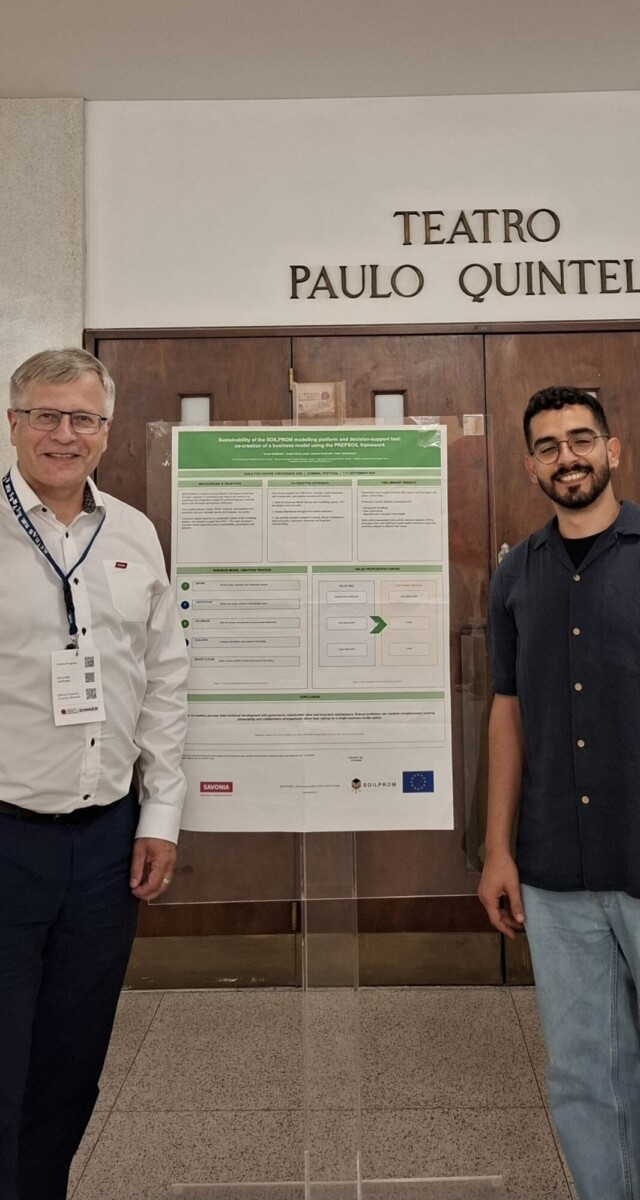
This co-creation approach was presented at the Soils for Europe Conference 2026 in the SOILPROM poster [15].
SOILPROM–PHISHES cooperation through digital platforms
At the conference, SOILPROM and PHISHES co-hosted the interactive session “Modelling Against Soil Pollution Via Digital Platforms” on 10 September 2026 from 14:00 to 15:20 local time [21,22]. The joint session made the cooperation between the two Mission Soil projects visible within the formal programme and focused attention on digital modelling approaches for addressing soil pollution.
The collaboration is relevant because both projects develop digital environments that connect soil data, modelling and decision support. SOILPROM is developing an open Modelling Platform for scientists and a Decision Support Tool for practitioners [7,8]. PHISHES is developing the PHISHES Digital Platform to support predictive assessment of how soil use, contamination, climate change and mitigation or adaptation measures affect soil functions and associated ecosystem services [23]. The co-hosted session therefore complemented SOILPROM’s poster and stakeholder-engagement activities by positioning digital platforms as practical interfaces between scientific models, scenario analysis and decisions for SoilHealth protection.
Applied research for Mission Soil cooperation
The European Commission’s EU Mission “A Soil Deal for Europe” is one of the five Horizon Europe Missions. Its goal is to lead the transition towards healthy soils by 2030 by establishing 100 Living Labs and Lighthouses in rural and urban areas, funding mission-oriented research and innovation, developing a harmonised European soil-monitoring framework and increasing soil literacy in society [16].
Across Waste4Soil and SOILPROM, the Sustainable Societies and Food System Research Fields provide applied research capabilities for sustainability transition, including facilitation, stakeholder engagement, sustainable and circular business models, social acceptance, decision analysis and impact-oriented co-creation. These capabilities connect food systems, circular bioeconomy and European SoilHealth networks with practical transition pathways that can be tested, refined and sustained beyond individual projects [7–9,14].
The conference evidence supports an applied-research model in which Living Labs provide real-world testing environments, business-model methods clarify value creation and continuity, stakeholder processes strengthen relevance and legitimacy, and policy dialogue addresses systemic barriers beyond the reach of individual projects [2,4–6,10,16,24–26].
Main outputs and implications
- Business-model readiness: The Waste4Soil–DeliSoil workshop produced a structured pathway from an initial Business Model Canvas through expert assessment and refinement to a Value Proposition Canvas. The process helps projects assess technical, commercial, institutional and social readiness early [4,10,11,18].
- Policy and market uptake: The Waste4Soil and Bin2Bean contributions identified regulatory fragmentation, quality and trust concerns, limited market acceptance, weak investment readiness and adopter risk as connected barriers requiring coordinated policy, evidence, demonstration and financing responses [5,6,17,18].
- Digital tools and continuity: SOILPROM demonstrated how user engagement, European use cases on soil pollution, and business model creation can support the long-term governance and maintenance of modelling and decision-support tools [7,8,10,13,15].
- Cross-project cooperation: The SOILPROM–PHISHES session connected modelling, soil pollution data, predictive assessment and decision support, while the EUSO Forum linked project-level learning with European soil monitoring, policy and stakeholder exchange [21–24].
- Network impact and visibility: The conference connected more than 60 European projects, Living Labs and sectoral stakeholders, on Mission Soil objectives [28–30]. Promotion through the Mission Soil Platform, EUSO and by participating projects broadened visibility beyond those physically present in Coimbra [26,27,31–33]. Together, these channels created credible opportunities for knowledge exchange, collaboration and uptake across SoilHealth and climate-adaptation networks.
- Lasting SoilHealth impact depends on combining credible science with co-created value propositions, trusted evidence, enabling policy, viable governance and sustained cross-project collaboration. This integrated approach also connects SoilHealth with food security, climate resilience, regional vitality and Europe’s capacity to adapt to environmental change [1,5,6,14,16,24–27].
Useful links
- Waste4Soil: https://www.waste4soil.eu/
- SOILPROM: https://soilprom.eu/
- DeliSoil: https://delisoil.eu/
- PHISHES: https://www.phishes-project.eu/
- Bin2Bean: https://www.bin2bean.eu/
- PREPSOIL: https://prepsoil.eu/
- Mission Soil Platform: https://mission-soil-platform.ec.europa.eu/
- Soils for Europe Conference 2026: https://soils4europe2026.eu/
Author
Tuomo Eskelinen, Research Manager, Sustainable Societies, Savonia University of Applied Sciences
This article was prepared with the help of AI.
References
[1] European Commission, Directorate-General for Research and Innovation. Caring for soil is caring for life. Publications Office of the European Union, 2020. https://op.europa.eu/
[2] Soils for Europe Conference 2026. Official conference website and programme, Coimbra, Portugal, 7–11 September 2026. https://soils4europe2026.eu/
[3] Waste4Soil. Waste4Soil at the Soils for Europe Conference and project information. https://www.waste4soil.eu/ ; https://mission-soil-platform.ec.europa.eu/project-hub/waste4soil
[4] Eskelinen, T., Palojärvi, A., Taipale, J., Sallinen, I., Hoxha-Jahja, A., Farrar, D., & Proskynitopoulou, V. Developing SoilHealth Business Models: Learnings from the DeliSoil-Waste4Soil Joint Workshop. Coimbra, 2026.
[5] Eskelinen, T., & Proskynitopoulou, V. Barriers and Policy Recommendations: Preliminary Learnings from the Waste4Soil Project. Bin2Bean Final Event, Coimbra, 2026.
[6] Bin2Bean. Policy Brief, 2026.
[7] SOILPROM. About SOILPROM. https://soilprom.eu/
[8] CORDIS. SOILPROM project fact sheet, Grant Agreement 101156589. https://cordis.europa.eu/project/id/101156589
[9] Mission Soil Platform. Waste4Soil project hub. https://mission-soil-platform.ec.europa.eu/project-hub/waste4soil
[10] PREPSOIL. Business Model Canvas for Soil Living Labs and Lighthouses.
[11] Eskelinen, T., Sydd, O., Kajanus, M., et al. Fortifying Social Acceptance when Designing Circular Economy Business Models on Biowaste Related Products. Sustainability, 2022.
[12] Mustajoki, J., Liesiö, J., Kajanus, M., Eskelinen, T., et al. A portfolio decision analysis approach for selecting a subset of interdependent actions. Science of the Total Environment, 2024, 912, 169548.
[13] SOILPROM. Use-cases: European use cases addressing PFAS, microplastics, pesticides, nutrients and metals.
[14] Eskelinen, T., Kotimaa, A., Kähkönen, J., Wuorisalo, J., Kajanus, M., Leinonen, R., & Villman, K. Linking impact pathways and transition design. Open Research Europe, 2026, 6:316.
[15] Eskelinen, T., Hoxha-Jahja, A., Seremetis, G., & Szymkiewic, A. Sustainability of the SOILPROM modelling platform and decision-support tool. Poster, Coimbra, 7–11 September 2026.
[16] European Commission. EU Mission: A Soil Deal for Europe. https://research-and-innovation.ec.europa.eu/funding/funding-opportunities/funding-programmes-and-open-calls/horizon-europe/eu-missions-horizon-europe/soil-deal-europe_en ; Mission Soil Platform: https://mission-soil-platform.ec.europa.eu/
[17] Waste4Soil Project. Meet the Waste4Soil partners speaking at the Bin2Bean Final Event. LinkedIn post, September 2026.
[18] Waste4Soil Project. Conference updates and highlights, September 2026.
[19] Rezaei, M. A fruitful week at the Soils for Europe Conference. LinkedIn post, September 2026.
[20] Soils for Europe Conference 2026. Conference communication, September 2026.
[21] SOILPROM and PHISHES. Modelling Against Soil Pollution Via Digital Platforms. LinkedIn post, September 2026. https://lnkd.in/p/d4KNFtCB
[22] Soils for Europe Conference 2026. Modelling Against Soil Pollution Via Digital Platforms. Programme session, 10 September 2026, 14:00–15:20 local time. https://soils4europe2026.eu/program-schedule/program/detail/71/modelling-against-soil-pollution-via-digital-platforms
[23] PHISHES. PHISHES Digital Platform: Predicting SoilHealth to protect ecosystems. Project website. https://www.phishes-project.eu/ ; https://phishes-pdp.eu/
[24] European Commission, Joint Research Centre. EU Soil Observatory (EUSO) and EUSO Stakeholders Forum 2026. https://esdac.jrc.ec.europa.eu/euso ; https://esdac.jrc.ec.europa.eu/euso/euso-stakeholders-forum-2026
[25] Soils for Europe Conference 2026. Official conference overview, themes, partners and programme. https://soils4europe2026.eu/
[26] Mission Soil Platform. Soils for Europe 2026 Conference event page. https://mission-soil-platform.ec.europa.eu/news-events/events/soils-europe-2026-conference
[27] Soils for Europe. Conference launch communication and livestream information, September 2026. https://www.linkedin.com/posts/soils-for-europe_soils4europe2026-solo-soils4europe2026-activity-7502643580327510016-FqaG
[28] Soils for Europe Conference 2026. Participant registration and project-affiliation categories. The registration list names more than 60 European soil projects and initiatives. https://soils4europe2026.eu/english-en/register/
[29] Soils for Europe Conference 2026. Call for Abstracts and session themes. The programme invited oral and poster contributions across the Mission Soil objectives and combined scientific, technical, policy and practitioner perspectives. https://soils4europe2026.eu/71-call-for-abstracts
[30] Soils for Europe. Conference event description and Living Labs & Project Fair. https://soils4europe.eu/events/solo-final-conference
[31] Soils for Europe. EUSO newsletter coverage of the Soils for Europe Conference 2026, documenting dissemination through the EU Soil Observatory network. https://www.linkedin.com/posts/soils-for-europe_eusoilobservatory-soils4europe2026-euso-activity-7439228654657773568-xIzj
[32] Soilscape. Soils for Europe Conference 2026 participation and sessions on art, science, community participation, Living Labs and the Project Fair. https://soilscape.eu/event/soils-for-europe-conference-2026/
[33] Agroecology Europe. Farmers’ Market at the Living Labs & Project Fair, an open public-facing activity designed to strengthen agroecological networks across regions. https://www.linkedin.com/posts/agroecology-europe_agroecology-soils4europe2026-solo-activity-7493666762073321472-jqmL