Savonia Article Pro: Entrepreneurial mobility as a pathway toward a European-native environment for commercialization
Savonia Article Pro is a collection of multidisciplinary Savonia expertise on various topics.
This work is licensed under CC BY-SA 4.0


Europe needs entrepreneurial learning that moves beyond the classroom
The future of work is changing rapidly. Technological development, artificial intelligence, new forms of work and shifting skills needs are challenging higher education institutions to rethink how students learn, build professional identity and enter working life.
For higher education, this is not only a pedagogical question. It is also an innovation policy question. How can institutions create conditions where students do not only study entrepreneurship, but actively build solutions, test ideas, develop prototypes and connect with ecosystems across Europe?
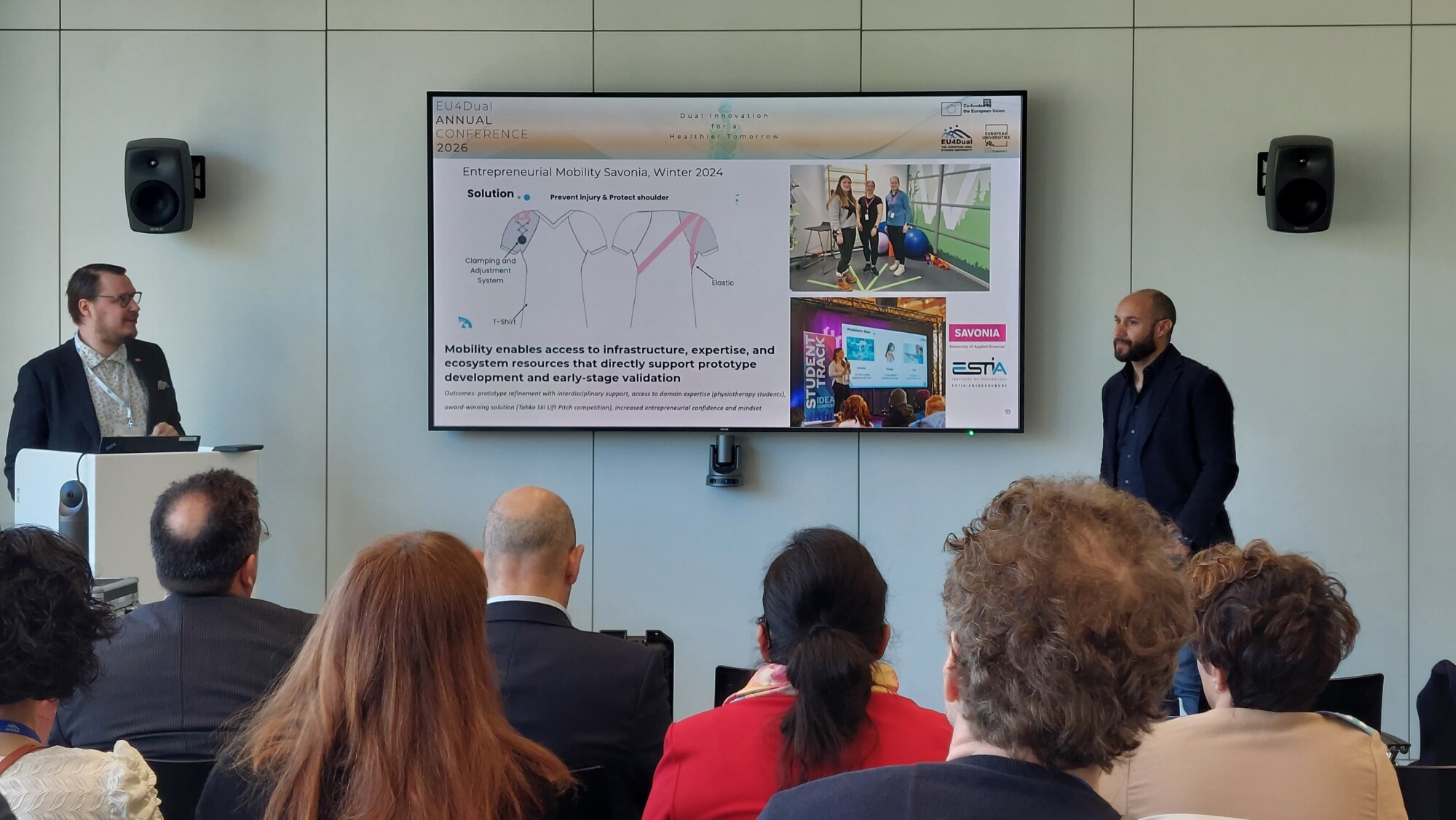
This question was at the core of the abstract “From Entrepreneurial Learning to the Future of Work: Evidence from EU4Dual Practice-Based Mobility,” presented at the EU4Dual Annual Conference 2026. The abstract examined how practice-based entrepreneurial mobility contributes to skills development, entrepreneurial identity and early career trajectories.
The key argument is that entrepreneurial mobility can become more than an exchange activity. Properly structured, it can function as an institutional model for strengthening innovation capacity, venture creation and entrepreneurial agency in European higher education.
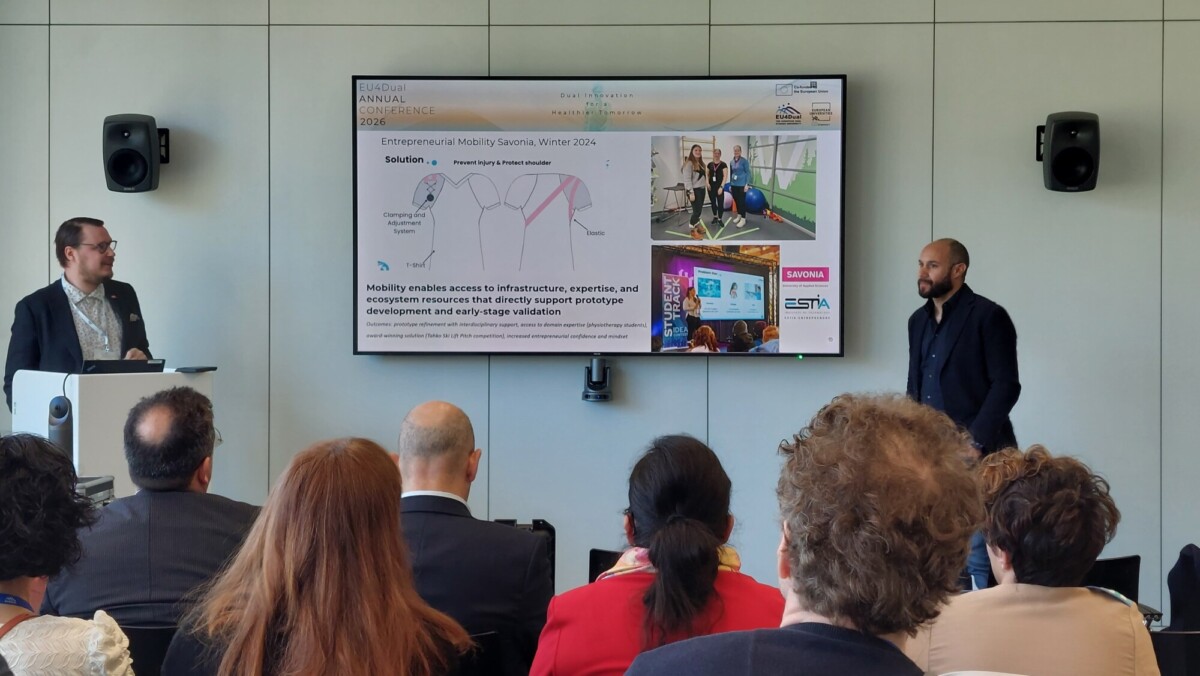
From mobility activity to innovation infrastructure: Evidence from practice-based mobility
Traditional mobility has often focused on studies, internships, cultural experience and academic credits. These remain valuable, but student entrepreneurs need a different kind of pathway. They need access to mentors, laboratories, incubators, domain expertise, test environments, customers, pitch opportunities and local startup ecosystems.
This means that entrepreneurial mobility should not be understood only as movement between countries. It should be understood as access to complementary innovation environments. A student entrepreneur may come with a business idea that is promising but still incomplete. One institution may offer business coaching, another prototyping facilities, another sector-specific expertise, and another stronger access to startup hubs, companies or market validation. The value of a European university alliance is that these strengths can be connected.
In this sense, the emerging EU4Dual model is not only about sending and receiving students. It is about building an emerging European support infrastructure where early-stage ideas can access the expertise, validation environments and networks needed for commercialization. The broader contribution lies in the shared model created between partner institutions.
The analysis in the abstract was based on early qualitative evidence from EU4Dual mobility activities since 2023, including programme documentation, participant reflections and interviews, post-activity feedback, staff exchange insights, and ten mobility cases involving ten mentors.
The analysis focused on how entrepreneurial mobility affects students’ skills, mindset and early career direction. In practice, the question was not only what students learn, but how they begin to act when they work on real entrepreneurial projects in unfamiliar environments.
This matters because European policy often emphasizes skills, employability and startup growth, while fewer practical models show how these capabilities are built in real learning environments.
Entrepreneurial mobility offers one such model. It allows students to move from classroom-based entrepreneurship toward real development work: meeting potential customers, building prototypes, validating assumptions, refining business models and communicating their ideas to external stakeholders.
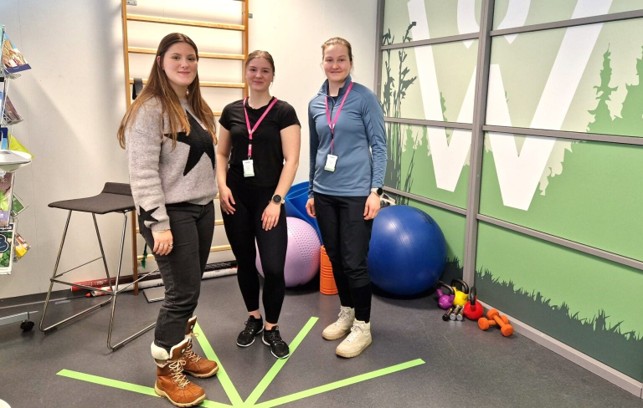
What kind of institutional model boosts new product and service development?
The cases developed within the EU4Dual context suggest that entrepreneurial mobility works best when it is structured, but not over-controlled. Before the mobility begins, the student’s idea, development stage and learning objectives need to be clarified. The hosting institution then identifies relevant resources, such as business coaches, laboratories, design expertise, sector specialists, incubator contacts, startup hubs or pitching opportunities.
During the mobility period, the student works on the project in a real ecosystem. The work may include customer discovery, business model development, service design, prototyping, testing, market validation, pitch preparation or commercialization planning. The essential point is that learning happens through action. Students do not only describe an opportunity; they try to move it forward.
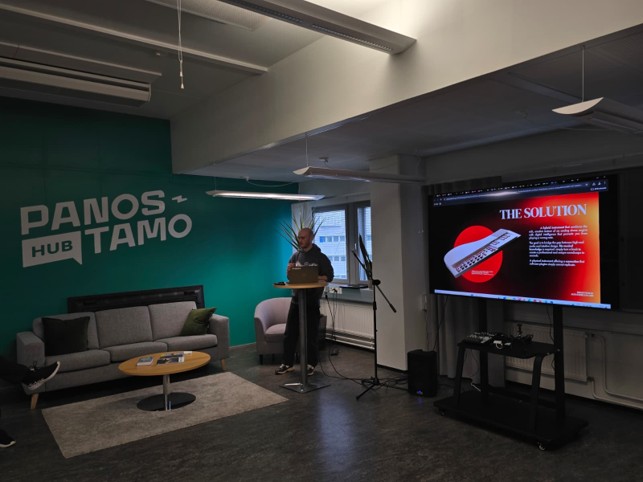
The emerging model points to a deeper institutional question: what must universities actually build if they want more entrepreneurial activity and more effective commercialization? It is important to note that innovation, in this context, is not only invention or idea generation. It becomes meaningful when ideas are tested, developed, adopted and turned into value in real operating environments.
The first requirement is structured access. Students need clear entry points to entrepreneurial support. If access to laboratories, mentors or incubators depends only on personal networks, the model remains fragile. Institutions need visible pathways that tell students where to go, who supports them and what kind of development process they can expect.
Access alone is not enough. Many startup ideas cross disciplinary boundaries. A technical product may need service design. A health solution may need clinical or physiotherapy expertise. A digital concept may need business model validation. A commercialization-oriented mobility model must therefore connect expertise across schools, departments and partner ecosystems.
This is also where test customers and early partners become important. A student entrepreneur may have a technically promising idea, but without contact with users the project can remain detached from market reality. Institutions need coaching methods that help students identify first test customers, arrange feedback situations and translate observations into product and business development decisions.
The role of coaching is especially important. Early-stage entrepreneurs need autonomy, but they also need rhythm, resources and structure. Regular mentoring helps students set priorities, test assumptions and avoid losing time with unclear goals. The coach should not take ownership of the idea, but should help the entrepreneur make better decisions.
Entrepreneurship is fundamentally about recognizing and acting on opportunities, mobilizing resources, creating value for users and customers, and developing a sustainable business or impact model by entrepreneurial actors. For this reason, practice-based mobility must include real resources for action. It is not enough to encourage students or researchers to innovate. They need access to tools, spaces, materials, expertise and feedback environments that make development possible.
Ecosystem exposure adds another layer of realism. Pitch events, startup hubs, companies, incubators and external experts create productive pressure. Students learn to communicate beyond the university, defend their assumptions and receive feedback from people who are not responsible for giving them grades.
Recognition is also necessary if the model is expected to scale. If entrepreneurial activities such as prototyping, market validation, business model development and pitching remain outside formal learning structures, mobility will stay marginal. Institutions need clearer ways to recognize entrepreneurial work through credits, internships, modules or learning tracks.
Policy relevance: from skills to startup capacity
At the European level, the model connects directly with current policy priorities. The Union of Skills emphasizes the need for people to adapt, reskill and remain competitive in a rapidly changing world. The EU Startup and Scaleup Strategy emphasizes Europe’s need to become a stronger environment for launching and growing technology-driven companies.
Entrepreneurial mobility sits between these agendas. It develops skills, but not in isolation. It connects skills to venture creation, innovation ecosystems and early career development.
This is where universities can have a concrete role: they can turn entrepreneurship from an abstract competence into a practical development pathway. Startups do not emerge only from funding instruments or policy statements. They emerge from people who have the competence, confidence, networks and environment to act. Higher education institutions can build these conditions if entrepreneurship is treated as a practical learning pathway, not only as a subject.
A European university alliance can add another layer: it can help students think beyond national markets from the beginning. When entrepreneurial students test ideas across borders early, Europe becomes part of their mindset before the company is fully formed. This may support the emergence of European-native startups: ventures that see Europe not as a later expansion market, but as a natural starting environment.
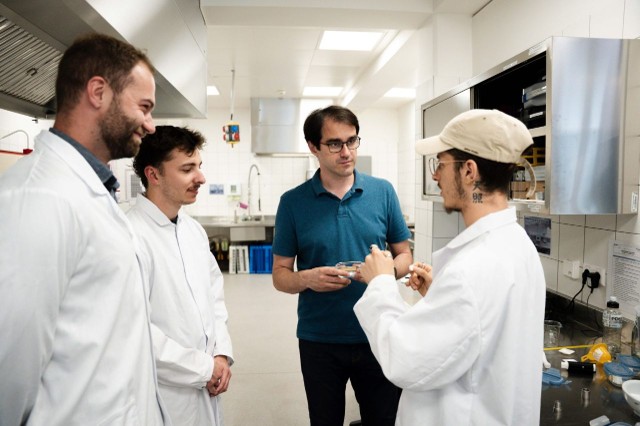
Building a European-native environment for commercialization
Building a European-native environment for commercialization requires more than good intentions and individual mobility cases. The model needs reliable hosting structures, practical resources, institutional ownership and a clear balance between autonomy and support.
Hosting quality is a central requirement. Students need more than a welcoming ecosystem. They need workspaces, local orientation, access rights to resources, mentor availability and practical support for connecting with staff, laboratories and external partners. Even small logistical issues can weaken the learning experience and slow down development. Funding and resource design also need attention. Entrepreneurial students may need travel and accommodation support, but also small prototyping budgets, access to materials, testing environments and market validation activities. Mobility funding should reflect the realities of venture development, not only the costs of physical movement.
The model also needs stronger institutional ownership. Entrepreneurial mobility cannot depend only on motivated individuals. To scale, it needs shared processes, clear roles and commitment from schools, incubators, international services and research and development units. At the same time, the model must protect the student entrepreneur’s ownership. Students must be treated as entrepreneurs, not only as exchange students. Early-stage founders need structured feedback and help navigating unfamiliar environments, but the project must remain theirs. The right balance is structured autonomy: the student owns the project, while the institution creates the conditions for progress.
Finally, the model needs stronger evidence as it develops. Much of the current understanding comes from participant reflections, programme documentation and mentor observations. These are valuable, but future research should include stronger external stakeholder perspectives and longitudinal follow-up. We need to know what happens after mobility: whether students continue developing the venture, create companies, enter other incubators or find employment in innovation-related roles.
A practical route toward stronger innovation culture
The most important insight from the EU4Dual practice-based mobility work is that entrepreneurial capacity grows when students are placed in real development situations with access to real ecosystems. This has implications for how universities design entrepreneurship education. Instead of asking only what courses students should take, institutions should ask what environments students should enter, what resources they should access, what feedback they should receive and what evidence of progress they should produce.
Entrepreneurial mobility can therefore become a tool for institutional innovation. It helps universities connect teaching, research and development, business services, international partnerships and regional ecosystems. It also helps staff learn from each other across partner institutions and develop shared practices for coaching, prototyping, incubation and venture support.
For Savonia and the EU4Dual network, this work points toward a more ambitious model: a European pathway where student entrepreneurs can move between ecosystems, develop ideas with multidisciplinary support and build ventures with an international mindset from the beginning.
The EU4Dual cases suggest that promising ideas exist in Europe; the larger challenge is to build environments where they can be tested in a practice-oriented way, supported with deep enough expertise, commercialized and scaled in a growth-oriented manner. Practice-based entrepreneurial mobility offers one concrete way to support this, especially at the early stage.
Authors
Matti Laitinen, RDI Expert, Business Center North Savo, Savonia University of Applied Sciences
Dr Jérémie Faham, Startup Manager, ESTIA Entreprendre / Hub ESTIA, ESTIA Institute of Technology
FH-Prof. DI Dr. Bojan Jovanovski MSc, Senior Lecturer, Institute of International Management, FH JOANNEUM
Arnaud Catinot, Startup Manager, ESTIA Entreprendre / Hub ESTIA, ESTIA Institute of Technology