Savonia Article Pro: From business concept to first pitch in EU4Dual entrepreneurial exchange: Entrepreneurial mobility as a pathway for applied innovation at Savonia University of applied sciences
Savonia Article Pro is a collection of multidisciplinary Savonia expertise on various topics.
This work is licensed under CC BY-SA 4.0


Entrepreneurial mobility as applied learning
From 26 January to 31 March 2026, Savonia University of Applied Sciences hosted a new EU4Dual Entrepreneurship Mobility participant, continuing the development of an European model where students work on their own business ideas in a real innovation environment.
The mobility model builds on earlier EU4Dual entrepreneurship exchanges at Savonia, where students from other EU4Dual university have developed early-stage ventures through coaching, prototyping, market exploration, and pitching. The aim is not only to offer an international experience, but to create a structured entrepreneurial learning process where the student develops both the business idea and their own professional identity.
This time the participant was Alexandre Esnard, an engineering student from the engineering school of ESTIA (France). His project focuses on developing an intuitive analog instrument designed to help creators compose cinematic soundtracks instantly, without requiring formal music theory knowledge.
A personal project rooted in music and engineering
Alexandre’s entrepreneurial idea combines two strong personal interests: engineering and music. In his interview, he describes his business interest as being “about music and electronic music” and explains that the mobility offered a different kind of learning opportunity compared to a conventional company internship. Instead of performing basic technical tasks, he wanted to build something of his own from the ground up.
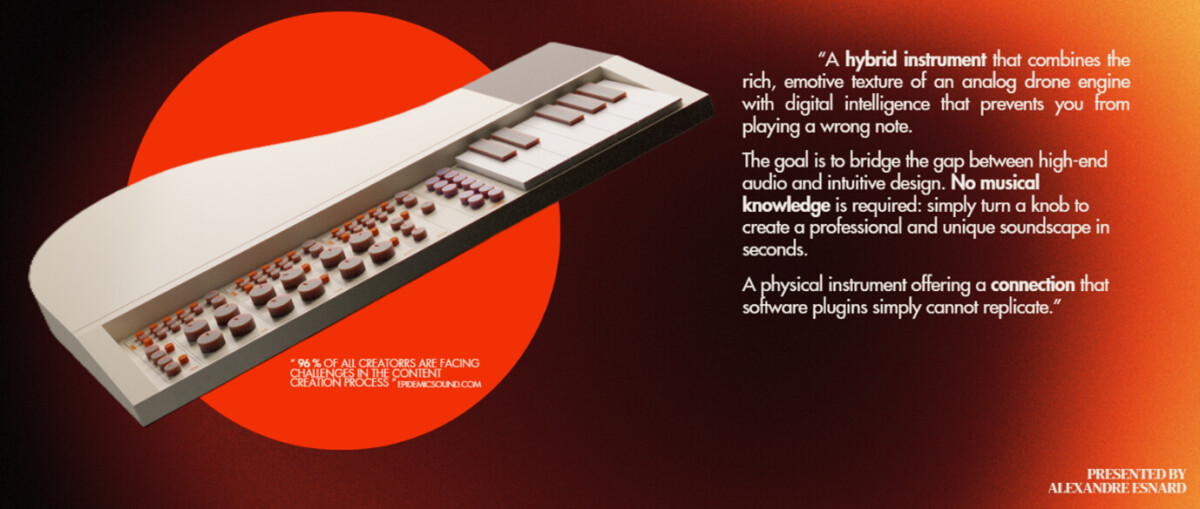
The idea behind Lethe Music is clear: many visual creators can produce high-quality video content with accessible tools, but sound design and music composition remain difficult and time-consuming. Alexandre’s project addresses this gap by developing an instrument that helps creators build emotional, cinematic soundscapes through a simple and physical user interface.
The project material describes this as a response to the needs of emerging creators who want a distinctive “signature sound” but do not necessarily have the musical training or technical knowledge required to use professional audio equipment.
Starting before arrival: shared understanding and expectations
The process began before Alexandre arrived in Kuopio, Finland. Savonia’s team met online with Alexandre and with Start-up Manager from Estia entrepreneurs Jérémie Faham to understand the business idea, clarify the objectives of the mobility, and explain the development process used during the exchange.
This early preparation was important. Entrepreneurial mobility is not a passive visit; it requires a shared understanding of what will be developed, what kind of support is available, and what kind of progress can realistically be achieved during a limited period. In Alexandre’s case, the work included both business development and technical prototyping.
After arriving in Kuopio, the first step was to examine the development case: what had already been done, what still needed to be validated, and which Savonia resources could support the next phase. This included looking at the commercialization pathway, available mentoring, and opportunities to connect the project with Savonia’s engineering expertise.
Structuring the business case
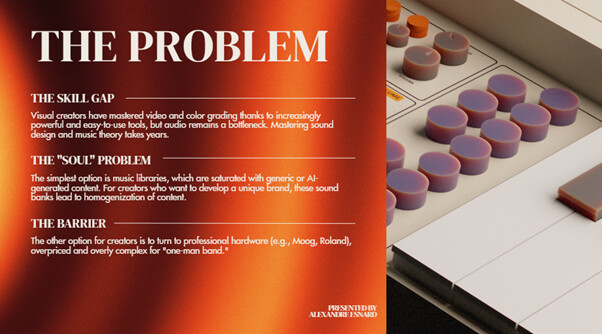
During the mobility, the business idea was developed through a pitch deck structure familiar from Savonia’s entrepreneurship support activities. The key areas included the problem, solution, market potential, business model, competitors, team, development plan, and future needs. This structure helped Alexandre move from a technically interesting concept toward a more understandable business case.
The work focused especially on clarifying the customer problem. Lethe Music is not just an electronic instrument project. It is positioned as a tool for content creators, filmmakers, digital artists, podcasters, and independent creators who want to strengthen the emotional quality of their work through original sound.
The value proposition became sharper during the process: The new product helps creators produce cinematic sound without requiring music theory, complex software, or expensive professional hardware. At the same time, the business case required careful thinking about market entry. The project material identifies emerging creators as a potential target group: creators who already have visual production skills and are ready to invest in tools that improve their professional identity and production value.
From idea to first prototype
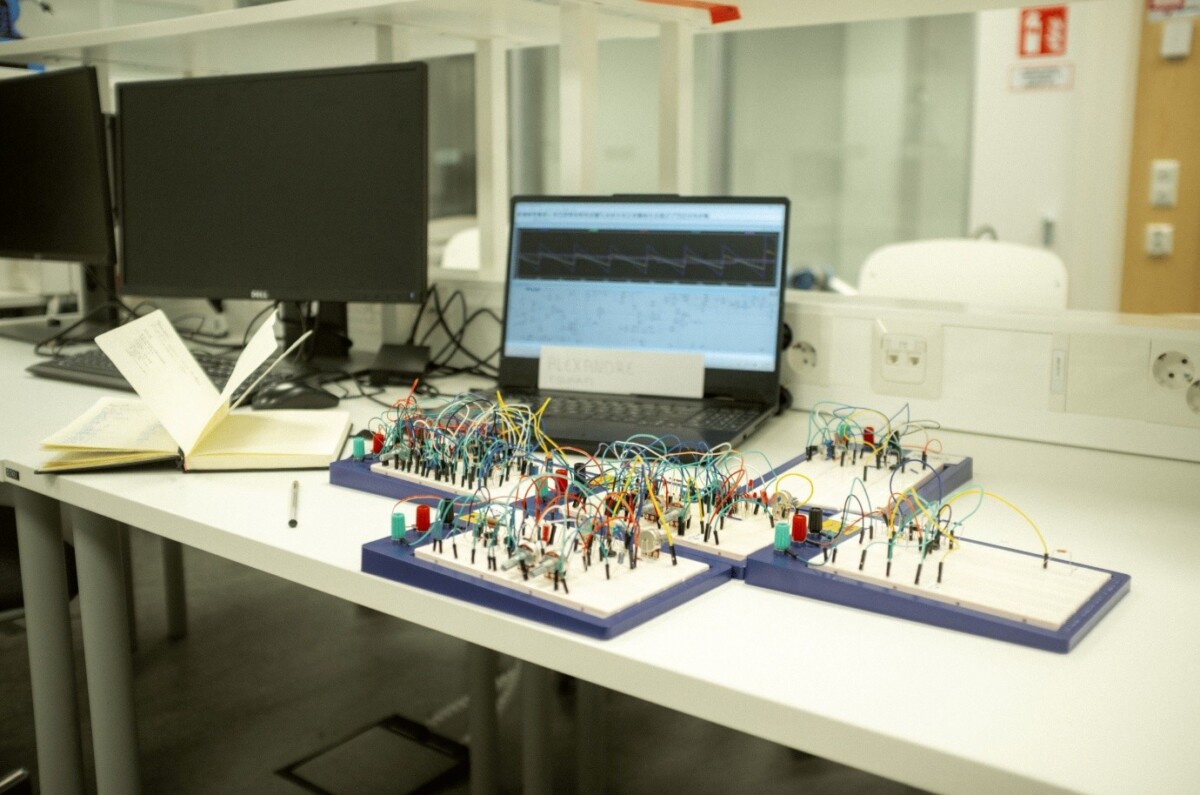
A central part of Alexandre’s mobility was technical development. With support from Savonia’s electronic engineering department, he started building the first prototype and working with prototype components.
Alexandre explains that he worked with electronic parts himself: thinking through the process, choosing components, testing them on a breadboard, soldering, and checking functionality with measurement tools. He describes the breadboard as a practical testing platform where components can be placed and tested before moving toward a more final circuit.
This practical phase was important because it connected his engineering studies directly with entrepreneurial development. In classroom exercises, technical work can sometimes remain separate from the purpose of the product. In this mobility, the technical choices were linked to the user experience, the product concept, and the business model.
The Lethe Music flyer describes the instrument’s technical direction: drone voices for atmospheric sound, a VCO oscillator for melodic accuracy, filtering and amplification for shaping the sound, tonal harmony logic, arpeggiator patterns, and calibration for musical precision.
Iterating the plan through feedback
As the prototype work progressed, the business plan also evolved. Alexandre iterated the product development plan and business plan several times, using the pitch deck as a framework for making the idea clearer.
This iterative process is one of the key learning points of entrepreneurial mobility. The work is not only about writing a plan or building a prototype. It is about moving back and forth between user needs, technical feasibility, business viability, and communication.
In Alexandre’s case, the process included questions such as:
What problem does the product solve for creators?
Who is the first realistic customer group?
What makes the product different from existing tools?
What should be demonstrated in the first prototype?
What evidence is needed before moving toward manufacturing?
These questions helped transform the project from a personal technical idea into a more structured venture concept.
Learning independence, structure, and focus
One of Alexandre’s strongest reflections was that the mobility required him to start from zero and structure his own work. He noted that two months may sound long, but it becomes short when the student must define the idea, modify it, create a prototype, test it, and make it work.
This is where coaching played an important role. Matti Laitinen, the innovation advisor from Savonia university of applied sciences and EU4Dual professional in entrepreneurship and innovation created the commercialisation and production tasks to structure the development steps. The role of the coach was not to take ownership of the project, but to help the student clarify priorities, set goals, and maintain progress.
This kind of support is central to entrepreneurial education. Early-stage entrepreneurship often contains uncertainty, unfinished ideas, and incomplete evidence. A structured coaching process helps the student work inside this uncertainty without losing direction.
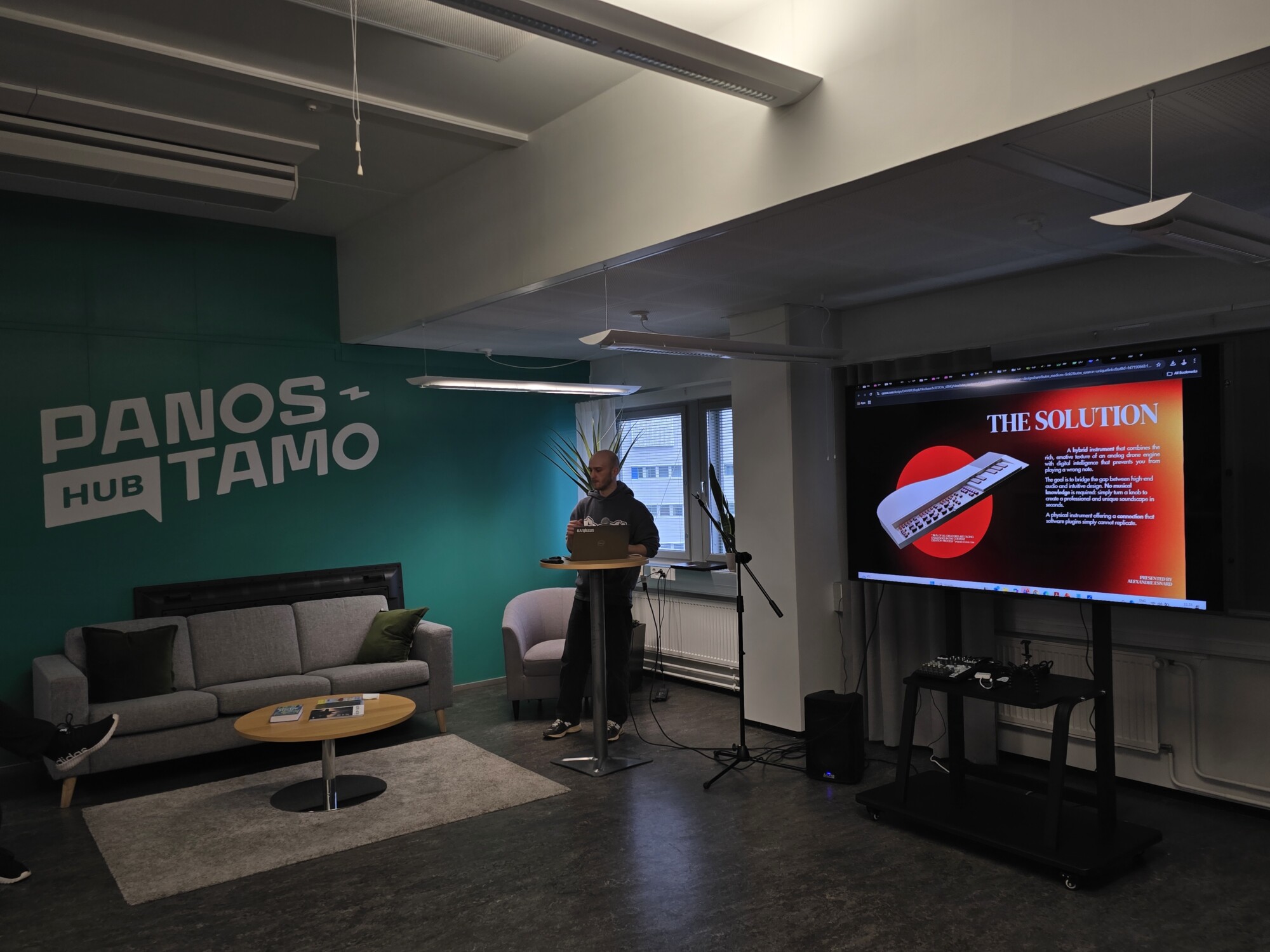
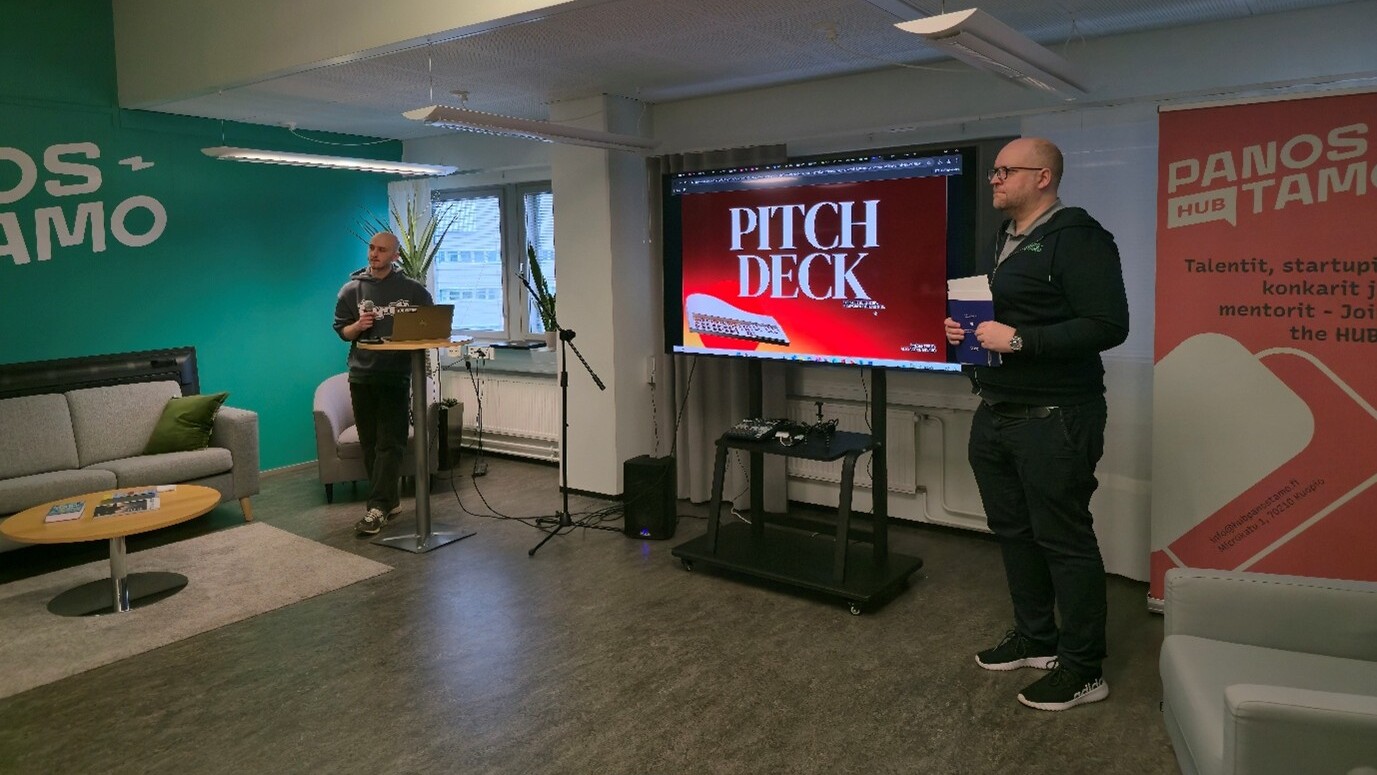
At the end of the mobility, Alexandre presented his first English pitch at Hub Panostamo, a local startup hub in Kuopio and received feedback on the development of the idea. This was an important milestone: pitching forced him to communicate the concept to others, explain the problem, demonstrate the solution logic, and reflect on what still needs to be developed.
The pitch also connected technical development with entrepreneurial communication. A prototype alone does not yet create a business. The entrepreneur must be able to explain why the product matters, who it is for, and what should happen next.
Lessons for entrepreneurial mobility
Alexandre’s case shows how international entrepreneurial mobility can support applied learning in several ways. First, it gives the student time and permission to focus on their own idea. Second, it connects academic expertise with practical development. Third, it creates an international context where the student must explain the idea clearly to people outside their usual environment.
For Savonia, the case strengthens the role of entrepreneurship mobility as a practical model for supporting early-stage innovation. The process brought together business coaching, engineering expertise, prototyping, commercialization thinking, and pitching. It also showed that entrepreneurial mobility does not need to produce a finished company immediately to be valuable. Its impact can be seen in stronger direction, clearer plans, improved confidence, and a more mature understanding of what it takes to turn an idea into a product.
As Alexandre’s experience demonstrates, entrepreneurial learning becomes powerful when the student is not only studying innovation, but actively building it.
Authors
Matti Laitinen, Innovation advisor and coach in the exchange, Business Center North-Savo, Savonia University of Applied Sciences
Phone +358 44 785 6333, matti.laitinen@savonia.fi, https://www.linkedin.com/in/mattislaitinen/
Dr Jérémie Faham, Start Up Manager, ESTIA Entreprendre, Hub Estia, Phone +33 699578133, j.faham@estia.fr
https://www.linkedin.com/in/j%C3%A9r%C3%A9mie-faham-0436335a/
Sources
Savonia University of Applied Sciences. (2025). Unlocking entrepreneurial potential across borders: A new model of entrepreneurial mobility from EU4DUAL network. https://www.savonia.fi/en/influence-stories/unlocking-entrepreneurial-potential-across-borders-a-new-model-of-entrepreneurial-mobility-from-eu4dual-network/?utm_source=chatgpt.com
Business Center Pohjois-Savo https://bcpohjois-savo.fi/
Estia-Entreprendre https://entreprendre.estia.fr/
Savonia University of applied sciences, Eu4Dual https://eu4dual.savonia.fi/
Idual entrepreneurship https://eu4dual.education/learn/mobility-and-internships/idual-entrepreneurship/
EU4Dual Entrepreneurial Mobility at Savonia UAS https://www.youtube.com/watch?v=IRWQWAM_Hic
European Commission. (2025). EU Startup and Scaleup Strategy: Choose Europe to start and scale. Directorate-General for Research and Innovation. https://research-and-innovation.ec.europa.eu/document/download/2f76a0df-b09b-47c2-949c-800c30e4c530_en