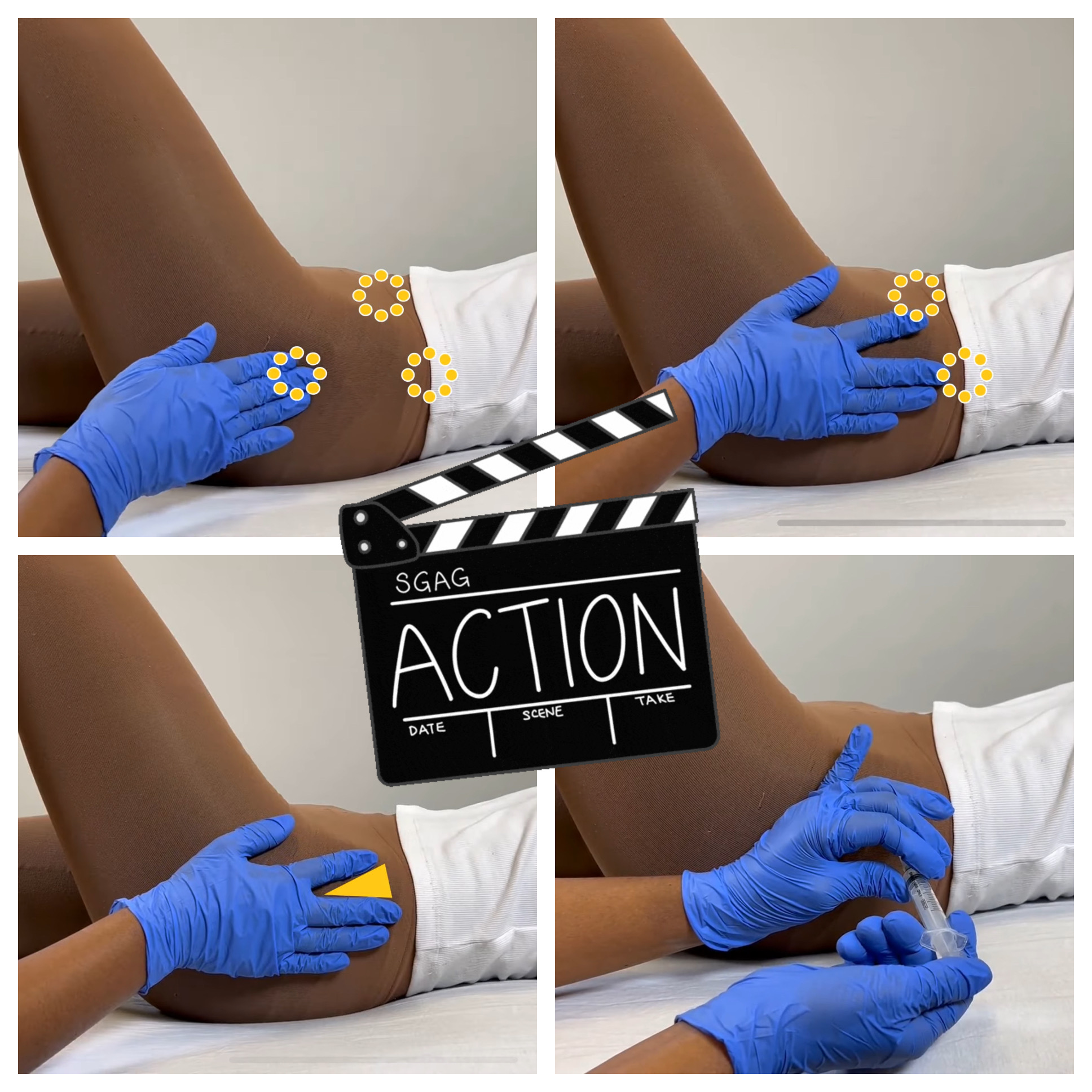
Savonia Article Pro: Lights, Camera, Action! Creating a clinical instructional video
Savonia Article Pro is a collection of multidisciplinary Savonia expertise on various topics.
This work is licensed under CC BY-SA 4.0


Imagine you are a nurse at work. You receive an order to perform a procedure but realize you have not done it in a while. You begin to feel uncertain. You ask your colleagues for guidance, but each person explains the process slightly differently. Then you remember that your organization has a repository of short instructional videos designed for exactly this situation, a form of just-in-time training for when you need a quick refresher.
This scenario highlights the growing importance of video in clinical practice (Vesna et al., 2024) and formed the foundation of our thesis project, in which we developed an instructional video demonstrating how to locate the ventrogluteal injection site. The thesis was carried out using the functional thesis method, which is an alternative to a research-based thesis. You can watch the video through this link: https://youtu.be/dPQ4W5GGTdM
Why video matters in clinical practice?
In clinical practice, accuracy is essential. Traditional methods of teaching practical skills often rely on demonstrations that may vary depending on the instructor (Singh et al., 2024). On the other hand, instructional videos provide a standardized and reliable way of delivering information, ensuring that all learners receive consistent guidance and a repeatable learning experience (Paradis et al., 2021; Morgado et al., 2024). For healthcare professionals, this can support both confidence and patient safety (Vesna et al., 2024).
Learning by doing
At the beginning of our project, we had limited knowledge of video production, learning theories, and even the ventrogluteal injection technique itself. Through the process, we developed a deeper understanding of how people learn and how visual and audio elements can support that learning. We learned that concepts such as reducing unnecessary information and guiding the viewer’s attention through visual cues and clear narration are important (Srinivasa et al., 2024). This became essential in shaping our video. We also realized that a well-designed video is not just about recording a procedure, but about making learning clear, structured, and engaging.
The importance of planning
One of the most important lessons we learned was the value of preparation. Developing a storyboard and a detailed checklist helped us stay organized and ensured that all key elements were included during filming (Krumm et al., 2022). We also created a demonstration version of the video before producing the final version. This allowed us to identify areas for improvement and enhance the outcome.
Unexpected challenges during filming reinforced the importance of thorough preparation. Technical issues disrupted our filming process and led to small but significant omissions, highlighting how essential it is to follow a clear plan and script to ensure all necessary content is captured (Zoltie et al., 2022).
Working together
Collaboration was another key aspect of our project. We learned to recognize each other’s strengths and divide tasks accordingly throughout the process. Using digital tools that supported real-time collaboration allowed us to coordinate our work efficiently and maintain clear communication.
What we learned
One key takeaway from our project is that high-quality instructional videos do not necessarily require expensive equipment (Zoltie et al., 2022). We used only a smartphone and additional lighting and were still able to produce clear and effective visual content. What mattered most was not the equipment itself, but how we planned, structured, and executed the video. We also came up with recommendations of key elements to consider when developing a high-quality instructional video for nurses.
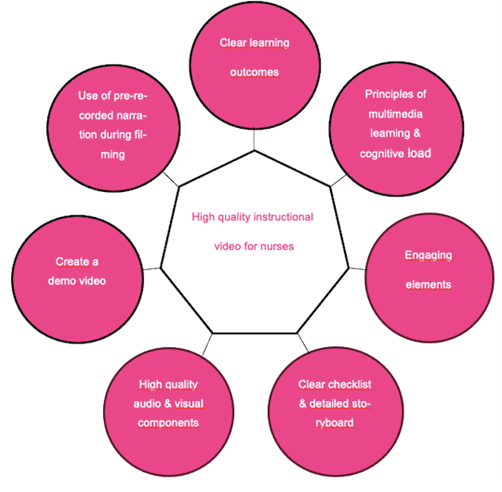
Looking ahead
Returning to the opening scenario, having access to a well-designed instructional video in a moment of uncertainty can make a significant difference. It can provide clarity, build confidence, and support safe clinical practice. Our experience shows that when educational principles are combined with practical video production, it is possible to create effective learning tools that are both accessible and impactful (Fossum, Opsal and Ehrenberg, 2022).
Authors
Rehema Peltorinta, RN, Master’s degree student in Digital Health, Savonia University of Applied Sciences
Simon Nyingi, RN, Master’s degree student in Digital Health, Savonia University of Applied Sciences
Liisa Klemola, Senior Lecturer, PhD, RN, Savonia University of Applied Sciences, Unit of Continuous Learning, Master School, Kuopio, Finland
Juhamatti Huusko, Part-time Lecturer, PhD, Savonia University of Applied Sciences, Unit of Continuous Learning, Master School, Kuopio, Finland
References
Fossum, M., Opsal, A. and Ehrenberg, A. (2022) “Nurses’ sources of information to inform clinical practice: An integrative review to guide evidence‐based practice,” Worldviews on Evidence-Based Nursing, 19(5), pp. 372–379. Available at: https://doi.org/10.1111/wvn.12569.
Krumm, I.R. et al. (2022) “Making Effective Educational Videos for Clinical Teaching,” Chest, 161(3), pp. 764–772. Available at: https://doi.org/10.1016/j.chest.2021.09.015.
Morgado, M. et al. (2024) “Video-based approaches in health education: a systematic review and meta-analysis,” ResearchGate [Preprint]. Available at: https://doi.org/10.1038/s41598-024-73671-7.
Paradis, E. et al. (2021) “Getting standardization right,” Canadian Family Physician, 67(5), pp. 323–325. Available at: https://doi.org/10.46747/cfp.6705323.
Singh, K. et al. (2024) “Barriers and Solutions to the Gap between Theory and Practice in Nursing Services: A Systematic Review of Qualitative Evidence,” Nursing Forum, 2024(1), p. 7522900. Available at: https://doi.org/10.1155/2024/7522900.
Srinivasa, K. et al. (2024) “How to Develop an Online Video for Teaching Health Procedural Skills: Tutorial for Health Educators New to Video Production,” JMIR Medical Education, 10(1), p. e51740. Available at: https://doi.org/10.2196/51740.
Vesna, D.L. et al. (2024) “The Role of Digital Education Tools in Healthcare Training and Professional Development,” Frontiers in Health Informatics, pp. 5982–5992. Available at: https://doi.org/10.52783/fhi.vi.545.
Zoltie, T. et al. (2022) “Medical photography using mobile devices,” The BMJ, 378, p. e067663. Available at: https://doi.org/10.1136/bmj-2021-067663.