Savonia Article Pro: EU4Dual Winter School 2026 at Savonia University of Applied Sciences: An international learning environment at the intersection of service development and regional innovation
Savonia Article Pro is a collection of multidisciplinary Savonia expertise on various topics.
This work is licensed under CC BY-SA 4.0


European higher education is increasingly seeking more impactful ways to integrate learning, working life, and regional development. This challenge is at the core of dual learning, which combines academic learning with authentic workplace-based development tasks. The EU4Dual – The European Dual Studies University network responds to this need by developing shared pedagogical models that embed learning directly into real organisational and societal contexts.
The EU4Dual Winter School represents one concrete implementation of this dual learning approach. It brings students, companies, and regional development organisations together around real-world challenges in authentic environments, where learning outcomes and development impact are pursued simultaneously.
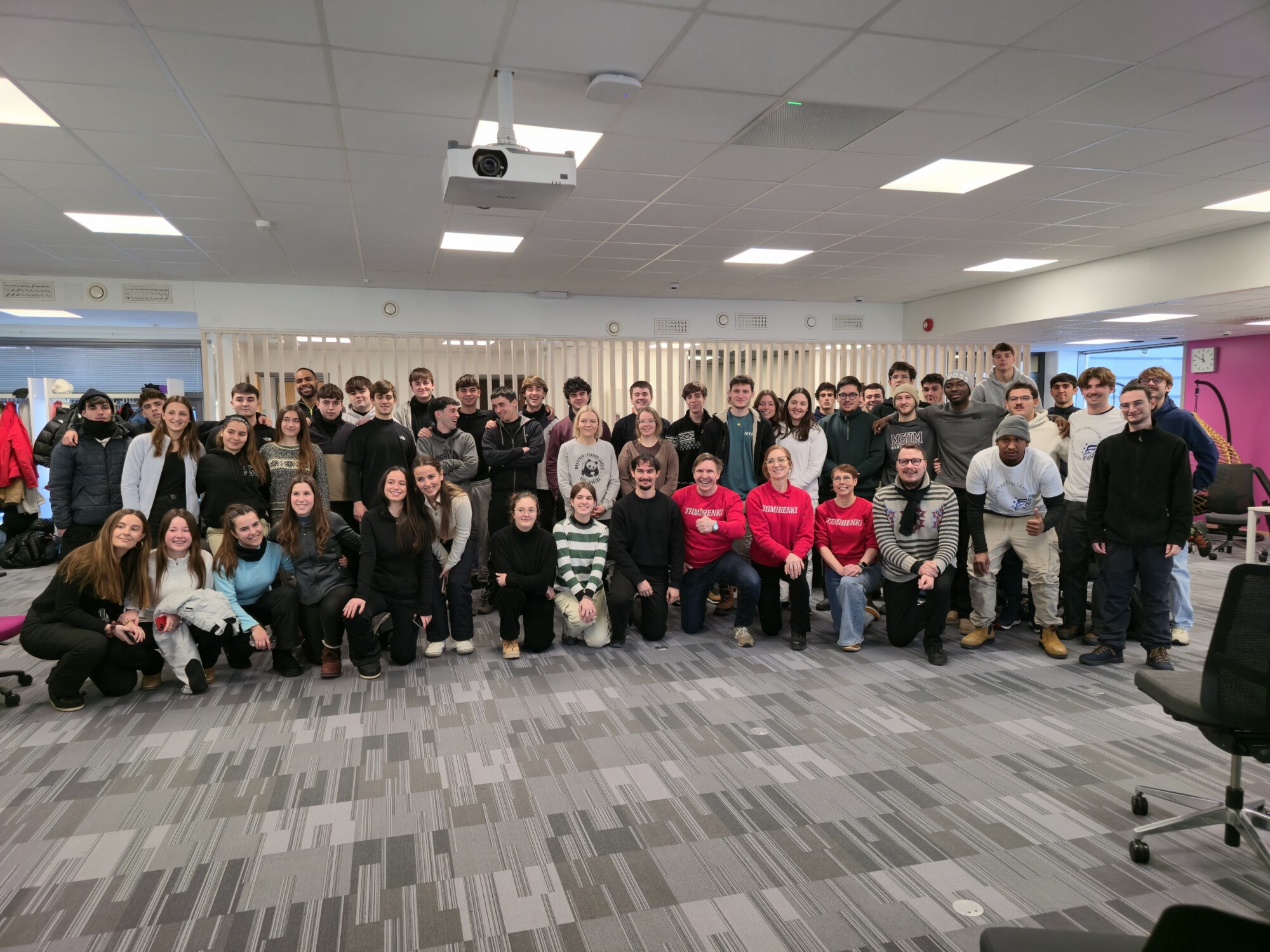
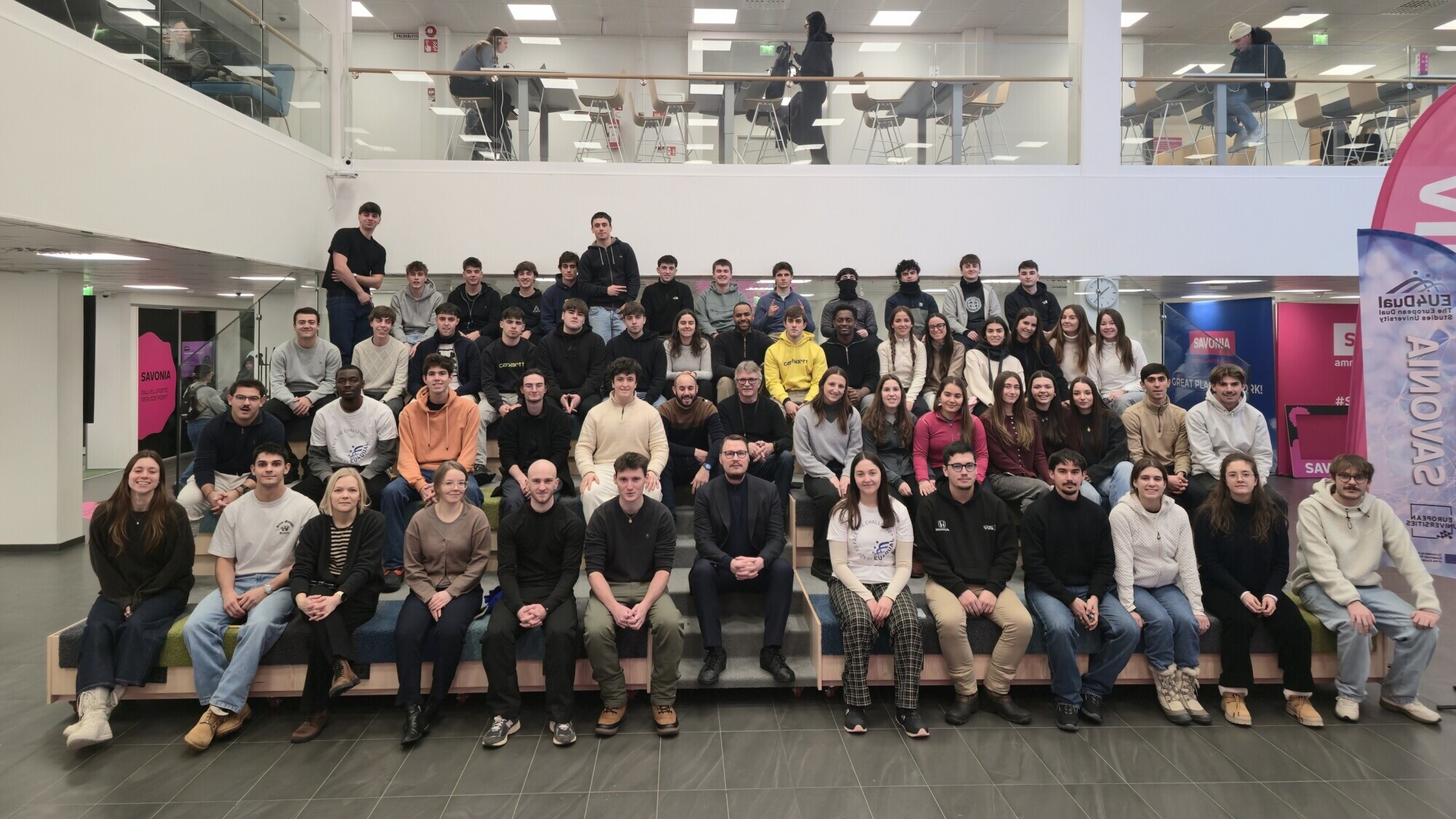
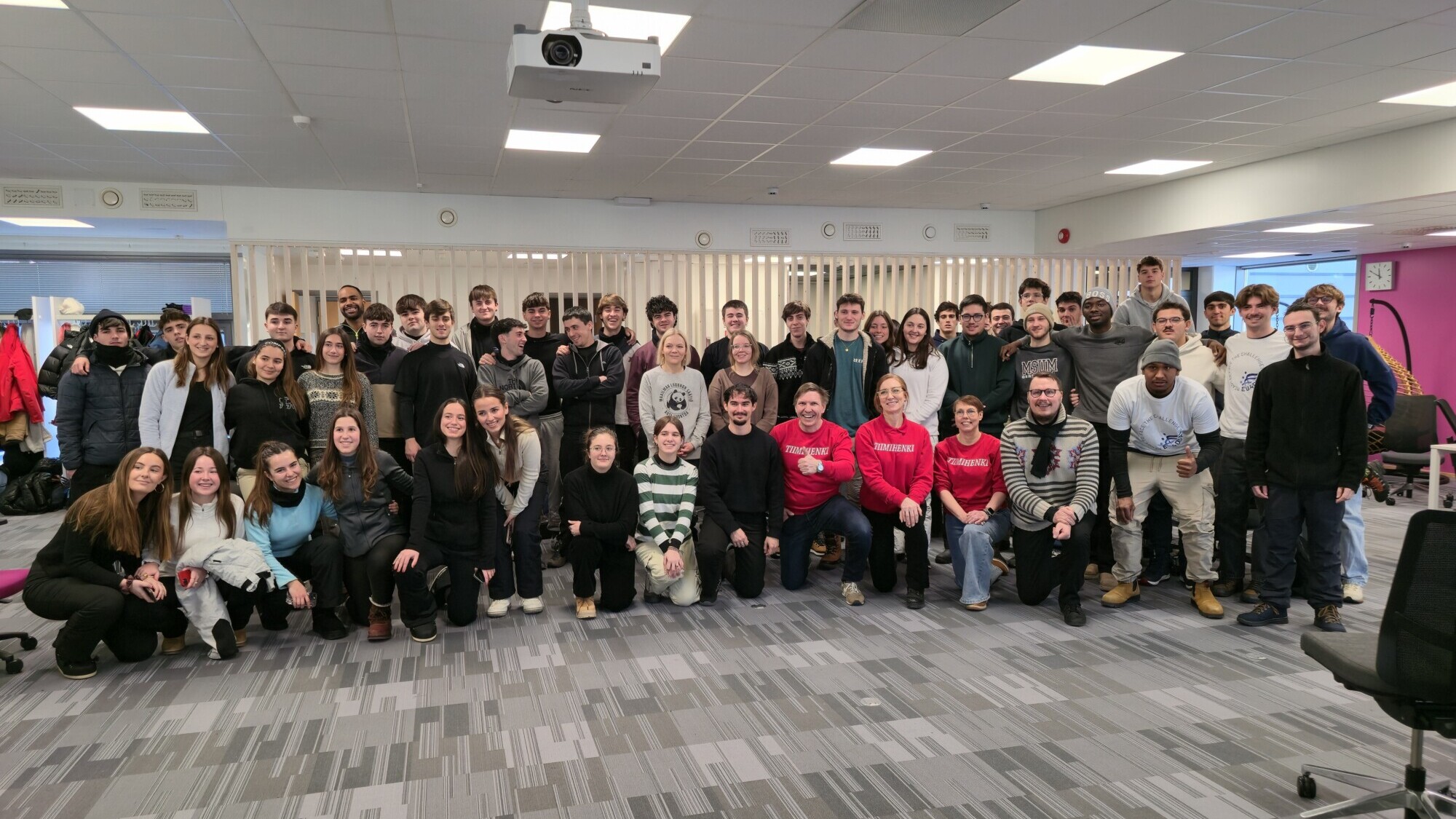
In January 2026, Savonia University of Applied Sciences hosted the EU4Dual Winter School, welcoming more than 50 international students from France, Spain, and Finland to the North Savo region. Participants represented Mondragon Unibertsitatea, ESTIA Institute of Technology, and Savonia University of Applied Sciences. In addition to higher education institutions, local companies and regional development actors were actively involved.
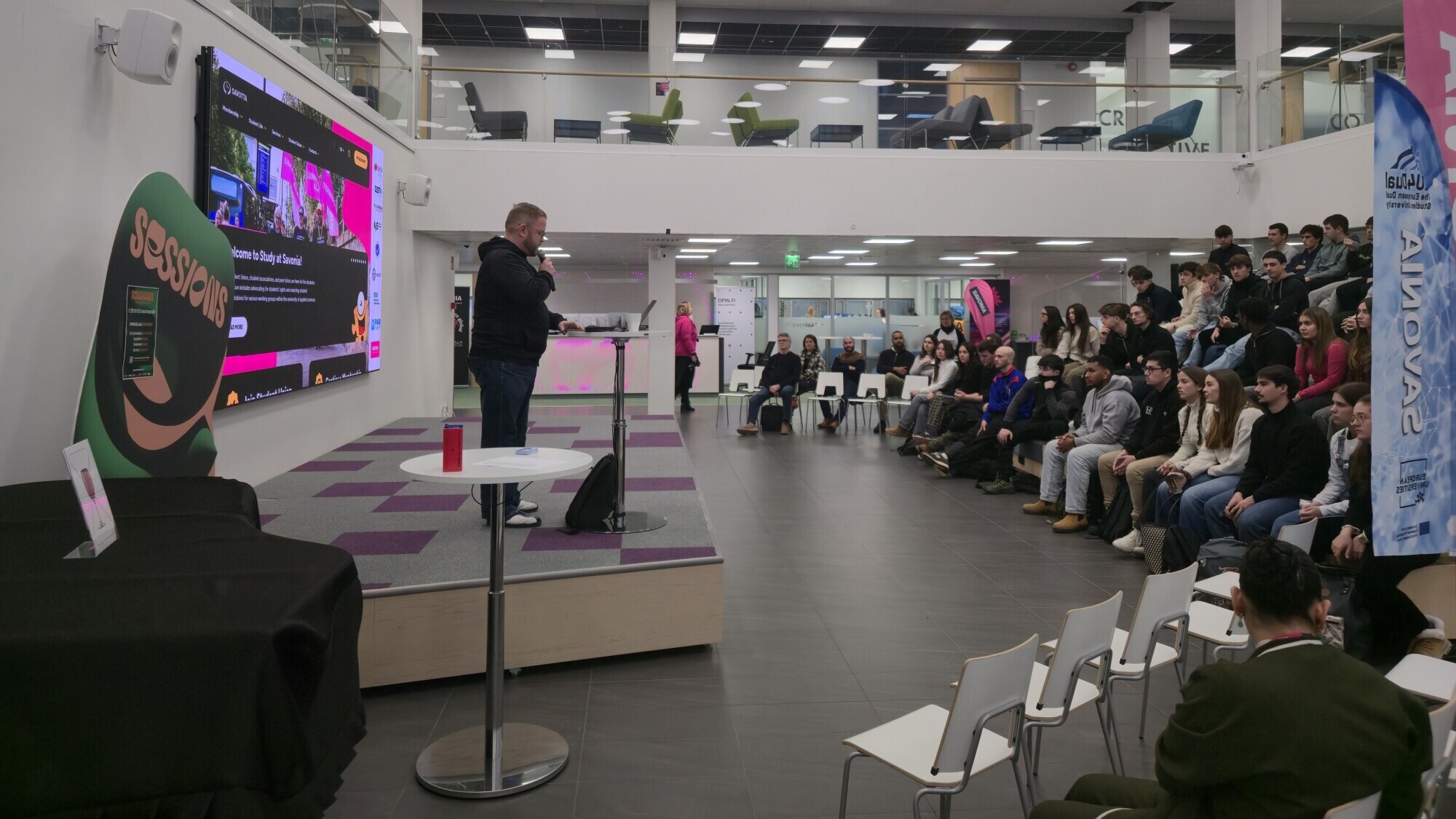
The shared objective was the development of experiential and activity-based services from an international customer perspective, embedded within the regional innovation ecosystem. The opening session at Savonia’s campus heart symbolised the core idea of the Winter School: a shared learning space where international perspectives, regional needs, and applied innovation intersect.
Learning connected to real development needs
At the core of the Winter School were development challenges presented by three North Savo–based experiential service companies:
Tiimihenki (Jukka-Tapio Keränen)
Metsäkkö (Piia Ratava)
Neljän Tuulen Tytär (Johanna Koponen)
These companies operate in nature-based, wellbeing-oriented, and experiential business contexts, where customer experience, contextual sensitivity, and emotional value creation are central. Their involvement was also directly linked to the regional EOP project (Elämys- ja ohjelmapalveluiden kehittäminen Pohjois-Savossa) coordinated by Savonia University of applied Sciences together and Savo Vocational College, which aims to strengthen the competitiveness and international readiness of experience-based services in the region.
Students analysed the services primarily from the perspective of an international customer. Key questions included: How does the service open up to a first-time visitor in Finland? What assumptions does it make about the customer? How easily can the service content, value, and practical implementation be understood?
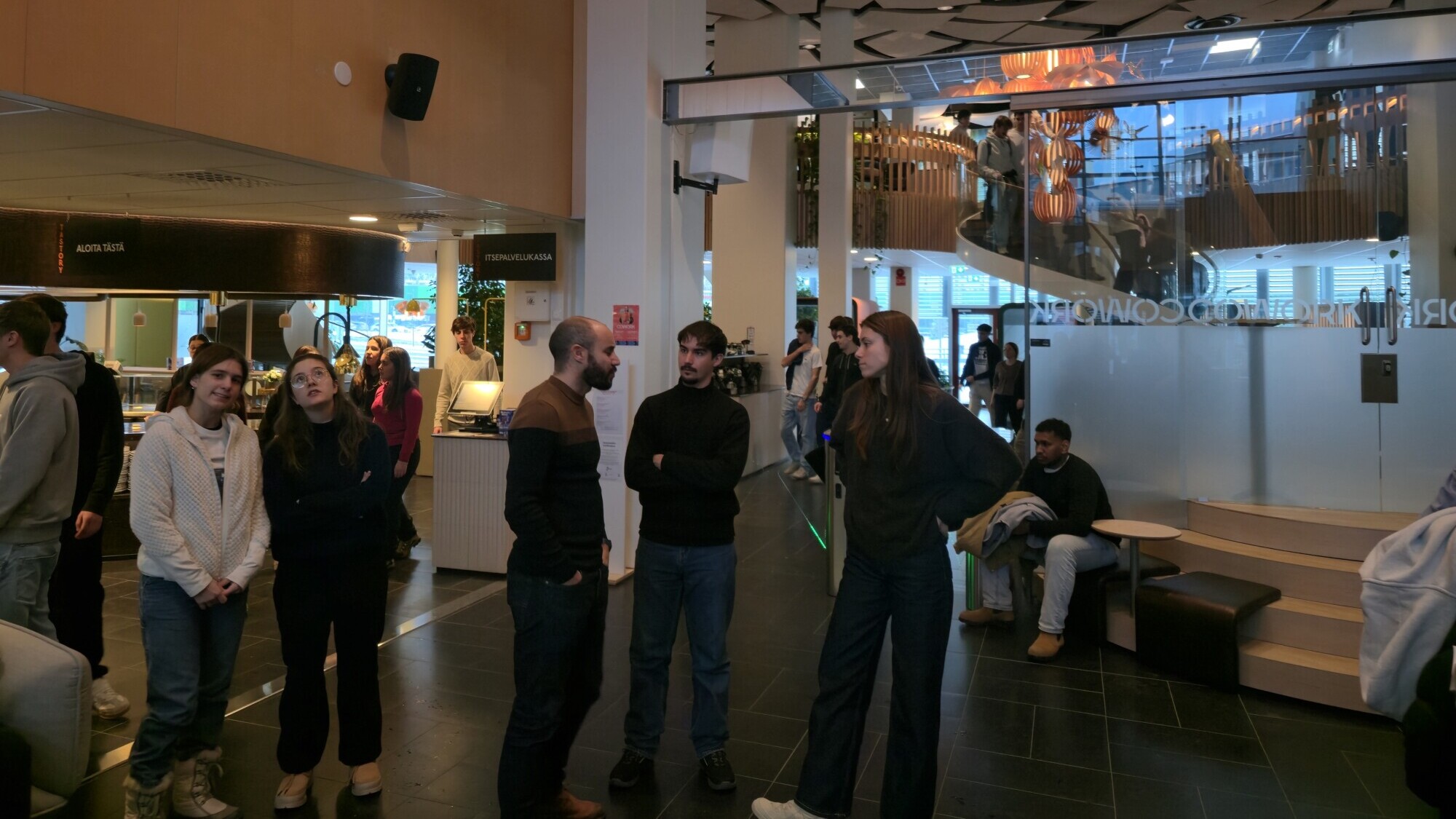
A significant factor was that for most participants, this was their first visit to Finland. This created a genuinely external and unfiltered perspective that is difficult for companies to achieve through domestic customer feedback alone. Visits to KPY Novapolis premises and the surrounding innovation environments illustrated how physical spaces can support collaboration between education, startups, research, and business development, an essential element of regional innovation systems.
Practice-oriented pedagogy and open innovation
The pedagogical structure of the Winter School was grounded in design thinking, but the emphasis was clearly on application rather than theory. Learning progressed rapidly from problem definition to ideation, concept development, prototyping, and pitching within a tight timeframe.
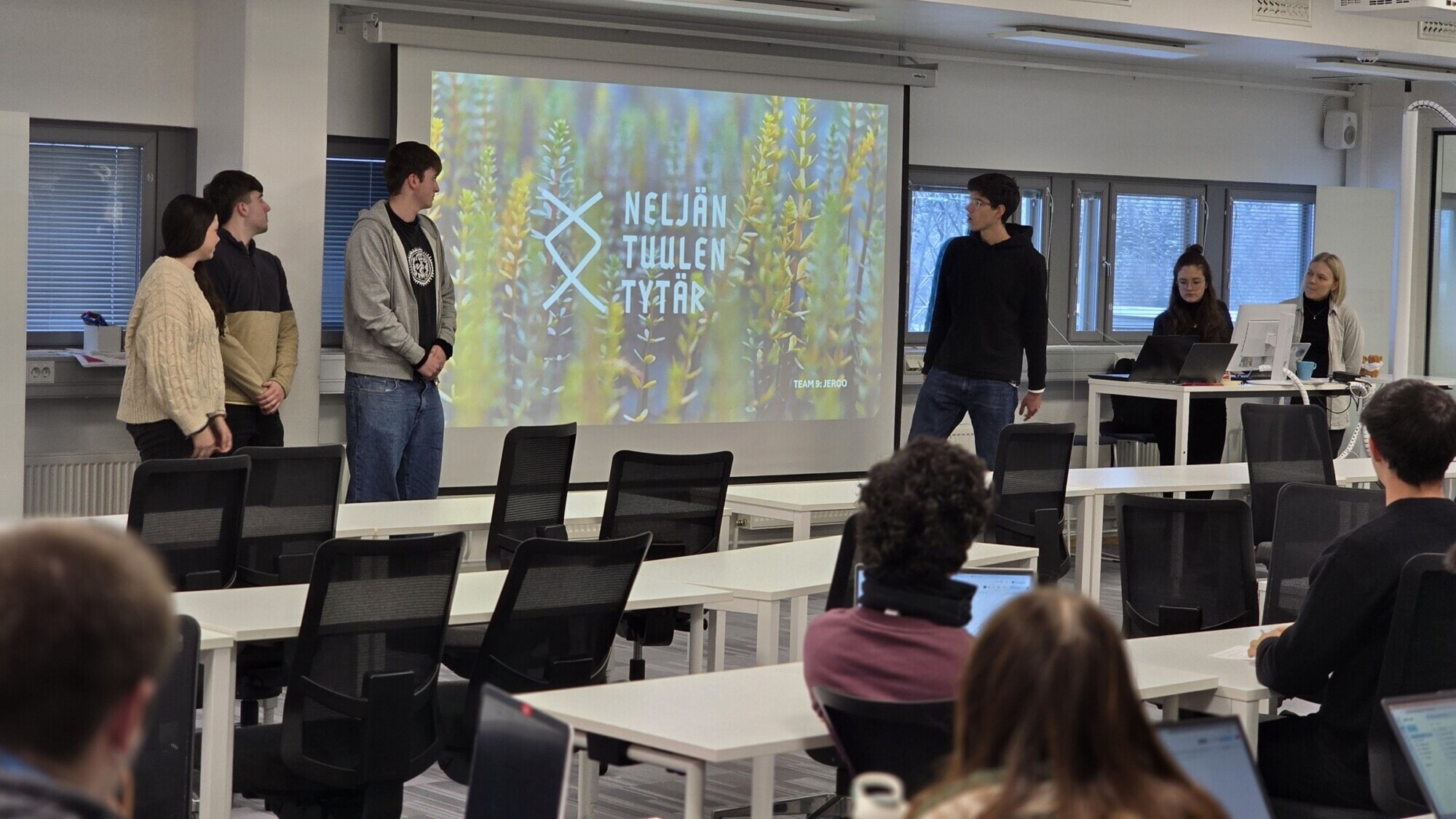
When designing the programme, the following principles were emphasised:
• strong practical orientation
• teamwork in international and multidisciplinary groups
• A coaching-based teaching approach
• student self-direction and responsibility
• principles of open innovation
Teachers and coaches acted primarily as facilitators and challengers rather than solution providers. This role supports students’ professional growth and ownership of learning while ensuring that companies receive genuinely new insights rather than predefined academic solutions.
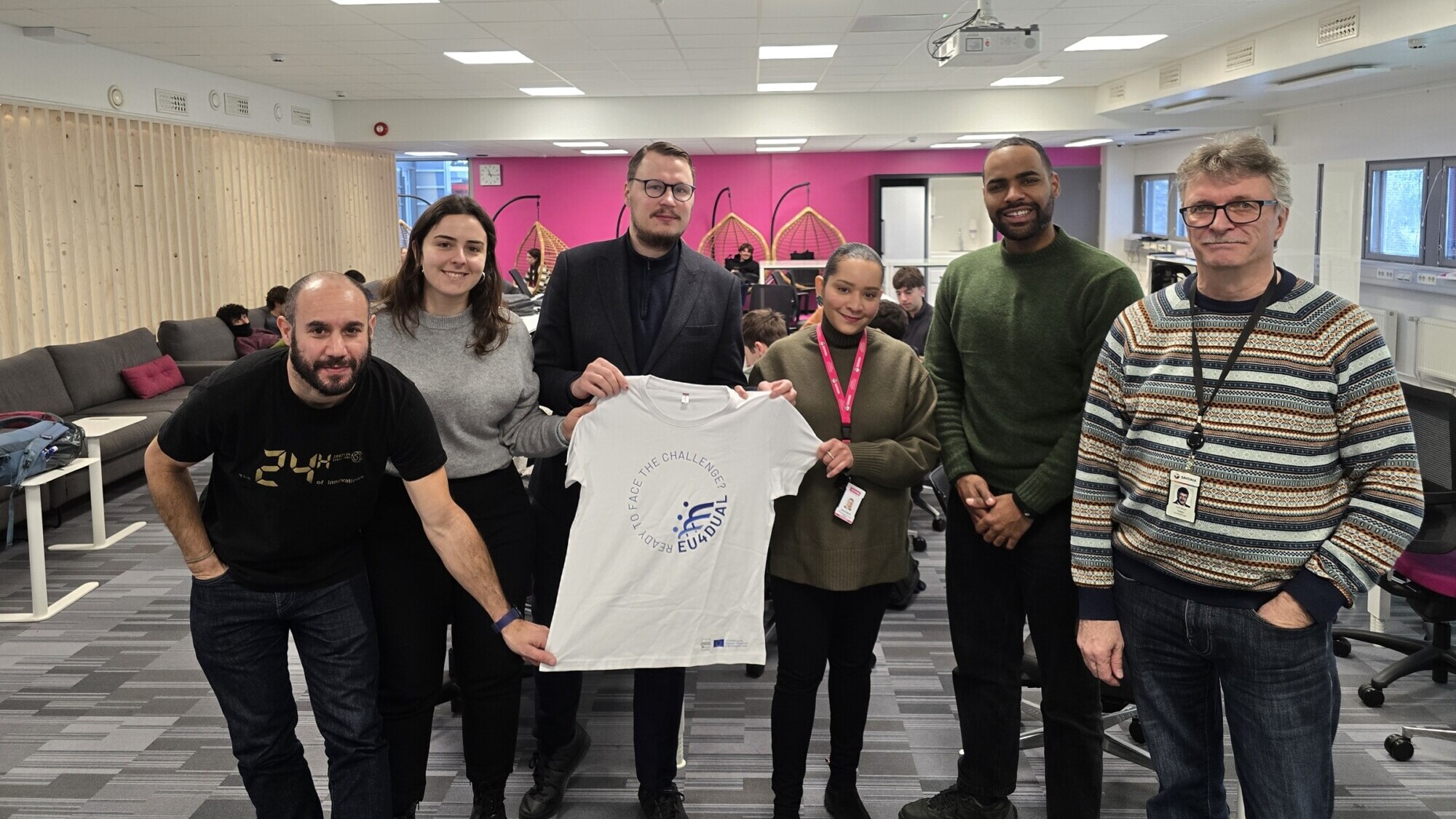
The diversity of coaching backgrounds, spanning engineering, business, pedagogy, innovation, and international relations, strengthened the multidisciplinary and international character of the learning environment and reflected the EU4Dual approach to shared European competence development.
Testing services in authentic environments
A key element of the Winter School was the testing of service prototypes and concepts in real contexts. Testing took place in the Savilahti campus and innovation area as well as at Luoto, complemented by participation in various winter activities across North Savo and elsewhere in Finland.
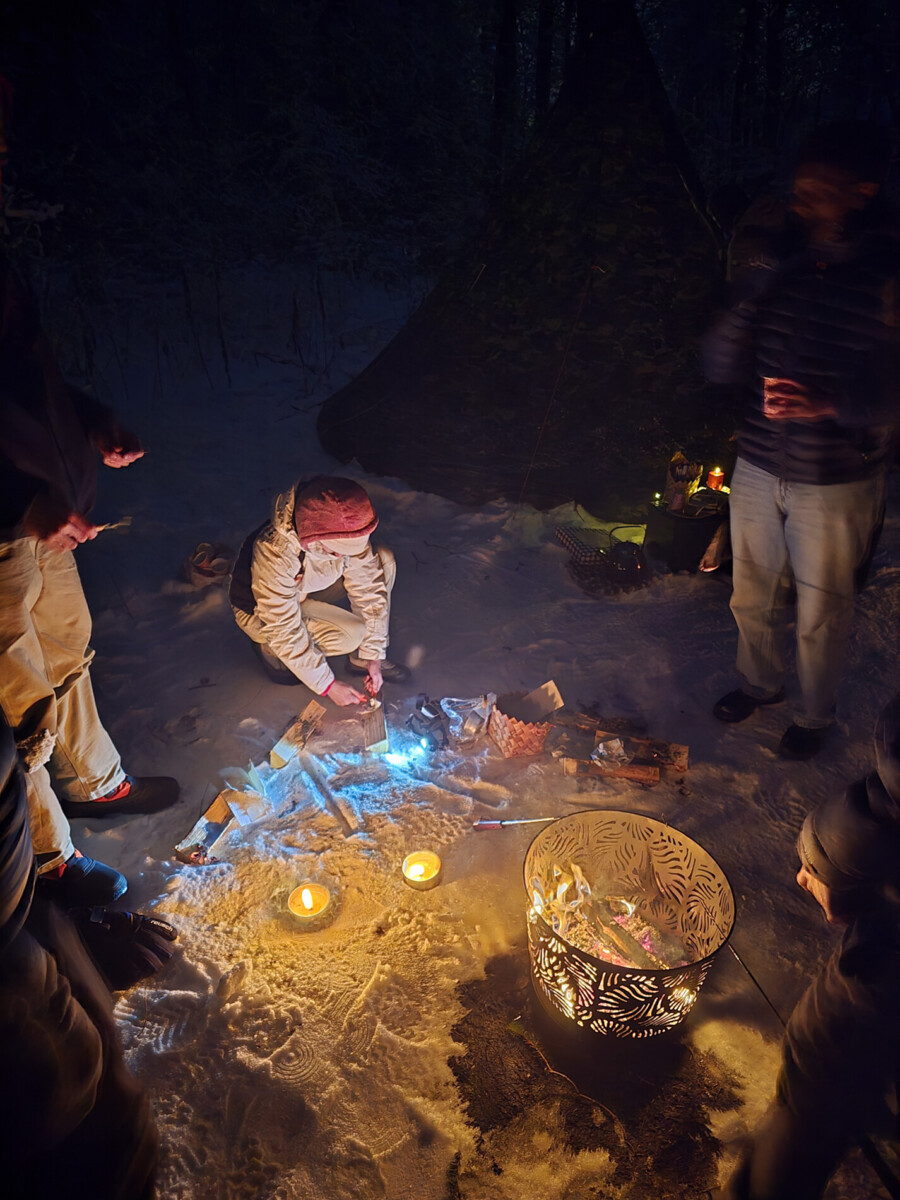
The test day was organised in close cooperation with Savonia University of Applied Sciences and Savo Vocational College (Sakky). This collaboration enabled a learning environment where higher education, vocational education, and real company development needs intersected naturally, highlighting the value of cross-educational cooperation in regional development.
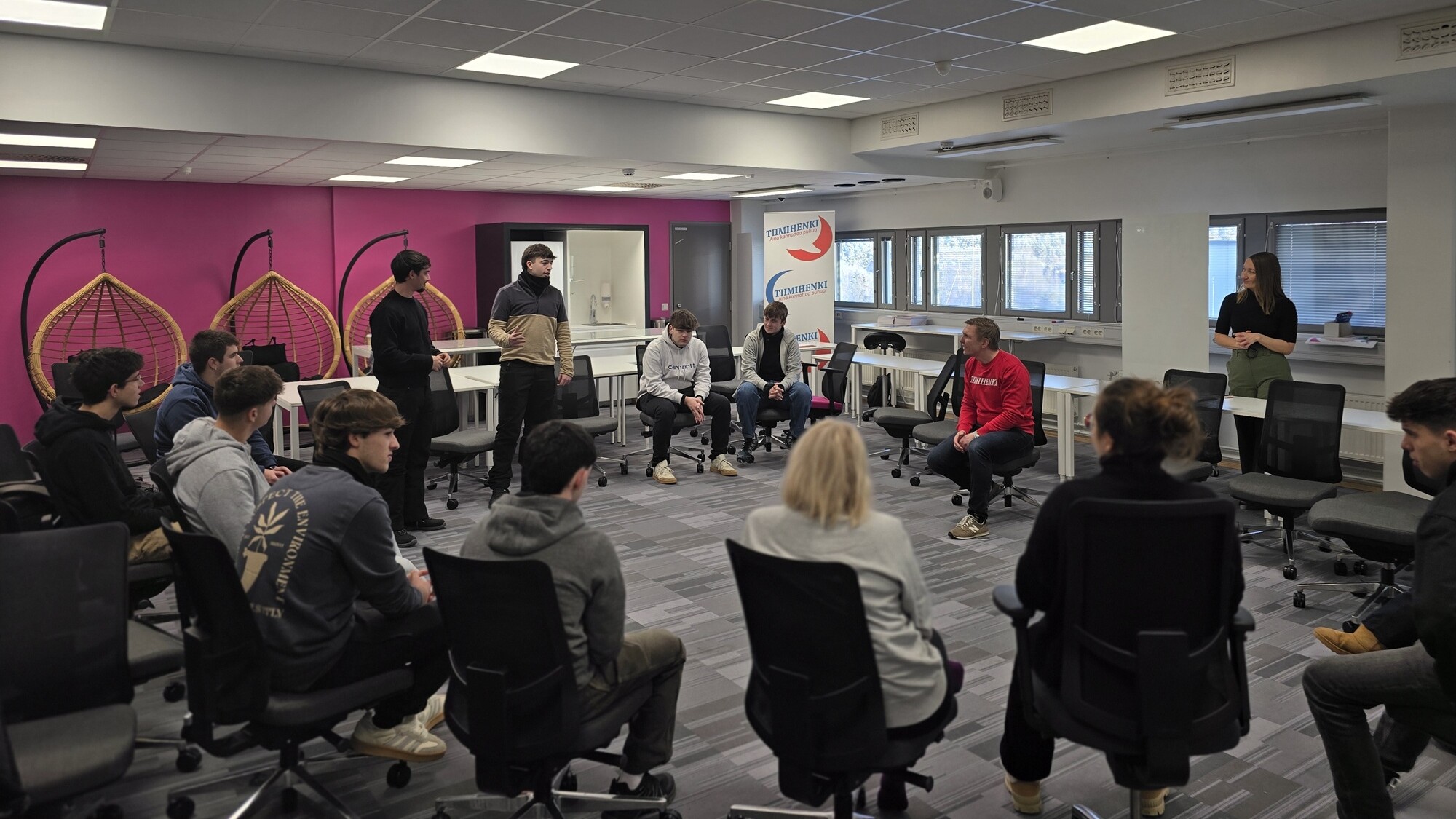
Companies received concrete, external feedback on service clarity, accessibility, and customer value, as well as actionable suggestions for internationalisation. For students, the week provided authentic insight into the regional innovation ecosystem, business structures, and service environments of North Savo and the City of Kuopio.

For companies, access to real test users, feedback on new service concepts, and material suitable for future marketing and communication were particularly valuable outcomes.
Savilahti and Hub Panostamo as learning environments
As part of the programme, participants explored the developing Savilahti campus and innovation area as well as the regional startup ecosystem at Hub Panostamo.
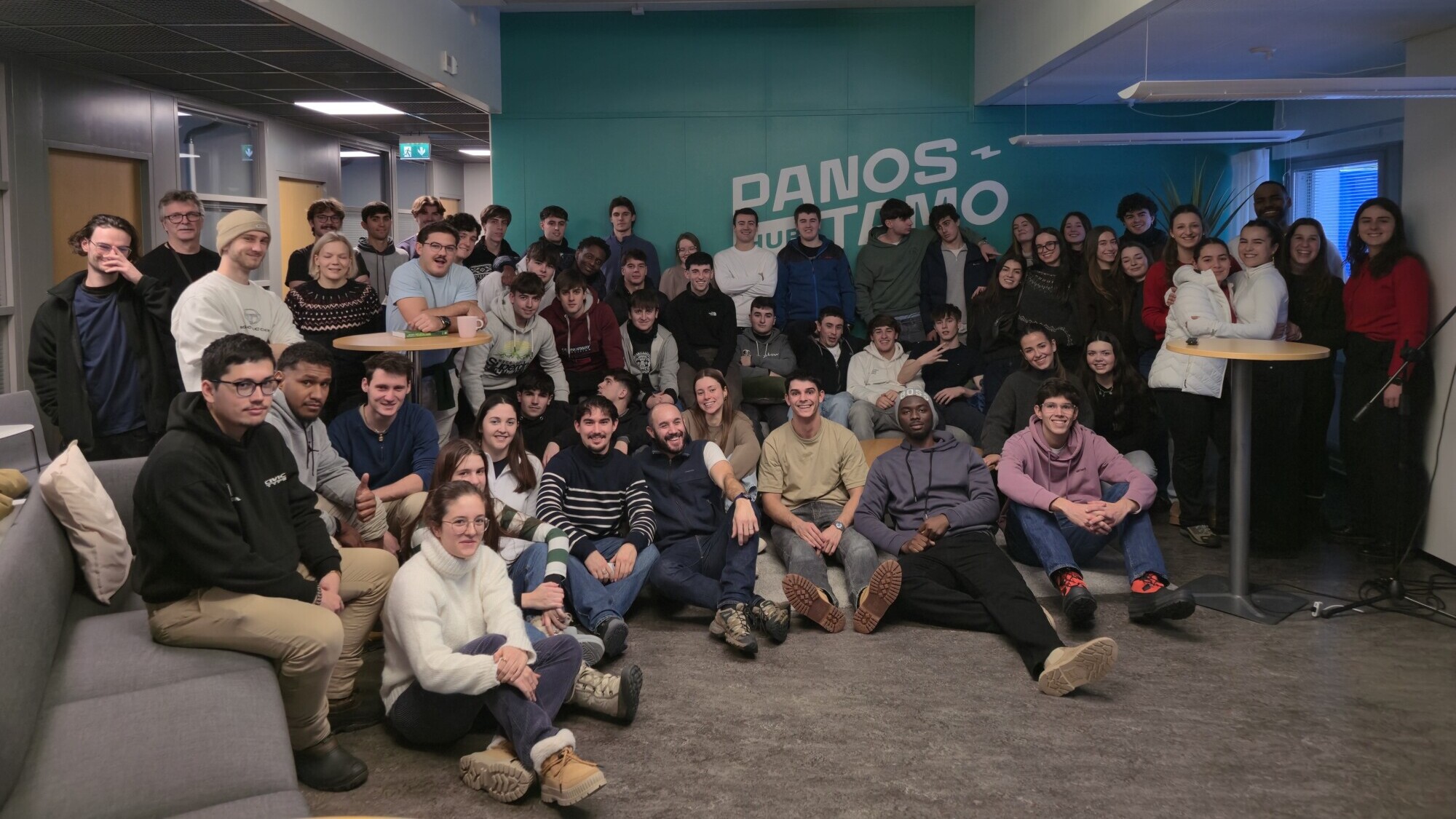
These visits demonstrated how education, research, business, and development organisations can operate both physically and functionally within shared environments. From a dual learning perspective, such environments are essential for building long-term regional innovation capacity and for attracting international talent. North Savo provides a concrete example of how close collaboration between different actors enables the development of new services and products.
Towards more impactful European education collaboration
The experiential and practice-oriented nature of the Winter School was also clearly reflected in participant feedback. In a reflection, Océane Paraik, a student from ESTIA, described the EU4Dual Winter School as an “intense, inspiring and truly international experience” that combined real-life company challenges, international and interdisciplinary teamwork, and hands-on service development in authentic contexts.
Paraik emphasized not only the professional learning outcomes, such as strengthening skills in innovation, entrepreneurship, and teamwork, but also the importance of working directly with companies and testing services in real environments. She highlighted how engaging with international customer perspectives, regional business life, and the local innovation ecosystem deepened her understanding of value creation and user experience in practice.
We conducted a feedback survey for the students, and 49 people responded. The response rate was excellent at 92% (49/53). Based on the survey, the WinterSchool 2026 was highly successful, as a total of 90% of respondents rated their overall EU4Dual Winter School experience as either “excellent” or “very good.” The responses praised, among other things, the event’s organization, the opportunity to work on real company cases, multicultural teamwork, and learning new things. Some respondents felt that too much time was spent on campus, leaving little free time.
Answers to the question “What is the most important thing you learned or experienced during the EU4Dual Winter School?” focused especially on teamwork with students from different countries, entrepreneurship, and Finnish culture. Some mentioned they learned how to dress properly in cold weather.
Such reflections underline the value of the Winter School model not merely as an intensive learning experience, but as a structured environment that supports students’ professional growth, international competence, and ability to apply innovation methods in real-world settings. Importantly, the feedback illustrates how dual learning principles, combining academic learning with working life contexts can be effectively implemented in short, intensive international formats.
The EU4Dual Winter School demonstrates that an international intensive programme can be far more than a short mobility experience or isolated event. When designed thoughtfully, it becomes a platform where dual learning, working life collaboration, and regional development are deeply interconnected.
From the perspective of Savonia University of Applied Sciences, the Winter School strengthens its role as a regional developer and an active international partner within the EU4Dual network. At the same time, it creates tangible value for participating companies and offers students an experience that enhances professional self-awareness, collaboration skills, and the capacity to operate in multicultural and interdisciplinary environments.
The value of the Winter School does not end with the final pitch. Its impact materialises in how the insights generated are utilised in continued development, within companies, education, and the wider regional innovation ecosystem. Overall, the responses clearly show that similar types of intensive weeks are worth organizing for students in the future as well.
Sources and further information:
https://bcpohjois-savo.fi/elamys-ja-ohjelmapalveluiden-kehittaminen-pohjois-savossa/
https://www.neljantuulentytar.fi/
https://piiaratava.wordpress.com/
https://www.opiskelijakuntasavotta.fi/en/home/
Kirjoittajat
Course Lead: Matti Laitinen, RDI-expert, Savonia University of Applied Sciences
matti.laitinen@savonia.fi, https://www.linkedin.com/in/mattislaitinen/
Veli-Matti Tolppi, Lecturer, Savonia University of Applied Sciences
Miia Kaartinen, EU4Dual Lead, Savonia University of Applied Sciences
Jérémie Faham, Lecturer, ESTIA Institute of Technology
Ane Eizmendi Garin, Lecturer, Mondragon Unibertsitatea
Jonathan Fontán Álvarez, Lecturer, Mondragon Unibertsitatea