Savonia Article Pro: Global and Sustainable Health, GOSH project – experiences from the project and intensive week in Singapore
Savonia Article Pro is a collection of multidisciplinary Savonia expertise on various topics.
This work is licensed under CC BY-SA 4.0


Introduction
Global and Sustainable Health is a crucial theme in rehabilitation as it addresses health equity, environmental sustainability, and system resilience on a global scale. Rehabilitation plays a key role in achieving the Sustainable Development Goal 3, which promotes health and well-being for all ages (World Health Organization 2019). Worldwide, more than 2.4 billion people could benefit from rehabilitation services, and this need is increasing due to aging populations and chronic conditions (World Health Organization 2024). Integrating rehabilitation into universal health coverage strengthens health systems, reduces disability, and supports social and economic participation, which are essential for sustainable development (World Health Organization 2023). Furthermore, global health initiatives aim to close gaps in access, as over half of people in low- and middle-income countries do not receive the rehabilitation they need (World Health Organization 2024).
The Global and Sustainable Health, GOSH, project builds on the earlier FUGA initiative, continuing its mission to foster international collaboration and innovative approaches in physiotherapy education. The purpose of this blog article is to describe the earlier FUGA project as a starting point for the Global and Sustainable Health (GOSH) project and to share teachers’ experiences from an intensive week in Singapore, which was carried out as part of the project implementation.
Driving Innovation and collaboration in Health Education: FUGA & GOSH Projects
Our institutions are proud to lead initiatives that shape the future of health education and global collaboration starting already in 2021. Two standout projects—FUGA and GOSH—are paving the way for digital transformation and sustainability in healthcare learning. FUGA – Future of Remote Therapy (2021–2023) focused on developing remote therapy models and digital learning solutions to support rehabilitation. Through collaboration with Finnish universities Turku, JAMK and Savonia UAS’s and the Singapore Institute of Technology, the project explored innovative approaches to online course development and blended learning. The innovative collaboration led to new idea of Global and sustainable health project. (Äijö et al. 2022, Äijö & Laukkanen 2023.)
The intensive week this fall was organized at the Singapore Institute of Technology (SIT), University of Applied Sciences, in collaboration with Savonia University of Applied Sciences, Turku University of Applied Sciences and JAMK University of Applied Sciences.
Intensive Week Overview
A total of 17 students from all participating universities attended the intensive week. They were either bachelor’s or master’s level students who had applied for a five-credit course, which included the intensive week as a key component. The course had previously been piloted in Kuopio at Savonia University of Applied Sciences (Lee-Moling et al. 2024), and based on student feedback, it was further revised for this implementation in Singapore.
Course Structure
The course consisted of three learning assignments:
• Pre-learning tasks before the intensive week
• Learning and collaboration during the intensive week
• Post-learning assignments after the intensive week
At the start of the course, an online meeting was held to provide an introduction and information about the course content and learning tasks. This allowed students to meet each other and gain an overview of the course objectives. The course was built on Savonia’s Edunia learning platform, which worked well as students could easily log in, and all teachers were able to edit and add content.
The program consisted of an intensive week that was jointly planned. Monday served as a general introduction to SIT’s campus and the opening of the intensive week. Students presented pre-prepared learning assignments, got to know each other, and attended lectures related to the theme, which was on global health from both Singaporean and Finnish perspectives.
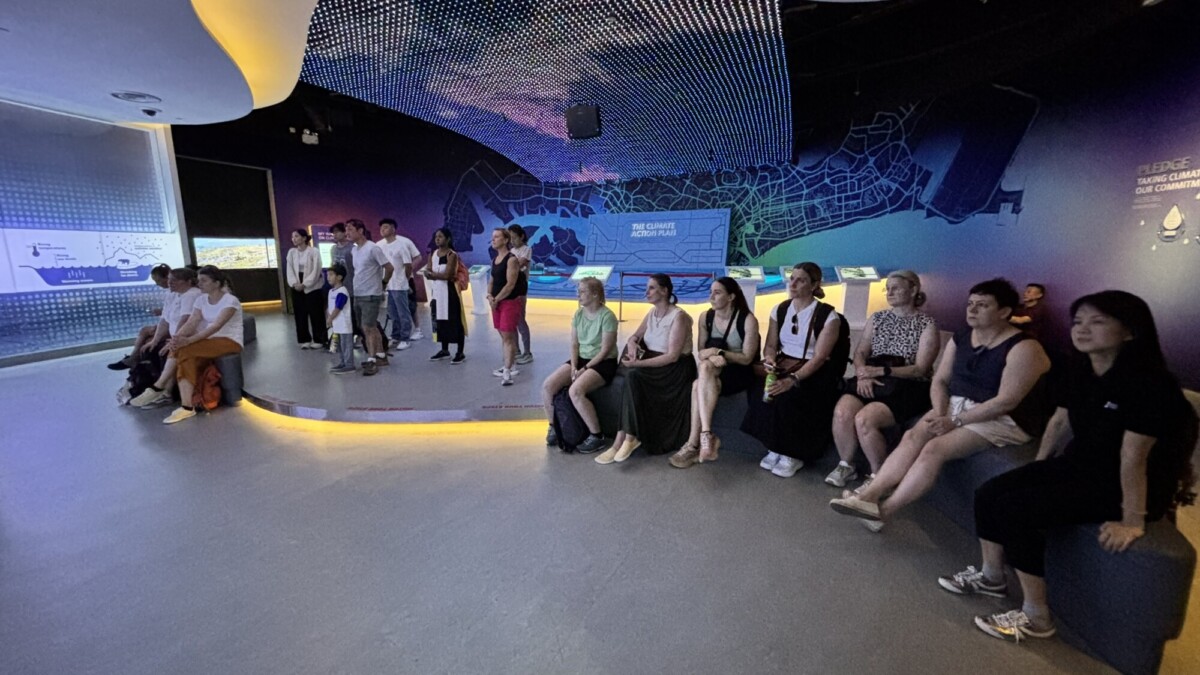
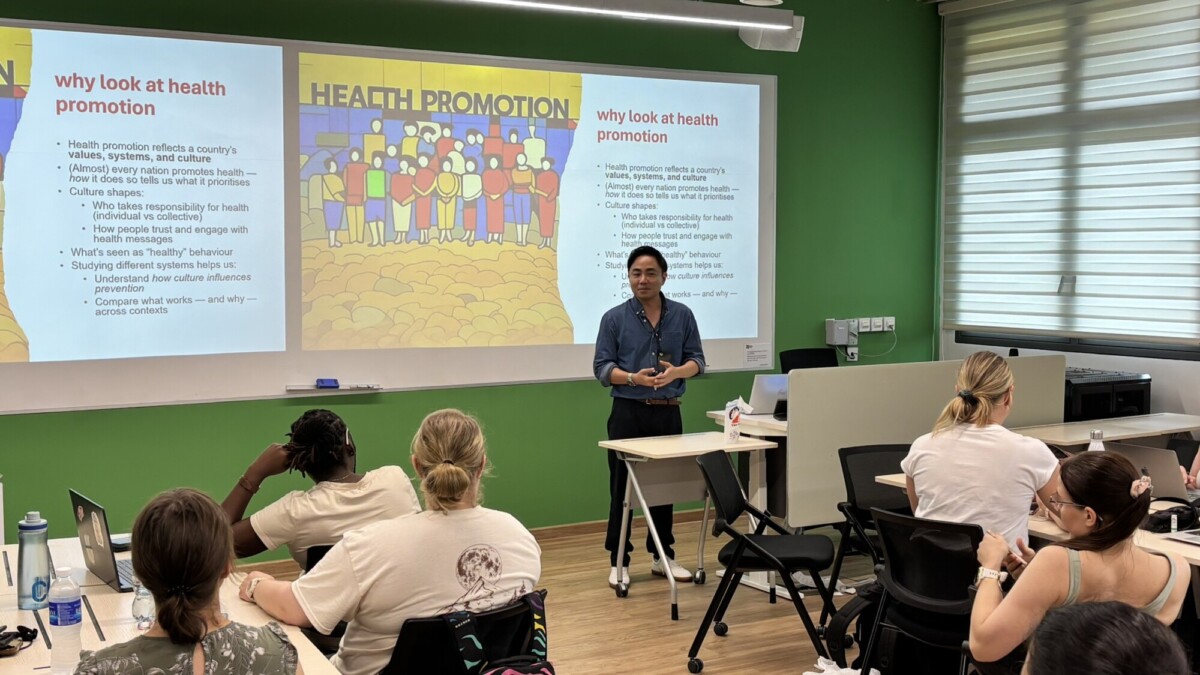
On Tuesday, students worked in small groups on global health themes based on their pre-assignments, facilitated by a teacher. They also attended a lecture on lecture-based health promotion and participated in a campus tour to explore teaching and research facilities at SIT. Wednesday included a visit to Singapore’s Sustainable Gallery, where students reflected on how sustainable development and health promotion have been advanced in Singapore. In Sustainable Gallery (Picture 1), students reflected on how sustainable development has advanced in Singapore. This immersive experience was complemented by special lectures on health promotion delivered by Assistant Professor Mark Chan, an SIT faculty member, on understanding of Singapore’s approach to public health (Picture 2). The gallery’s sustainable component served as more than an exhibit became a springboard for ideation, sparking future research possibilities for both students and faculty. It underscored how the United Nations Sustainable Development Goals (SDGs) (United Nations n.d.) have profoundly influenced nations worldwide, driving collective action toward healthier, more sustainable societies.
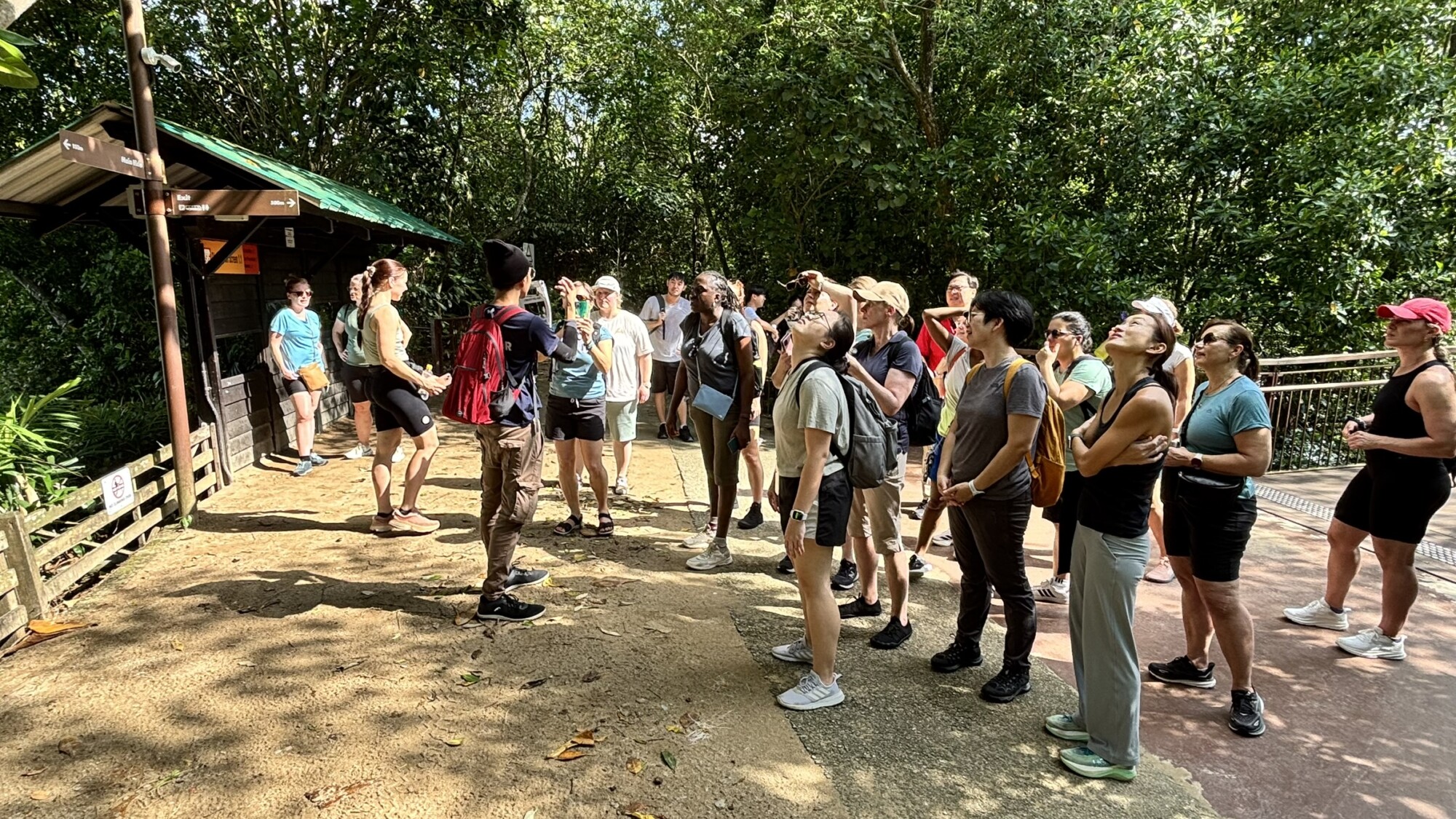
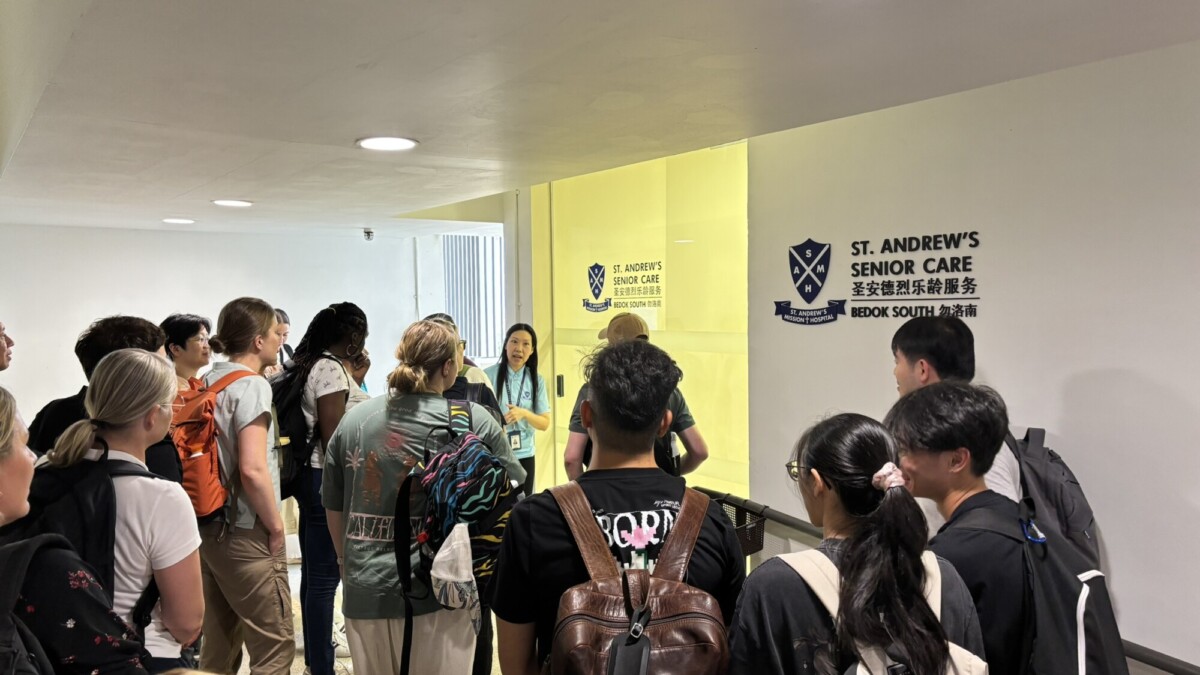
Thursday featured a visit to a nature reserve in Singapore, highlighting the vulnerability of nature to human actions and the importance of sustainable development solutions on biodiversity and human wellbeing. Students also visited a senior activity center (Picture 3) that offers active day programs such as singing, art, and craft for older adults. Some students sat down and played Rummikub with older adults.
Throughout the week, students worked on a group presentation to compare the differences in health systems and sustainability efforts by the two countries from their visits and their own readings. Students presented their work on Friday morning.
Course and intensive week feedback
Course feedback was collected from the course of participating students through a Webropol survey, which was linked to the Edunia Moodle platform. The feedback survey included multiple-choice questions, where students evaluated the course and the intensive week in Singapore on a scale from 0 (totally disagree) to 5 (totally agree). In addition, students reflected on their learnings and experiences through an open-ended question. 17 students responded to the feedback questionnaire.
Regarding the on-line course accessibility, navigation and interaction with other students, the median score was 4. Similarly, the on-line course contents, such as learning objectives, assignments, and materials resulted in a median score of 4. Students also felt that the on-line course supported their preparations for the intensive week in Singapore. Regarding the intensive week in Singapore, the median score overall was 4.5, reflecting the programme, professional content, social activities and overall competence development.
Regarding students’ open feedback, students felt that the intensive week in Singapore was educational, rewarding, and culturally enriching. Students appreciated the relaxed learning environment, friendly atmosphere, and support from teachers and peers. While students would have hoped a bit more time for team-building activities during the week, they felt that practicing English and engaging in cross-cultural discussions were beneficial. Main improvements for the future included having more time for field visits (e.g., health care organisations) in addition to increasing the number of local student participants. Overall, the experience was described as wonderful, educational, and joyful.
The outcomes of the trip included short-term exchanges supported by the project, which students found excellent, as well as learning experiences that will be published as blog articles on different on various publishing platforms, for example Seppänen & Äijö 2025, Lydman & Äijö 2025, Manninen & Äijö 2025, Klemetti & Äijö 2025, Rutanen & Äijö 2025. The trip also fostered international contacts and collaboration between students and teachers.
Summary and future directions
The recent Global Health Programme Exchange hosted in Singapore showcased an innovative highlight. What made this exchange truly impactful was the diverse representation of students from multiple countries, brought together by participating universities. This diversity fostered robust discussions on global health issues, whether focusing on Singapore’s health promotion strategies or exploring initiatives in other regions. Such dialogue not only broadened perspectives but also highlighted the interconnectedness of health and sustainability challenges across borders.
Ultimately, this collaboration exemplifies the power of international partnerships in addressing global health priorities. By sharing knowledge and experiences, we create endless opportunities for innovation and motivation, paving the way for future joint research and transformative projects. Together, we are shaping a generation of change-makers committed to advancing health and sustainability worldwide.
As a follow-up to the previous FUGA and current GOSH projects, we aim to continue cooperation by applying for new funding and exploring additional short-term exchange programs to enhance student and staff mobility. These initiatives, currently under review by the consortium, build on the positive feedback from both staff and students. Higher education institutions are committed to strengthening international relations and promoting global health and sustainability through diverse intercultural opportunities.
Authors:
Marja Äijö PhD, principal lecturer of gerontology and rehabilitation, Savonia University of Applied Sciences
Niina Katajapuu, PhD principal lecturer, Turku University of Applied Sciences
Sanna Sihvonen, Institute of Rehabilitation, School of Health and Social Studies, Jamk University of Applied Sciences
Armi Hirvonen, Senior Advisor, Insitute of Health, School of Health and Social Studies, Jamk University of Applied Sciences
I-Ling Yeh, Assistant Professor, Health and Social Sciences Cluster, Singapore Institute of Technology
Mauricette Lee, Assistant Professor, Health and Social Sciences Cluster, Singapore Institute of Technology
References:
Klemetti M, Äijö M. 2025. Singapore – A Nation of Healthy People: What Finland Can Learn. Published: 27.11.2025. Savonia Pro Article. In available: https://www.savonia.fi/en/articles-pro/singapore-a-nation-of-healthy-people-what-finland-can-learn/
Lee-Moling M, Katajapuu N, Sihvonen S, Äijö M. 2024. Overseas Exchange Programme on Global and Sustainable Health. Published at: 14.11.2024. Available: https://www.savonia.fi/en/hankkeet/overseas-exchange-programme-on-global-and-sustainable-health/
Lydman S, Äijö M. 2025. Environmental Friendliness in Physiotherapy Education – Thoughts on a More Sustainable Path. Published: 25.11.2025. Savonia Pro Article. In available: Environmental Friendliness in Physiotherapy Education – Thoughts on a More Sustainable Path – Savonia AMK
Manninen S, Äijö M. 2025. Encounters and insights in Singapore. Published: 26.11.2025. Savonia Article. In available: https://www.savonia.fi/en/articles/encounters-and-insights-in-singapore/
Rutanen M. Äijö M. 2025. What does sustainability mean in health context? Published: 26.11.2025. Savonia Pro Article. In available: https://www.savonia.fi/en/articles-pro/what-does-sustainability-mean-in-health-context/
Seppänen M, Äijö M. 2025. Active Aging through rehabilitation: Lessons from Singapore and Finland. Published: 25.11.2025. Savonia Pro Article. In available: https://www.savonia.fi/en/articles-pro/active-aging-through-rehabilitation-lessons-from-singapore-and-finland/
United Nations n.d. Sustainable Development Goals. Retrieved 30.11. 2025. In available: https://sdgs.un.org/goals
World Health Organization. (2019). Rehabilitation: fact sheet on Sustainable Development Goals (SDGs): health targets. WHO Regional Office for Europe. https://www.who.int/europe/publications/i/item/WHO-EURO-2019-2384-42139-58051
World Health Organization, WHO. (2023). Strengthening rehabilitation in health systems (WHA76.6). Geneva: WHO.
World Health Organization, WHO. (2024). Rehabilitation fact sheet. Retrieved from https://www.who.int
Äijö M, Laukkanen V. 2023. Developing Future of Remote Therapy in Finland and Singapore. Savonia article. Published: 11.1.2023. In available: https://www.savonia.fi/en/articles/savonia-article-developing-future-of-remote-therapy-in-finland-and-singapore/
Äijö M, Sihvonen S & Katajapuu N. 2022. FUGA project – Promoting cooperation in Singapore. Savonia article. Published: 14.9.2022. In available: https://www.savonia.fi/en/rdi/savonia-article-fuga-project-promoting-cooperation-in-singapore/