Savonia Article Pro: Learning Together: Advancing Evidence-Based Physiotherapy Through BIP Week from different physiotherapy topics
Savonia Article Pro is a collection of multidisciplinary Savonia expertise on various topics.
This work is licensed under CC BY-SA 4.0


Evidence-Based Physical Therapy (EBP) uses the best research evidence with clinical expertise and user’s preferences to produce the most appropriate and effective care. Teaching should also employ the most effective methods available to support evidence-based decision-making when planning client rehabilitation (Boshnjaku et al. 2023, Connor et al. 2023, Diaz 2024, Nielsen et al. 2024). Based on evidence of effective teaching methods, we designed a BIP course to enable physiotherapy students to deepen their understanding of evidence-based physiotherapy in an international learning environment.
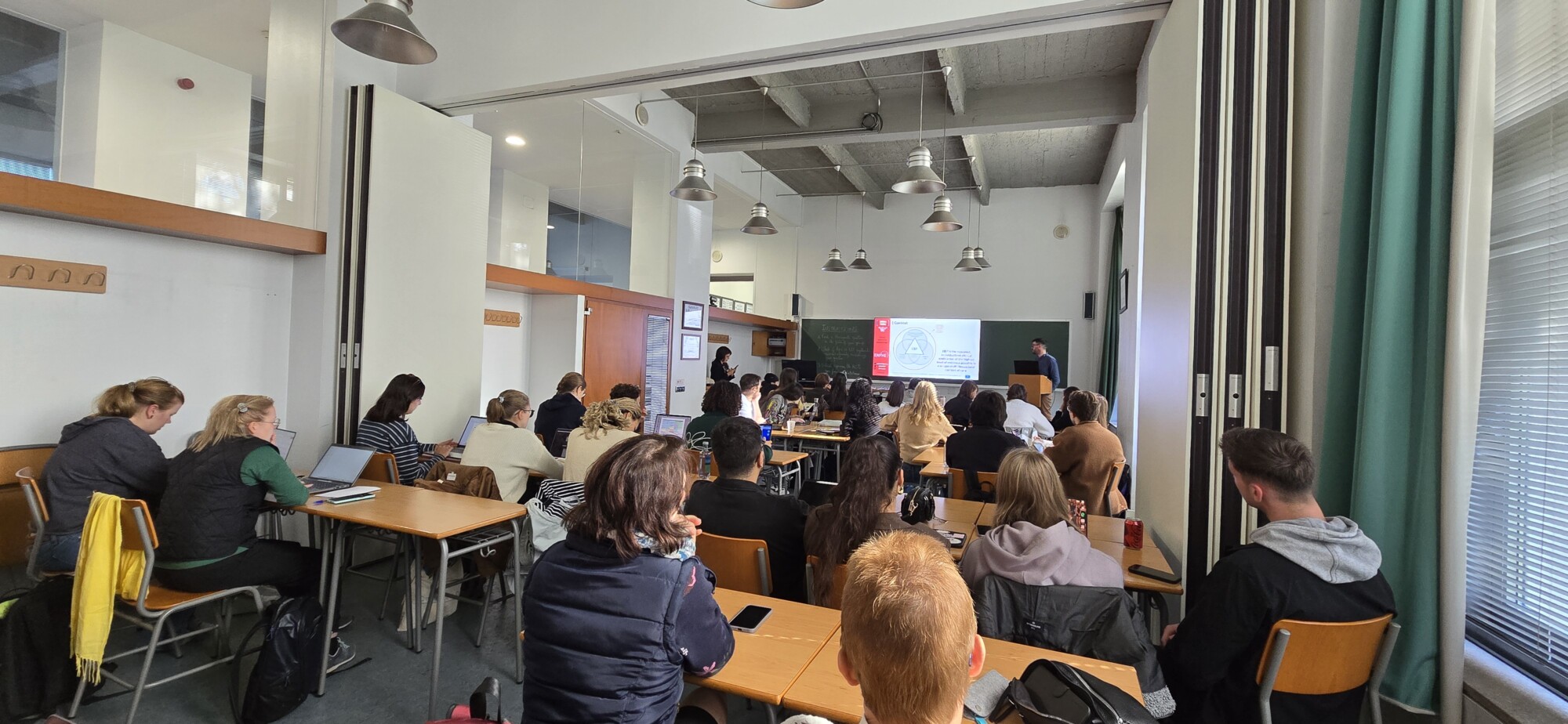
At week 44 in 2025, we had International Course in Spain, A Coruna, in the Faculty of Physiotherapy at University of Coruña about EBP. The program was opened with welcome words of the president of The European Network of Physiotherapy in Higher Education (ENPHE) (nd) and followed with the basis of EBP and teachers who highlighted the main challenges at different Physical Therapy fields. More than 30 physiotherapy students and 9 teachers from six universities (Savonia University of Applied Sciences, Finland, Universidade da Coruña, Spain, Charles University Czech Republic, CERRFF and École D´Assas, France, and Escola de Santa María de O Porto, Portugal), actively participated this week and shared experiential group dynamics and social activities. The students collaborated and wrote articles on a range of topics, including evidence based.
One week BIP programme included in both lectures and students’ group work in international groups to not forget social programme. During the virtual meeting, students were introduced to the concept of evidence-based physiotherapy, the sources of evidence, and methods for critically appraising it. During the week, students deepened their knowledge particularly in research methodology and critical appraisal skills. In addition, evidence-based practice was connected to various areas of physiotherapy, including neurology, respiratory and musculoskeletal disorders, geriatric and pediatric care, as well as sports injuries and related conditions. This blog article presents teaching topics from the perspective of educators during BIP week.
Women’s Health
During the BIP week, within the Women’s Health group, we worked collaboratively, starting by identifying questions or concerns raised by the students who were part of the group. We discussed several aspects of women’s health that might be of interest to them, and they defined their main areas of interest, which were primarily related to pelvic pathologies and diastasis. Finally, they carried out their research work based on scientific evidence about abdominal diastasis. At that stage, they identified relevant articles, read and analyzed them, and completed their learning assignment. This project may have represented the first, or one of the first, experiences with physiotherapy in women’s health for the students. They did an excellent job. (Porubčanská et al. 2025.)
Physiotherapy in infancy
This student team focused on physiotherapy in infancy. In cooperation, our objective was to identify evidence-based practices and current limitations within this field. Our work involved a systematic search and critical appraisal of recent literature, emphasizing the integration of physiotherapeutic interventions in neonatal care. The project culminated in the development of a blog article discussing pain management in NICUs, highlighting the importance of non-pharmacological strategies to ensure safe, effective, and developmentally appropriate care for preterm infants. (Hvězdová et al. 2025.)
Neurological diseases: Stroke and Parkinson disease
Self-Rehabilitation & Stroke, what does the evidence say, focused on recent studies investigating the gain obtained by guided self-rehabilitation contract for post stroke hemiparesis. The keynote started with a presentation of the pathology and specifically the deforming spastic paresis. The (small) literature on the subject seems to suggest that intensive training program, especially self-stretching associated with rapid repetitive movements, may have beneficial effects on spastic paresis syndrome, even during the chronic stage of the stroke! As often, more studies are needed to confirm these results. (Vecchio et al. 2017, Pradines et al. 2019, Gault-Colas et al. 2024.) For the neurology-related theme, students chose Parkinson’s disease and explored how Lee Silverman Voice Treatment (LSVT) rehabilitation is connected to quality of life. (Kuokkanen et al. 2025.)
Sport
One group, consisting of four international students from Finland, Spain, France, and the Czech Republic, focused on a sports-related topic, specifically the management of anterior cruciate ligament (ACL) injuries in male athletes. They carried out a mini systematic review to critically examine current research comparing operative and conservative treatment approaches for ACL rupture and their effects on return to sport, knee function, and long-term outcomes. By conducting a structured literature search and assessing methodological quality using the PEDro scale (scores ranging from 6/10 to 9/10, average 7.5/10), the group summarized findings from four randomized controlled trials (Reijman et al., 2021; van Yperen et al., 2018; Frobell et al., 2010; Meuffels et al., 2009). The evidence indicated that early ACL reconstruction does not provide significant functional benefits over structured rehabilitation, though it may offer slightly better mechanical stability, with long-term follow-ups showing similar outcomes in activity level, osteoarthritis, and knee function between operative and nonoperative strategies. Throughout the project, the students worked effectively as an international team, dividing tasks according to individual strengths, engaging in open discussion, and refining their methodology to ensure a rigorous and reliable review. This experience not only clarified practical implications of ACL management in athletes but also strengthened their skills in teamwork, communication, and shared responsibility within a multicultural academic setting. (Aalto et al. 2025.) Sports physiotherapy is always of great interest to students. Another group familiarized themselves with the theme Ankle Sprain Swelling to comparison of Kinesio taping and neuromuscular electrical stimulation (Josefusová et al. 2025).
Asthma from respiratory diseases
The management of asthma from a physiotherapy perspective was addressed, complementing conventional treatment based on inhaled medication. Asthma is a chronic condition characterized by bronchial hyperresponsiveness and airway obstruction, with symptoms such as dyspnoea, cough, chest tightness, wheezing, and, in many cases, mucus hypersecretion. Physiotherapy contributes through three main areas: respiratory physiotherapy, exercise and physical activity, and patient education. Respiratory physiotherapy includes airway clearance techniques, breathing pattern retraining, and respiratory muscle training. Exercise and physical activity should be prescribed similarly to healthy individuals, while considering symptoms and preventive measures for exercise-induced asthma. Finally, education is essential. Physiotherapists should participate actively by teaching proper inhaler use, environmental control strategies, and promoting physical activity, exercise, and healthy lifestyle habits. Further high-quality studies are required to strengthen the evidence regarding the effects of physiotherapy in patients with asthma. (Vilanova-Pereira et al. 2025.) One group of students focused on the high-intensive training patients with respiratory disease. (Saastamoinen et al. 2025.)
Evidence based practice decision-making model for low back pain
A clinical model for evidence-based decision-making (Haynes, R.B. et al., 1996) was introduced along environmental and organizational factors (Satterfield, 2009) to account for legal frameworks, practitioner competencies, and healthcare accessibility. The clinical decision-making process was simulated in the context of chronic non-specific low back pain and mechanical diagnosis and therapy. Moderate- to high-quality evidence supports the use of mechanical diagnosis and therapy for reducing pain and disability, with small to moderate effect sizes (Lam, O. et al., 2018). These results must be critically interpreted, as effectiveness depends on the type of intervention being compared. Clinical guidelines recommend using a classification system based on mechanical diagnosis and therapy, as confirmed by Long, A. et al. (2004), and applying joint mobilization and general exercise training, which are supported by strong evidence (George, S.Z. et al., 2021). One group of studetns become familiar with the subject related to posterior tibial tendon dysfunction (Khida et al. 2025).
Walking a good therapy for older adults
Walking and Nordic walking have well-documented benefits for maintaining and improving functional capacity in older adults. Evidence shows that these forms of physical activity enhance cardiovascular endurance, muscle strength, balance, and gait efficiency, all of which are critical for independence and fall prevention (Ungvari et al. 2023, Rubin et al. 2025). Nordic walking, in particular, engages both upper and lower body musculature, increasing energy expenditure and improving posture and coordination (Bullo et al. 2017, Tschentscher et al. 2013). Regular participation in these activities is associated with better mobility, reduced risk of disability, have some impact of cognitive functions, and improved quality of life among older populations (Li et al. 2025, Skórkowska-Telichowska et al. 2016). On group of students focusing on exercise training effect on walking ability among older adults (Ayivi et al. 2025).
Conclusion
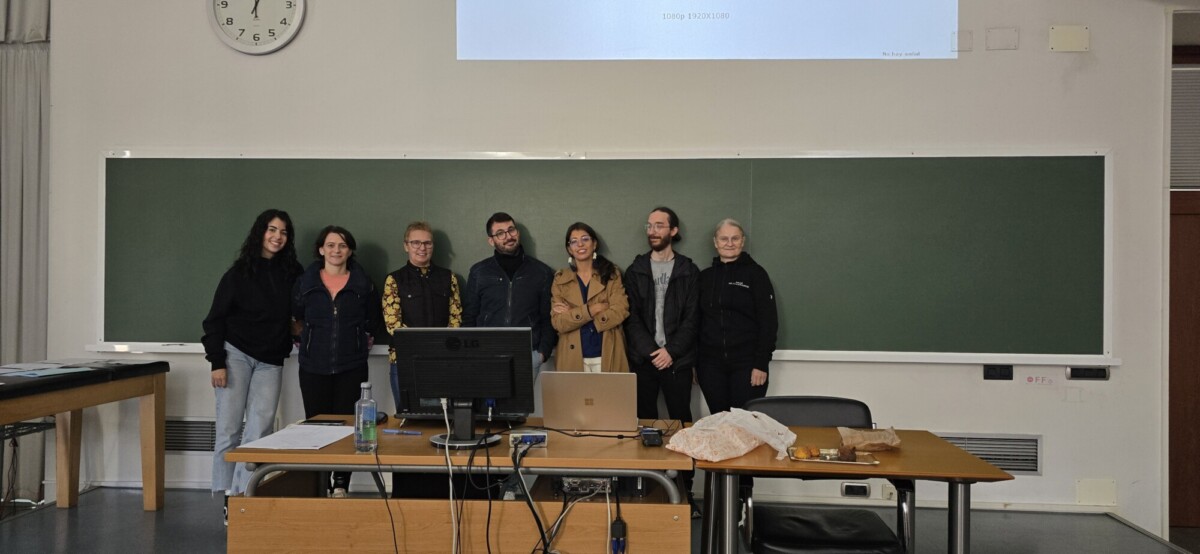
It is important to bring teachers and students together to learn and study evidence-based physiotherapy. Shared discussion fosters deeper learning and teaching (Picture 1). This provides a strong foundation for continuing collaboration and further development.
Authors:
Marja Äijö, PT, PhD Principal Lecturer of gerontology and rehabilitation, Savonia University of Applied Sciences, Kuopio, Finland.
Dagmar Pavlu, PT. Assoc. Prof. Charles University, Czech Republic.
Ivana Vláčilová, PhD., PT. Charles University, Czech Republic.
Veronica Robles García, PhD. PT. OT. Associate Professor, University of A Coruña, A Coruña, Spain.
Zeltia Naia Entonado, PhD. PT. University of A Coruña, A Coruña, Spain.
María Vilanova Pereira, PhD., PT. University of A Coruña, A Coruña, Spain.
Adrien Pallot, PT, MSc, Lecturer at École D´Assas, France.
Aurel Bellaïche, PT, Lecturer at CEERRF, France.
References:
Aalto S, Benhammou Y, Flašíková M, Rivada López N, Pavlu D, Vláčilová I, Äijö M, Robles García V, Naia Entonado Z, Vilanova Pereira M, Pallot A, Bellaïche A. 2025. Is operative approach to ACL rupture better than conservative on athletes coming back to sports? Published: 21.11.2025. Savonia Pro Article. In available: Is operative approach to ACL rupture better than conservative on athletes coming back to sports? – Savonia AMK
Ayivi A, Lydman S, Theofanous LM, Pavlu D, Vláčilová I, Äijö M, Robles García V, Naia Entonado Z, Vilanova Pereira M, Pallot A, Bellaïche A.2025. How does exercise training affect walking ability in elderly. Published: 27.11.2025. Savonia Pro Article. In available: How does exercise training affect walking ability in elderly – Savonia AMK
Boshnjaku A, Arnadottir SA, Pallot A, Wagener M, Äijö M. Improving the Evidence-Based Practice Skills of Entry-Level Physiotherapy Students through Educational Interventions: A Scoping Review of Literature. 2023. Int J Environ Res Public Health. Aug 18;20(16):6605. https://doi.org/10.3390/ijerph20166605
Bullo, V., Gobbo, S., Vendramin, B., Duregon, F., Cugusi, L., Di Blasio, A., … & Zaccaria, M. (2017). Nordic walking can be incorporated in the exercise prescription to increase aerobic capacity, strength, and quality of life for elderly: A systematic review and meta-analysis. Rejuvenation Research, 21(2), 141–161. https://doi.org/10.1089/rej.2017.1921
Connor L, Dean J, McNett M, Tydings DM, Shrout A, Gorsuch PF, Hole A, Moore L, Brown R, Melnyk BM, Gallagher-Ford L. 2023. Evidence-based practice improves patient outcomes and healthcare system return on investment: Findings from a scoping review. Worldviews Evid Based Nurs Feb;20(1):6-15. https://doi.org/10.1111/wvn.12621.
Diaz H. 2024. Physiotherapy in Clinical Research: Optimizing Patient Outcomes through Evidence-Based Practices. J Clin Res Bioeth. S21:002.
Frobell, R. B., Roos, E. M., Roos, H. P., Ranstam, J., & Lohmander, L. S. 2010. A randomized trial of treatment for acute anterior cruciate ligament tears. The New England journal of medicine, 363(4), 331–342. https://doi.org/10.1056/NEJMoa0907797
Gault-Colas C, Pradines M, Baude M, Gracies J-M. 2024. Exceptional improvement in chronic stroke through Guided Self-rehabilitation Contract: a case report study. Front Rehabil Sci 5:1385483. https://doi.org/10.3389/fresc.2024.1385483.
George SZ, Fritz JM, Silfies SP, Schneider MJ, Beneciuk JM, Lentz TA, Gilliam JR, Hendren S, Norman KS. 2021. Interventions for the Management of Acute and Chronic Low Back Pain: Revision 2021. J Orthop Sports Phys Ther.,51(11):CPG1-CPG60. https://doi.org/10.2519/jospt.2021.0304
Haynes, R. B., Sackett, D. L., Gray, J. M. A., Cook, D. J., & Guyatt, G. H. 1996. Transferring evidence from research into practice: 1. The role of clinical care research evidence in clinical decisions. BMJ Evidence-Based Medicine, 1(7), 196.
Hvězdová N, Berthes L, Sow G, Busto M, Pavlu D, Vláčilová I, Äijö M, Robles García V, Naia Entonado Z, Vilanova Pereira M, Pallot A, Bellaïche A. 2025. What physiotherapy interventions are available to reduce pain in premature infants during their hospitalization in NICU’s? Published: 24.11.2025. Savonia Pro Article. In available: What physiotherapy interventions are available to reduce pain in premature infants during their hospitalization in NICU’s? – Savonia AMK
Josefusová K, Rylich L, M’Zebla D, González González E, Pavlu D, Vláčilová I, Äijö M, Robles García V, Naia Entonado Z, Vilanova Pereira M, Pallot A, Bellaïche A. 2025. Kinesio Taping vs. Neuromuscular Electrical Stimulation: Which Is Better for Reducing Ankle Sprain Swelling? Published: 24.11.2025. Savonia Pro Article. In available: Kinesio Taping vs. Neuromuscular Electrical Stimulation: Which Is Better for Reducing Ankle Sprain Swelling? – Savonia AMK
Khida A, Mezerová T, Otero P, Metoi N, Pavlu D, Vláčilová I, Äijö M, Robles García V, Naia Entonado Z, Vilanova Pereira M, Pallot A, Bellaïche A. 2025. Effectiveness of Resistance Training Plus Orthoses in Posterior Tibial Tendon Dysfunction. Published: 21.11.2025. Savonia Pro Article. In available: Effectiveness of Resistance Training Plus Orthoses in Posterior Tibial Tendon Dysfunction – Savonia AMK
Kuokkanen A, Coufalová W, Leone-Ganado V, Pavlu D, Vláčilová I, Äijö M, Robles García V, Naia Entonado Z, Vilanova Pereira M, Pallot A, Bellaïche A. 2025. What are the Effects of LSVT BIG Treatment on Quality of Life Outcomes in Parkinson’s Disease Patients? Published: 25.11.2025. Savonia Pro Article. In available: What are the Effects of LSVT BIG Treatment on Quality of Life Outcomes in Parkinson’s Disease Patients? – Savonia AMK
Lam, O. T., Strenger, D. M., Chan-Fee, M., Pham, P. T., Preuss, R. A., & Robbins, S. M. 2018. Effectiveness of the McKenzie Method of Mechanical Diagnosis and Therapy for Treating Low Back Pain: Literature Review With Meta-analysis. The Journal of orthopaedic and sports physical therapy, 48(6), 476–490. https://doi.org/10.2519/jospt.2018.7562
Li, H., Zhang, Y., Wang, L., Chen, X., & Zhao, J. 2025. The effects of Nordic walking on cognitive function in older adults: A systematic review and meta-analysis. Frontiers in Aging Neuroscience, 17, 1666449. https://doi.org/10.3389/fnagi.2025.1666449
Long, A., Donelson, R., & Fung, T. 2004. Does it matter which exercise? A randomized control trial of exercise for low back pain. Spine, 29(23), 2593–2602. https://doi.org/10.1097/01.brs.0000146464.23007.2a
Meuffels, D. E., Favejee, M. M., Vissers, M. M., Heijboer, M. P., Reijman, M., & Verhaar, J. A. 2009. Ten year fol-low-up study comparing conservative versus operative treatment of anterior cruciate ligament ruptures. A matched-pair analysis of high level athletes. British journal of sports medicine, 43(5), 347–351. https://doi.org/10.1136/bjsm.2008.049403
Nielsen, L.D., Løwe, M.M., Mansilla, F. et al. 2024. Interventions, methods and outcome measures used in teaching evidence-based practice to healthcare students: an overview of systematic reviews. BMC Med Educ 24, 306. https://doi.org/10.1186/s12909-024-05259-8
Porubčanská V, Andujar P, Cardon F, Cabrera Cao C, Pavlu D, Vláčilová I, Äijö M, Robles García V, Naia Entonado Z, Vilanova Pereira M, Pallot A, Bellaïche A. 2025. Effectiveness of Supervised versus Online Pelvic Floor and Core Rehabilitation in Postpartum Women with Diastasis Recti. Published: 28.11.2025. Savonia Pro Article. In available: Effectiveness of Supervised versus Online Pelvic Floor and Core Rehabilitation in Postpartum Women with Diastasis Recti – Savonia AMK
Pradines M, Ghedira M, Portero R, Masson I, Marciniak C, Hicklin D, et al. 2019. Ultrasound Structural Changes in Triceps Surae After a 1-Year Daily Self-stretch Program: A Prospective Randomized Controlled Trial in Chronic Hemiparesis. Neurorehabil Neural Repair 33:245–59. https://doi.org/10.1177/1545968319829455.
Reijman, M., Eggerding, V., van Es, E., van Arkel, E., van den Brand, I., van Linge, J., Zijl, J., Waarsing, E., Bierma-Zeinstra, S., & Meuffels, D. 2021. Early surgical reconstruction versus rehabilitation with elective delayed recon-struction for patients with anterior cruciate ligament rupture: COMPARE randomised controlled trial. BMJ (Clinical re-search ed.), 372, n375. https://doi.org/10.1136/bmj.n375
Rubin, D. S., et al. 2025. Walking cadence as a measure of activity intensity and impact on functional capacity for prefrail and frail older adults. PLOS ONE, 20(11), e0323759. https://doi.org/10.1371/journal.pone.0323759
Saastamoinen M, Šimoníčková R, Vandamme L, Duault J, Pavlu D, Vláčilová I, Äijö M, Robles García V, Naia Entonado Z, Vilanova Pereira M, Pallot A, Bellaïche A. 2025. The Effect of High-Intensity Interval Training on Exercise Tolerance in Patients with Respiratory Diseases. Published: 26.11.2025. Savonia Pro Article. In available: The Effect of High-Intensity Interval Training on Exercise Tolerance in Patients with Respiratory Diseases – Savonia AMK
Satterfield, J. M., Spring, B., Brownson, R. C., Mullen, E. J., Newhouse, R. P., Walker, B. B., & Whitlock, E. P. 2009. Toward a transdisciplinary model of evidence-based practice. The Milbank quarterly, 87(2), 368–390. https://doi.org/10.1111/j.1468-0009.2009.00561.x
Skórkowska-Telichowska, K., Kropielnicka, K., Bulińska, K., Pilch, U., Woźniewski, M., Szuba, A., & Jasiński, R. (2016). Nordic walking in the second half of life. Aging Clinical and Experimental Research, 28(6), 1035–1046. https://doi.org/10.1007/s40520-016-0531-8
Tschentscher, M., Niederseer, D., & Niebauer, J. 2013. Health benefits of Nordic walking: A systematic review. American Journal of Preventive Medicine, 44(1), 76–84. https://doi.org/10.1016/j.amepre.2012.09.043
Ungvari, Z., Fazekas-Pongor, V., Csiszar, A., & Kunutsor, S. K. 2023. The multifaceted benefits of walking for healthy aging: from Blue Zones to molecular mechanisms. GeroScience, 45, 3211–3239. https://doi.org/10.1007/s11357-023-00873-8.
Vecchio M, Gracies J-M, Panza F, Fortunato F, Vitaliti G, Malaguarnera G, et al. 2017. Change in Coefficient of Fatigability Following Rapid, Repetitive Movement Training in Post-Stroke Spastic Paresis: A Prospective Open-Label Observational Study. J Stroke Cerebrovasc Dis 26:2536-40. https://doi.org/10.1016/j.jstrokecerebrovasdis.2017.05.046.
van Yperen, D. T., Reijman, M., van Es, E. M., Bierma-Zeinstra, S. M. A., & Meuffels, D. E. 2018. Twenty-Year Fol-low-up Study Comparing Operative Versus Nonoperative Treatment of Anterior Cruciate Ligament Ruptures in High-Level Athletes. The American journal of sports medicine, 46(5), 1129–1136. https://doi.org/10.1177/0363546517751683
Vilanova-Pereira M, Jácome C, Lista-Paz A. 2015. The Role of Physiotherapy in Optimising Asthma Management. Open Respiratory Archives 7(4):100498. https://doi.org/10.1016/j.opresp.2025.100498