Savonia Article Pro: Two Mission Soil projects developing business models for soil health in co-creation workshop
Savonia Article Pro is a collection of multidisciplinary Savonia expertise on various topics.
This work is licensed under CC BY-SA 4.0


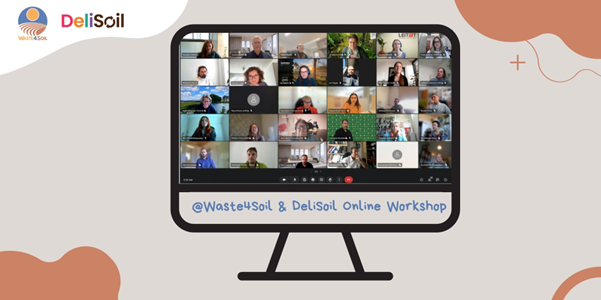
Waste4Soil and DeliSoil are circular sister projects working on European Commission Mission Soil to enhance soil health. The two projects planned and organized an online workshop on business models and regulatory aspects for project partners on Friday 24th of April 2026. The organizers were pleased to host 40 experts who attended the workshop and were active in discussions and co-creation.
Waste4Soil and DeliSoil address the role of business models
Tuomo Eskelinen from Savonia UAS opened the day by welcoming all participants. He presented how the two projects align with the other, and why business model creation is an essential part of soil-health innovations. The Waste4Soil and DeliSoil Business Model Workshop highlighted the role of business models in turning soil-health innovations from Living Labs into accepted, investable, and scalable solutions. It emphasized business models as a bridge between strategy and implementation, aligning value creation with farmer needs, regulatory compliance, and financing structures. The presentation underlined that social acceptance, economic viability, and policy readiness are essential for market uptake of circular soil improvers. Waste4Soil and DeliSoil were presented as examples of how co-created, circular bioeconomy solutions can gain legitimacy and long-term sustainability. Overall, the workshop positioned business models as key enablers for Mission Soil, the Green Deal, and circular economy objectives.
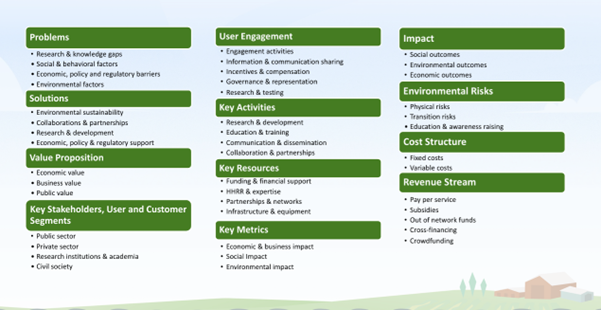
Next Marina Ettl from Proman Consulting highlighted how sustainable and circular business models—particularly in soil health and recycled fertilizers—can create long-term economic and strategic value. Using the Business Model Canvas and business case methodologies, the presentation demonstrated how value propositions, regulatory readiness, and customer acceptance are critical success factors. The presentation emphasized soil health as a driver of resilient agricultural yields, market competitiveness, and investor confidence. It also showed that early alignment with EU Green Deal and sustainability directives reduces regulatory risk and unlocks new financing opportunities. Finally, real-life examples illustrated how financial metrics such as ROI, NPV, and IRR support informed decision-making for industrial innovation projects
Business models are designed around real-life business cases
The participants got to hear inspiring stories on how to turn research into business. Toni Luoma from Biopallo Systems and Ossi Kinnunen from Soilfood were invited to present their real-life business cases.
Biopallo Systems presented a circular economy technology that transforms organic waste and industrial side streams into high-quality soil improvers and organic fertilizers in less than 24 hours. Its patented, highly automated and modular reactor technology combines precision microbial processing with low energy and material use, enabling scalable and cost-efficient operations. The solution is applicable across food industry waste, biogas digestate, animal manure, forestry residues, and reused growing media. By enabling fast, hygienic, and customizable processing close to waste sources, Biopallo supports sustainable resource use and regional bioeconomy value chains.
Ossi Kinnunen from Soilfood described how the company utilizes industrial and food-sector side streams to produce recycled raw materials, fertilizers, and soil amendments. The presentation highlighted Soilfood’s role as a market leader in the Nordics, working with industry, biogas plants, and farmers to replace virgin raw materials at scale. Soilfood offers comprehensive side stream processing services and a broad agricultural product range. Strong emphasis was placed on environmental impacts, including reduced emissions, improved soil health, and nutrient recycling. Overall, Soilfood presented circular solutions where sustainability and profitability were closely aligned.
Project case studies highlighted key aspects of circular economy journey
Jori Taipale from Waste4Soil introduced observations on business models in the project. Sustainability is an important value, but it should not be the only benefit that an idea offers. For this reason, it is important for partners to consider what kind of problem their idea solves and who would be willing to pay for the solution. Value can be created, for example, through cost efficiency, higher quality, water saving or increased national self-sufficiency related to fertilizers. It is also vital to notice, that solution does not always have to be a product, it can also be a service. Overall, it is particularly important to consider the idea’s financial profitability, as this is the only way to achieve long-term impact.
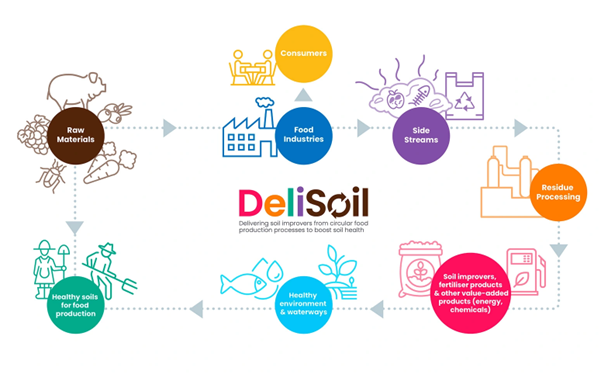
Ronald Farrar from DeliSoil highlighted how the project converts problematic food industry side streams into soil improvers, fertilisers, and biostimulants through circular value chains. The presentation emphasized that viable solutions depend on the economic feasibility of all interconnected actors—from waste generators to farmers—not individual stakeholders. The distinction between Living Labs (co-creation ecosystems) and value chains (business and contractual pathways) was clarified. Overall, successful innovation requires integrated, value chain-level business models rather than standalone solutions.
Participants shared their main challenges experienced during the co-creation phase
In co-creation phase of the workshop, participants chose from four themes they wanted to participate in: 1. Social acceptance of the solutions, 2. Economical performance of solution, 3. Regulatory compliance or 4. EU level policy briefs. The projects facilitated these workshops together. First, the facilitator presented a short introduction related to the topic. Second, the participants worked at a Padlet workspace answering questions on the theme. Then the participants discussed together and highlighted the important aspects, and tried to find solutions.
Social acceptance: The discussion identified low awareness, trust gaps, regulatory uncertainty, and perceived economic risks as key barriers to adopting soil-related innovations. Participants emphasized the need for targeted communication, stakeholder engagement, and concrete demonstration pilots to build confidence. Co-creation with farmers, industry, and local actors was seen as essential, alongside clear value propositions and risk sharing. Supportive socio-political measures included predictable policies, financial incentives, and alignment with EU and national soil strategies. Overall, improving acceptance requires better communication, evidence-based practices, and inclusive governance.
Economic performance of solutions: The discussion highlighted that decentralized and local processing of organic waste can significantly improve product quality, uniformity, and cost-efficiency. Key benefits vary by actor: food processors gain cheaper waste handling and reduced regulatory risks; waste processors benefit from stable feedstocks and new revenue streams, and manufacturers access lower-cost raw materials. For farmers, adoption depends mainly on competitive pricing and proven agronomic performance. Overall, economic viability requires clear cost advantages, reliable performance, and independence from subsidies.
Regulatory compliance: Participants emphasized that regulatory and legal aspects must be integrated from the very beginning of waste valorisation projects. Early understanding of permits, end of waste criteria, and fertilizer legislation is essential to avoid delays or project failure. Regulatory fragmentation across EU member states and slow inclusion of new materials were identified as major barriers, especially for SMEs. Compliance was seen as a prerequisite for credibility, investment, and market acceptance rather than a final step.
EU-level policy recommendations: The policy discussion focused on overcoming barriers to using food-processing residues by clarifying waste vs. by-product rules and harmonizing waste and fertilizer legislation. Increased funding for pilot and large-scale demonstrations and stronger support for Living Labs was seen as key enablers. At regional level, mapping residue availability and using digital tools to match supply and demand can accelerate uptake. The group also highlighted the need for common quality standards, farmer support, and clearer definitions for concepts such as regenerative agriculture.
The important work on soil health continues
The workshop produced valuable insights on circular business model creation. The results will guide the projects to focus on the key aspects recognized in the workshop and co-creation. The joint online workshop proved to be a success, with active discussion and inspiring presentations.
Acknowledgements
This work has received funding from the European Union’s Horizon Europe research and innovation programme under Grant Agreement No. 101112708 (Waste4Soil) and 101112855 (DeliSoil).
The Waste4Soil and DeliSoil project teams would like to express their sincere appreciation to all project partners and participating companies for their active contributions to the workshop, including presentations and organisational support.
Special thanks are extended to the group discussion leaders — Ansa Palojärvi, Ronald Farrar, Marina Ettl, Iida Sallinen, Jori Taipale, Nora Hatvani, Mari Eronen, Pekka Maijala and Tuomo Eskelinen — for their valuable expertise and facilitation.
Further information about the projects can be found at:
- Waste4Soil: https://www.waste4soil.eu/
- DeliSoil: https://delisoil.eu/
Authors
Dr. Tuomo Eskelinen, Research Manager, Savonia University of Applied Sciences
Iida Sallinen, RDI expert, Savonia University of Applied Sciences
Jori Taipale, RDI expert, Savonia University of Applied Sciences
References
Eskelinen, T. (2026). From Living Labs to uptake: how soil-health innovations become accepted, investable, compliant, and scalable. Manuscript.
Eskelinen, T., Hoxha-Jahja, A., Taipale, J., Sallinen, I., Hatvani, N. Sustainable and Circular Business Models Development: Experiences from Waste4Soil project. ISPIM Conference 2026, Granada, Spain.
Ettl, M. (2026). Waste4Soil Business Model Workshop.
Luoma, T (2026). Biopallo Systems Oy company presentation.
Kinnunen, O (2026). Soilfood company presentation.
Taipale, J (2026). From business model canvas to value creation
Farrar, R. (2026). From Circular Value Chains to Credible Business Models: “Understanding economic feasibility across interconnected actors”
Images:
- Screenshot of workshop participants (Waste4Soil)
- Image of Finnish countryside (Waste4Soil)
- DeliSoil value chain visualisation (DeliSoil)
- PREPSOIL Business model canvas elements. https://prepsoil.eu/living-labs-and-lighthouses/business-model-canvas-overview
M365 Copilot was used to summarize workshop presentations and to language check the article (May 2026).