
Savonia Article: Building a strong foundation for sustainable forestry education development
This work is licensed under CC BY-SA 4.0


The CO-FOREST Creating Opportunities for Resilience, Entrepreneurship, Sustainability, and Training in European Forestry -project was officially launched on 11th – 12th February in Tallinn, Estonia, hosted at the Estonian Business School. Over two intensive and well-structured days, the international consortium moved beyond formal introductions and focused on building a shared direction, clear governance structures and a strong foundation for implementation.
CO-FOREST responds to structural and emerging challenges in forestry education across Europe. The project develops innovative, inclusive, and challenge-driven training content that equips forestry professionals, students, landowners, and stakeholders with the competence required to navigate:
• Climate resilience and sustainability
• Wildfire prevention and fuel management
• Pest and disease outbreaks
• Digital transformation in forestry
• Innovation and sustainable entrepreneurship
The pedagogical backbone of the project is built on Challenge-Based Learning (CBL) and Place-Based Innovation (PBI). This ensures that training programs are grounded in real-world environmental and economic challenges, while remaining sensitive to the context of the regional forestry. Although locally embedded, the solutions developed through CO-FOREST will carry clear European relevance. By aligning education more closely with industry needs and innovation ecosystems, project contributes simultaneously to workforce readiness, green job creation, and regional competitiveness.
At the societal level, the project contributes to building a more resilient and adaptive forestry sector. By addressing climate resilience, fire resistance, professional needs, and pests and disease challenges, CO-FOREST supports long-term sustainability goals and reinforces the role of education as a driver of systemic transformation. The ambition is not limited to individual learners; it extends to influencing organizational practices and embedding sustainable forestry approached into long-term policy and strategic frameworks.
Learning from Estonian Forest and Innovation Ecosystem
During the kick-off programme, the consortium had the opportunity to gain deeper insights into the Estonian forestry sector. Site visits and stakeholder presentations highlighted how education, research, industry and innovation interact in practice. A key insight emerged clearly: forestry education must operate within an ecosystem perspective rather than a standalone activity.
Site visits to Lift99 Telliskivi Hub (https://www.lift99.co/) and Arbonics (https://www.arbonics.com) provided concrete examples of how digitalization and green transition intersect in business practice. These encounters illustrated the types of entrepreneurial, technological and systemic competences that future forestry professionals require. They also reinforced the importance of connecting forestry education with startups, scale-ups, and emerging green technology actors.
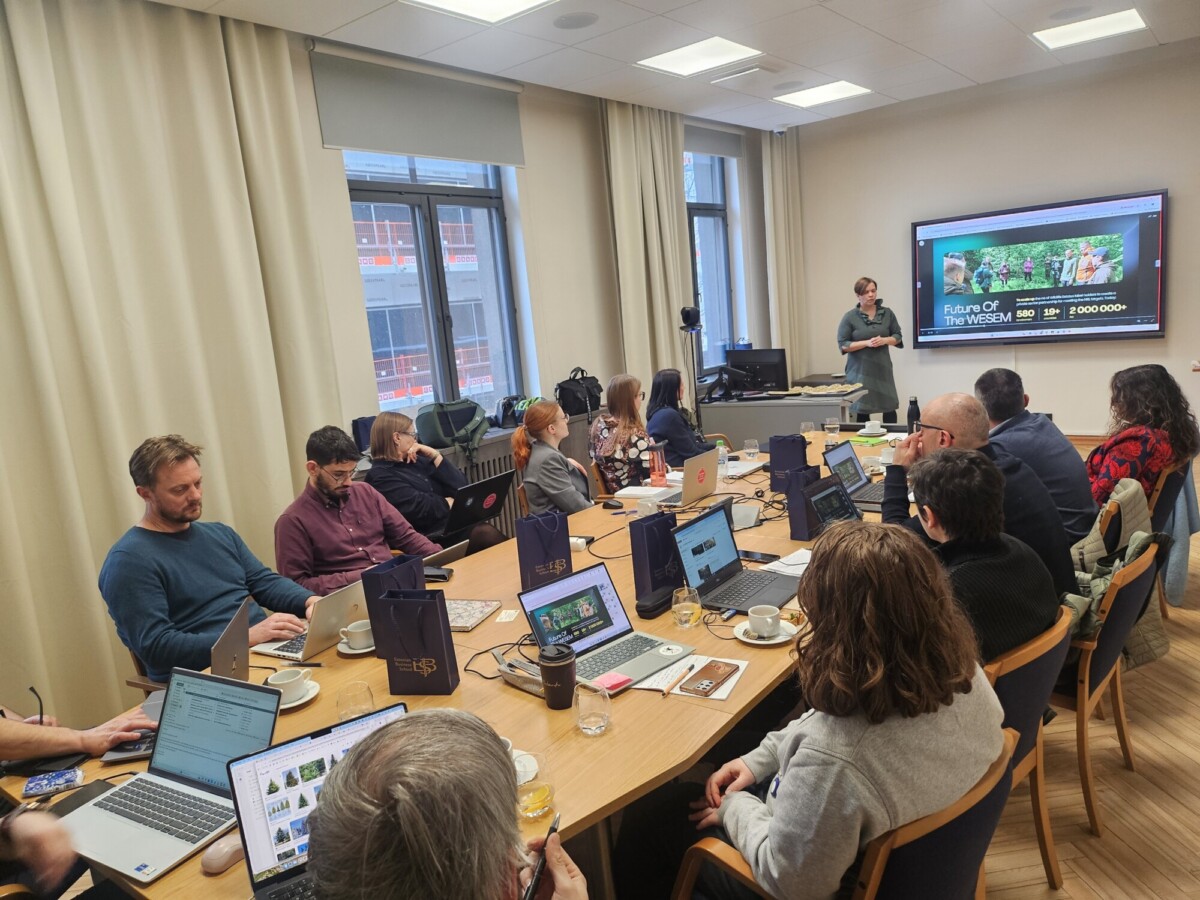
Pille Ligi from Loodushoiu Fond SA (nature conservation fund) presenting to the consortium what they have achieved during their project focusing on sustainable land management.
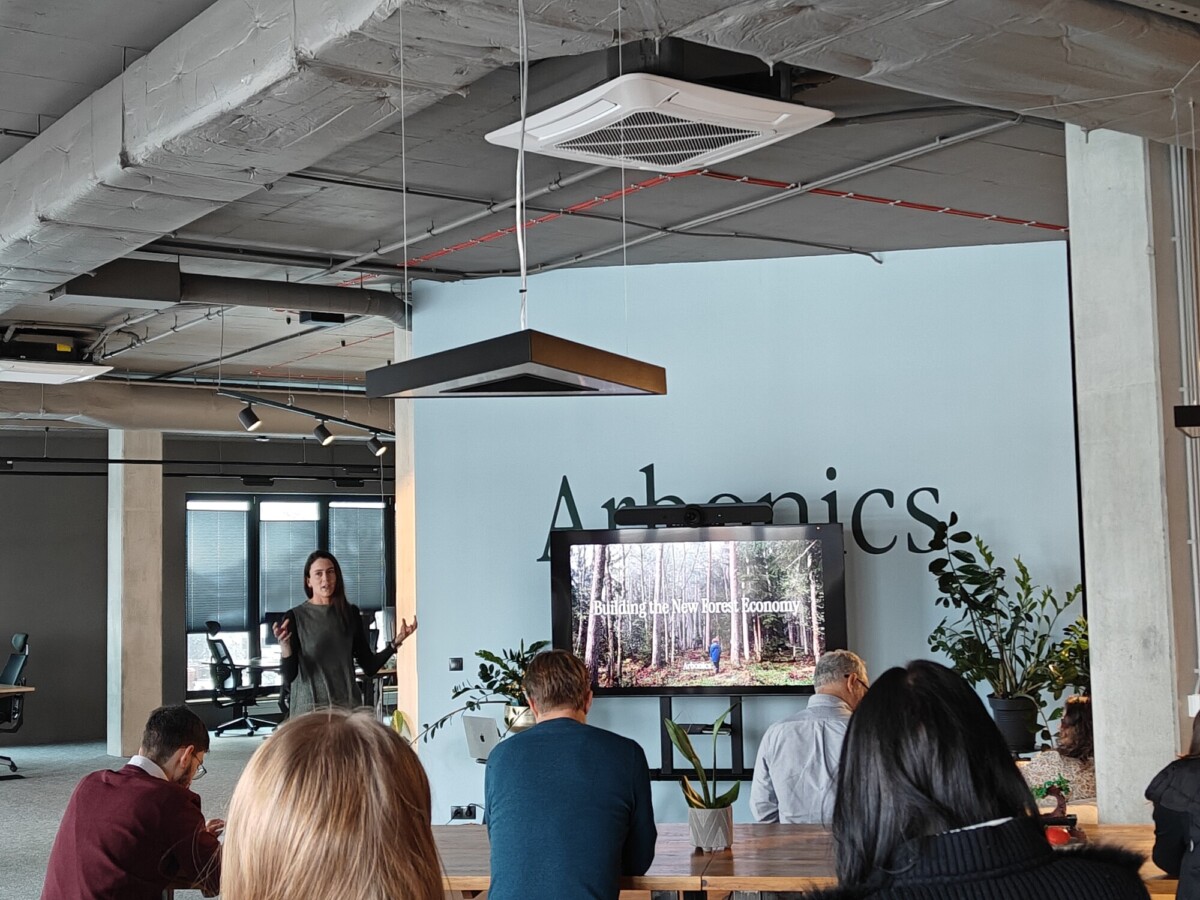
Site visit to Arbonics where they are building the New Forest Economy by using data, technology, and forests to remove carbon dioxide & protect biodiversity.
From shared vision to implementation
The kick-off clarified several guiding principles that will shape the project implementation:
• Early and structured co-creation strengthens long-term collaboration and impact
• Training development must be grounded in systematic stakeholder mapping and need assessment (first concrete task in the project)
• Anticipating future skill requirements requires scenario-based thinking but also reliance on current realities
• Forestry education must integrate with broader innovation ecosystem to remain relevant and transformative.
Bringing together partners from Finland, Estonia, Lithuania, Bulgaria, Greece, Spain and France, CO-FOREST establishes a transnational platform for strengthening resilience, entrepreneurship, and sustainability in the European forestry sector. The foundation for the project has been now carefully constructed. The next phase moves from alignment to execution – ensuring that innovative and inclusive forestry education becomes a tangible driver of Europe’s green transition.
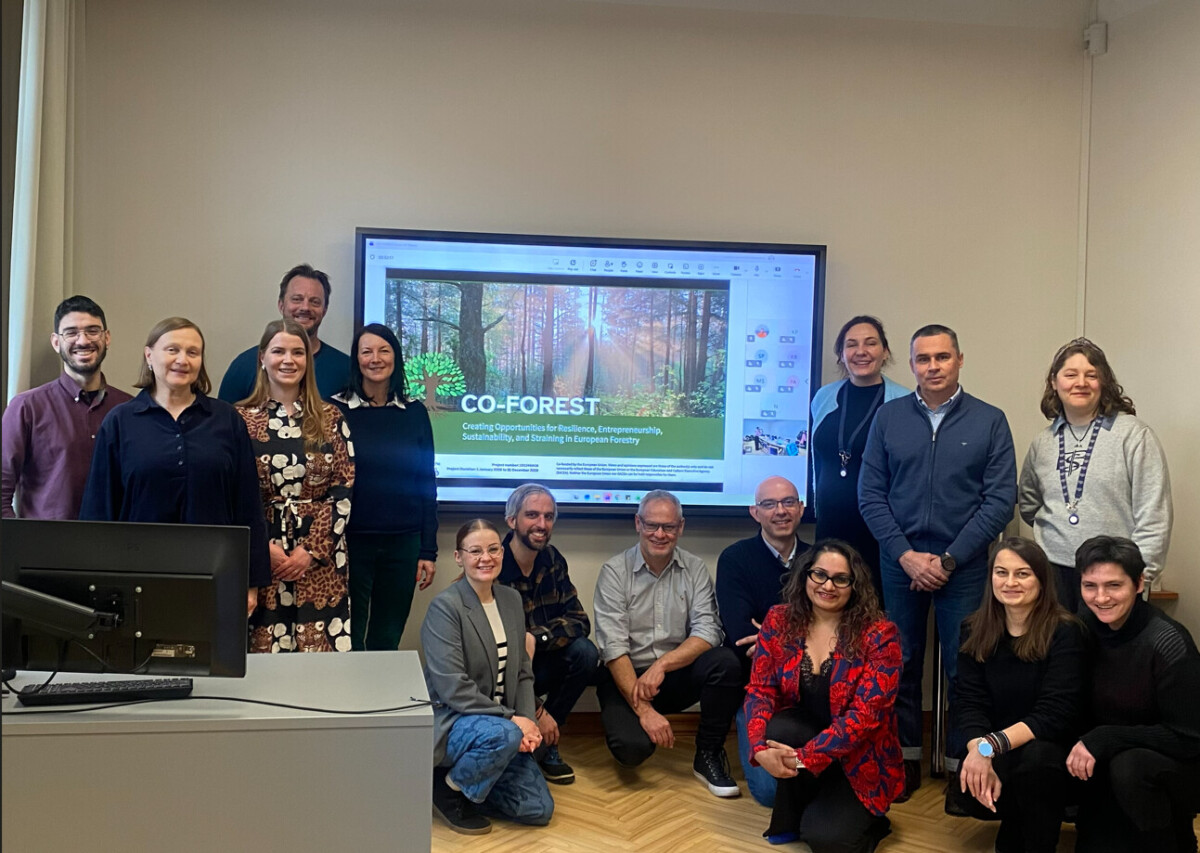
CO-FOREST consortium brings together partners from Finland, Estonia, Lithuania, Bulgaria, Greece, Spain and France.
CO-FOREST – Creating Opportunities for Resilience, Entrepreneurship, Sustainability, and Training in European Forestry project is funded by the European Union. Views and opinions expressed are however those of the author(s) only and do not necessarily reflect those of the European Union or the European Education and Culture Executive Agency (EACEA). Neither the European Union nor EACEA can be held responsible for them.
Authors
Jade Hirvonen, RDI Specialist, Food System research unit
Minna Luoto, RDI Specialist, Food System research unit