Savonia Article: From Hamburg to North Savo: Friendship Cooperation for Stronger Food Clusters and Sustainable Food Systems
This work is licensed under CC BY-SA 4.0


Savonia University of Applied Sciences representing the North Savo region has engaged in friendship cooperation with the City of Hamburg during 2025. The cooperation was part of the Interreg BSR funded project, KISMET, which focused on building more sustainable food environments. The idea of friendship cooperation is to benchmark what has been done in the cluster development in Hamburg, and pilot suitable elements in North Savo.
In this cooperation, the aim of the North Savo pilot is to support the development of cluster activities and advocacy work at the regional level and to explore the possibility of a joint North Savo position to support the development of national cluster strategy. In practice, this means strengthening the quadruple helix model in the development of the North Savo food system through the Agri-Food Cluster.
In peer learning between German and Finnish actors, it is important to remember the differences between the countries, especially in administrative structures. In Germany, the federal states have strong regional administrative authority, whereas in Finland regions do not. In Finland, decisions made at state level strongly steer regional activities. Due to these differences, the situations of the regions are not fully comparable, but the regions can still learn a great deal from each other.
Cluster activities in Hamburg
According to Hamburg’s definition, clusters must be under public (governmental) ownership. Based on this definition, there are eight official clusters operating in the Hamburg region. One of these is Food Cluster Hamburg, that started its activities in autumn 2024 following systematic studies and political decision-making.
Hamburg has a regional cluster strategy, which has guided the establishment of Food Cluster Hamburg. Decision-makers have recognized that companies need support for innovation in order to respond to consumer demand. The idea of a food cluster emerged in 2021, after which a detailed analysis of the food sector and food-related cluster activities in Germany and Europe was carried out. Based on this analysis, the Senate made a decision on the matter in 2023, followed by a parliamentary decision in 2024. Consequently, Food Cluster Hamburg started its operations in autumn 2024.
The cluster was built on the existing FoodActive network, with the aim of expanding the network’s activities. Food Cluster Hamburg is the only food cluster in Germany; in other federal stated there is no food cluster activities, although various networks do exist. The AirBus cluster served as an important inspiration for establishing other clusters in Hamburg, including Food Cluster Hamburg.

Stakeholder event in North Savo
A stakeholder event for quadruple helix actors from North Savo was held on 7th of May 2025. The event strengthened the shared understanding of the importance of Agri-Food sector cluster activities both regionally and nationally. Participants expressed a strong interest in learning from Hamburg cluster model, especially in relation to influencing decision-makers and national steering. Conversely, Hamburg found out the opportunity to learn from North Savo’s way of engaging consumers and expanding from triple helix model towards a quadruple helix model.
The discussions identified key challenges for cluster activities, such as continuity and stability of funding and the lack of regional funding. At the same time, participants noted that North Savo already has a strong cluster ecosystem, which provides a solid basis for engaging public authorities and developing funding solutions. Food clusters were seen as playing a significant role in supporting companies, innovation and business growth, as well as in EU project applications and the comprehensive development of food security.
The event also highlighted the need to strengthen the national cluster strategy and to improve the visibility and implementation of the existing ecosystem-based strategy in Finland. In Finland, strong state-centred steering and the lack of a national cluster policy slow down the consolidation and long-term development of clusters, even-though clusters were viewed as flexible tools that should be adapted to the different needs of regions and institutions.
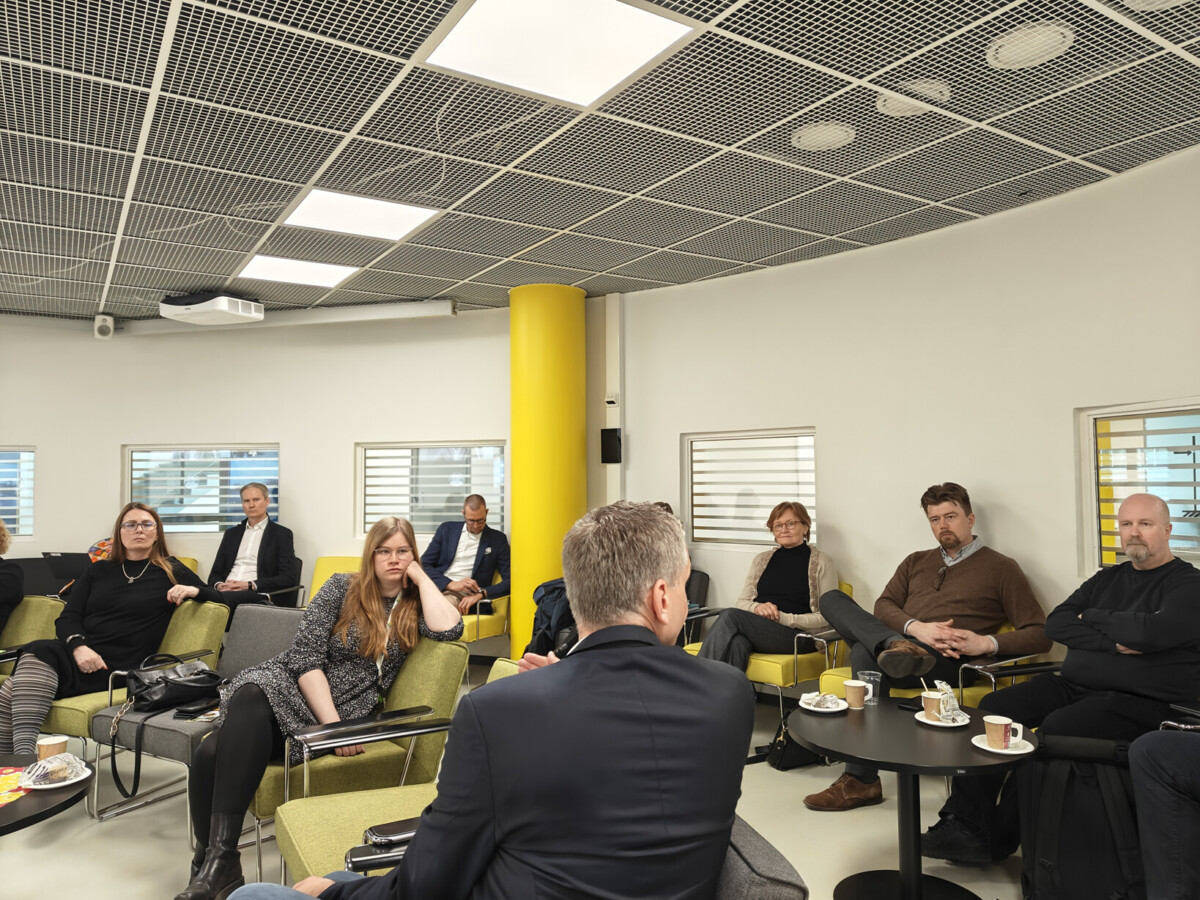
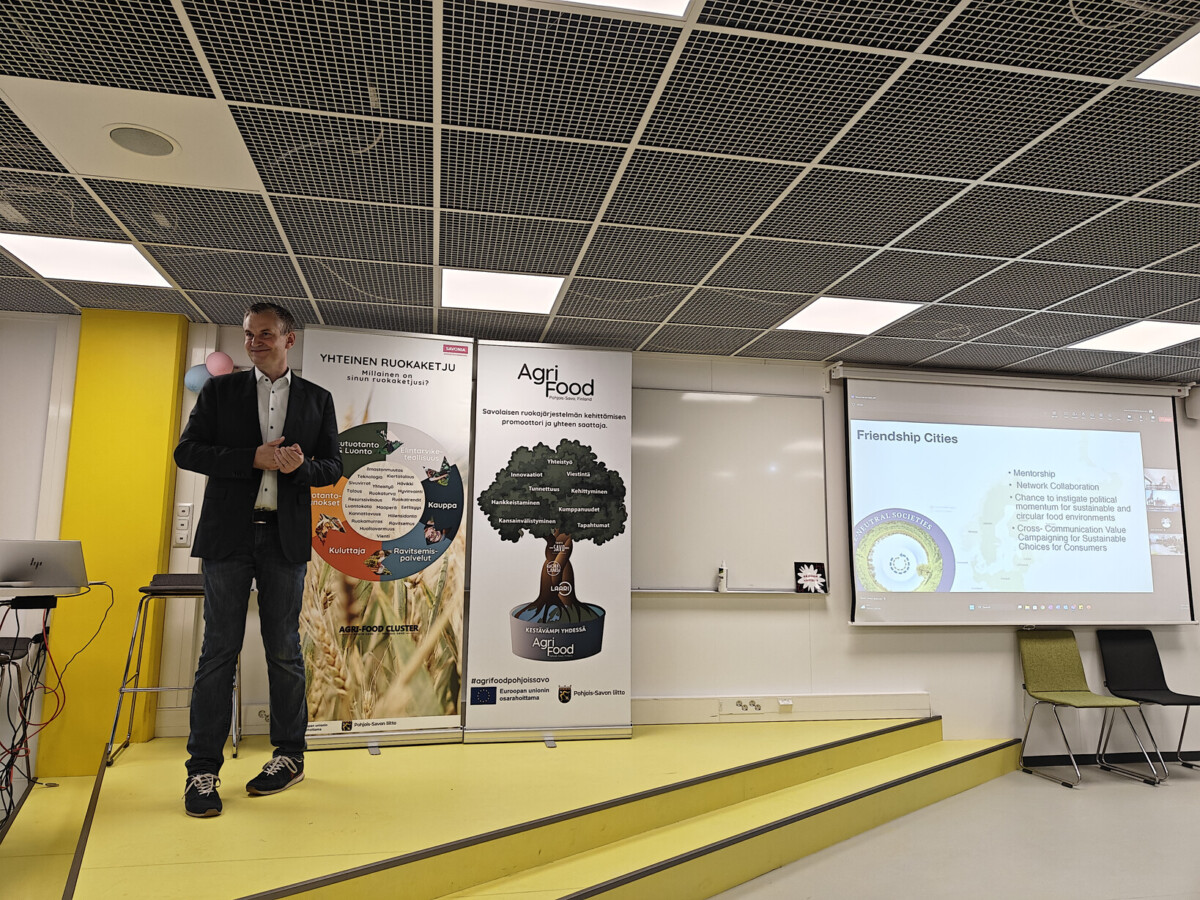
Stakeholder event brought together the regional quadruple helix actors from North Savo. The representative of the Ministry of Innovation and Economy of Hamburg presented the cluster activities from Hamburg.
Results of the Friendship cooperation
The German model of cluster activity highlights clusters that are publicly owned, anchored in a regional cluster strategy, and launched on the basis of thorough analytical work and formal political decisions by Senate and Parliament. From Finland’s perspective, this suggests that food clusters could be strengthened by systematically building them on existing networks, seeking a clear public mandate and continuity of funding, and clarifying the division of labour between chambers of commerce and clusters so that clusters are seen as structures that support companies rather than compete with them.
Another very interesting perspective that emerged in the friendship cooperation concerned the role of chambers of commerce in cluster development. In Germany, chambers of commerce have previously strongly supported cluster work. However, as representatives have changed, some chambers of commerce have increasingly criticized the cluster, arguing that its activities now compete with their own work.
Quadruple helix actors can be more strongly engaged in cluster development by bringing them together in stakeholder events where peer learning is combined with regional challenges and discussions on the role of clusters in supporting companies and innovation activities. These events should also agree on concrete next steps, such as exploring a regional cluster strategy, strengthening cooperation between clusters and organizing events targeted at politicians. In this way, participation is linked to visible impacts at both regional and national levels.
More sustainable food environments in Baltic Sea Region
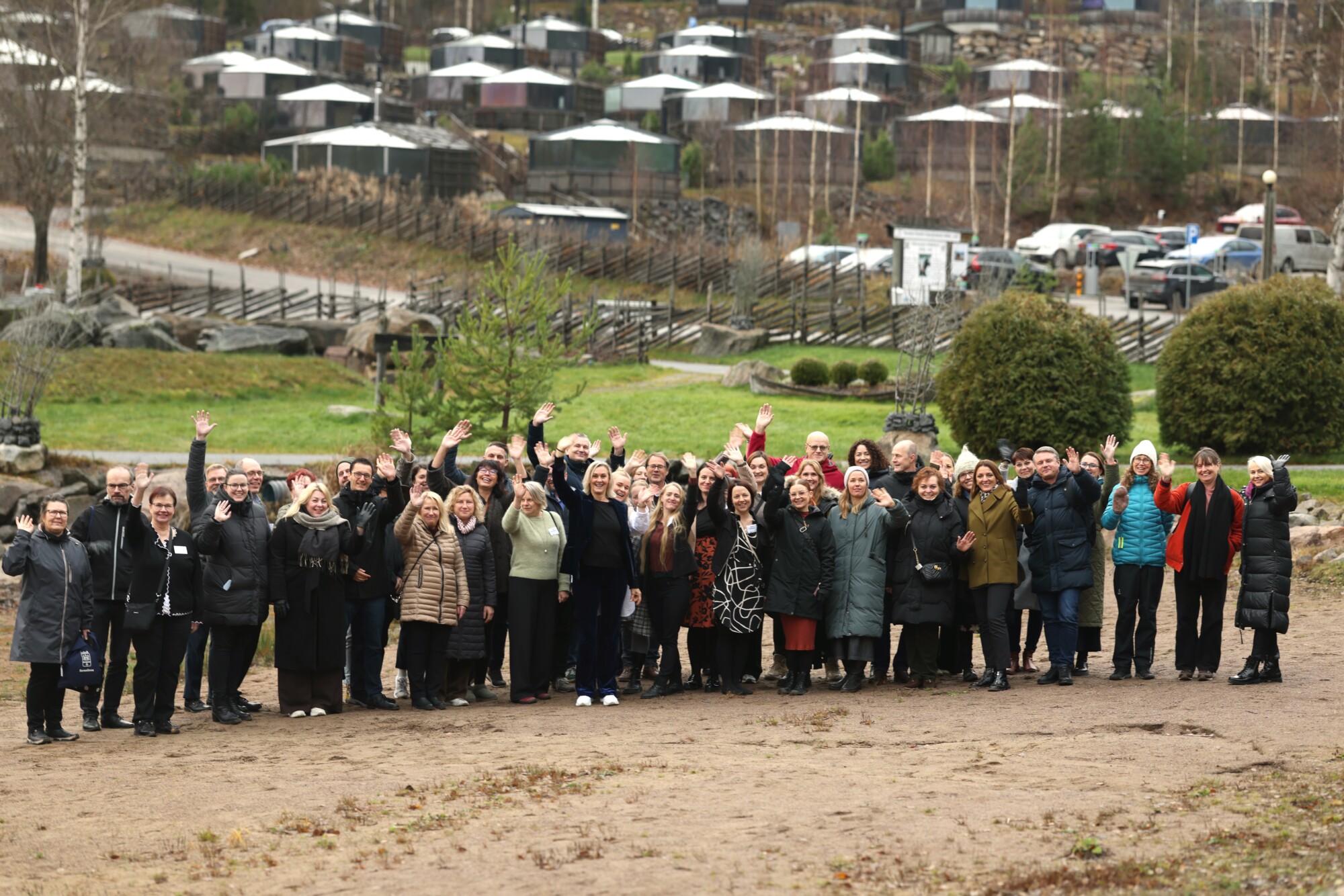
The friendship cooperation pilots wrapped up in the final conference held in Savonlinna in November 2025. The three-year Interreg BSR project KISMET – Sustainable food environments developed concrete solutions to promote sustainable food systems across the Baltic Sea region. The project reduced food waste, strengthened food education, created and piloted tools and models for public food services, and advanced regional food policy, data use, and operating conditions for businesses. At the same time, it reinforced quadruple helix collaboration and built new permanent structures, such as food clusters and biodistricts, to support a sustainable food system in the long term.
The KISMET MANIFESTO – Commiting to keep up the established partnesrhip was signed by all consortium partners and associated organisations, but also all the friendship cooperation organisations, including Agri-Food cluster North Savo.

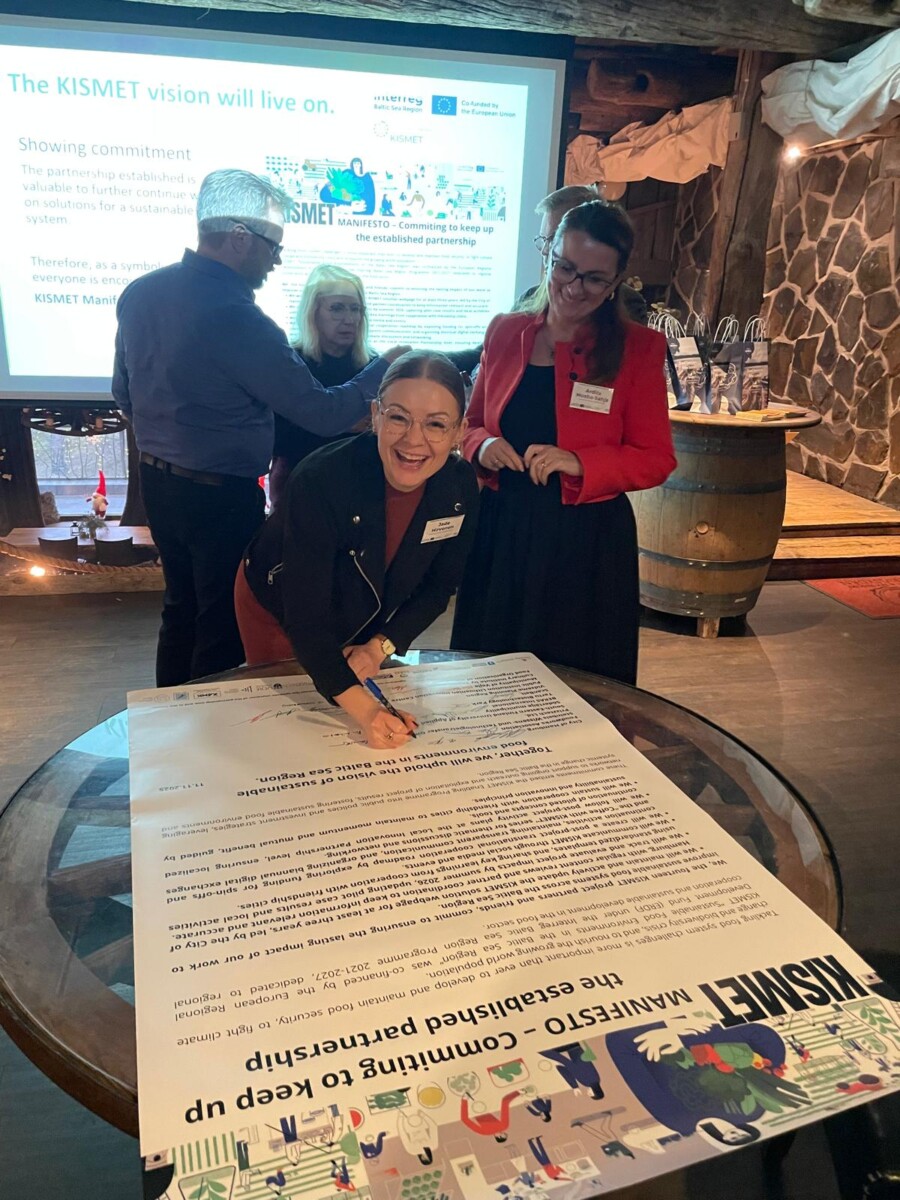
Watch here the summary video of the KISMET project made by the lead partner, the City of Hamburg:
EU-Interreg Project KISMET – Partners Thank you from LP FINAL END Nov. Finland 2025 https://www.youtube.com/watch?v=mta77JZSwpQ
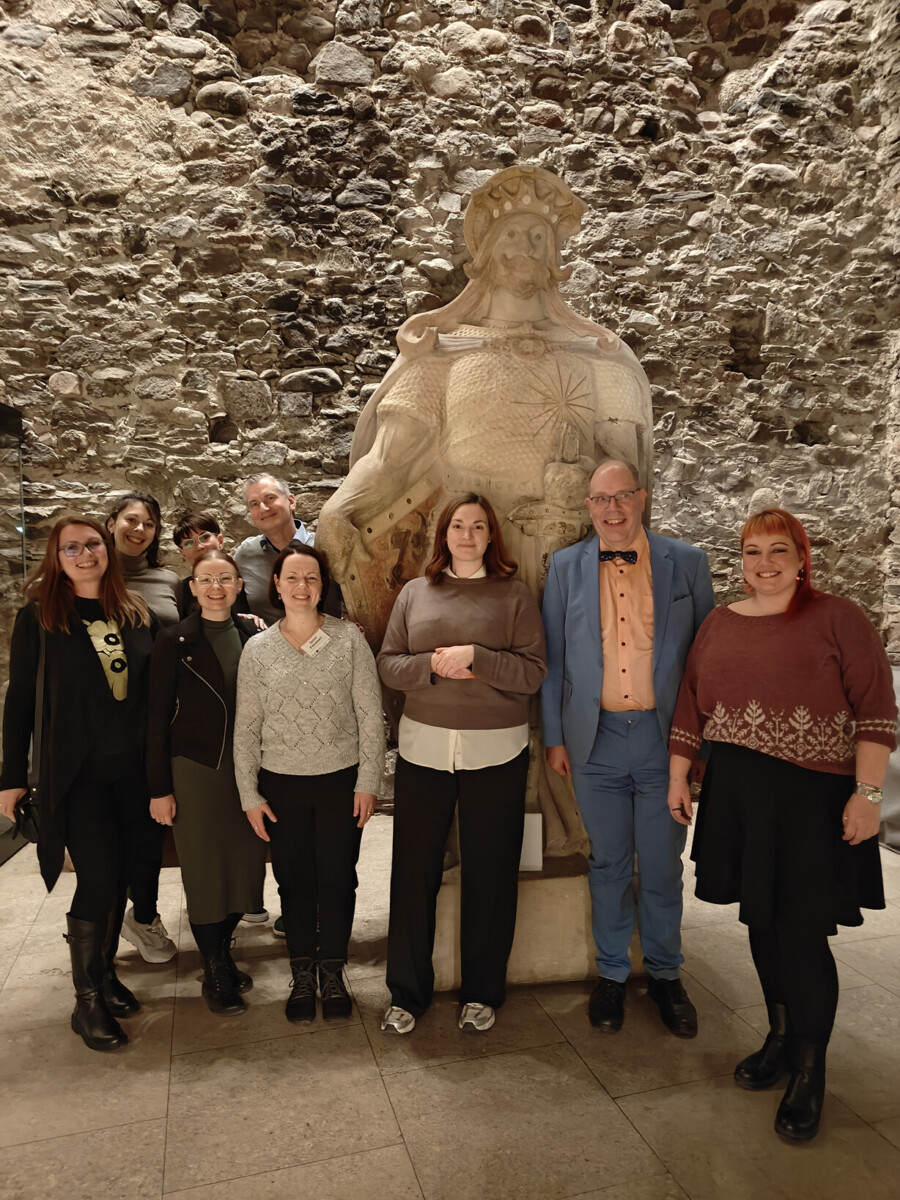
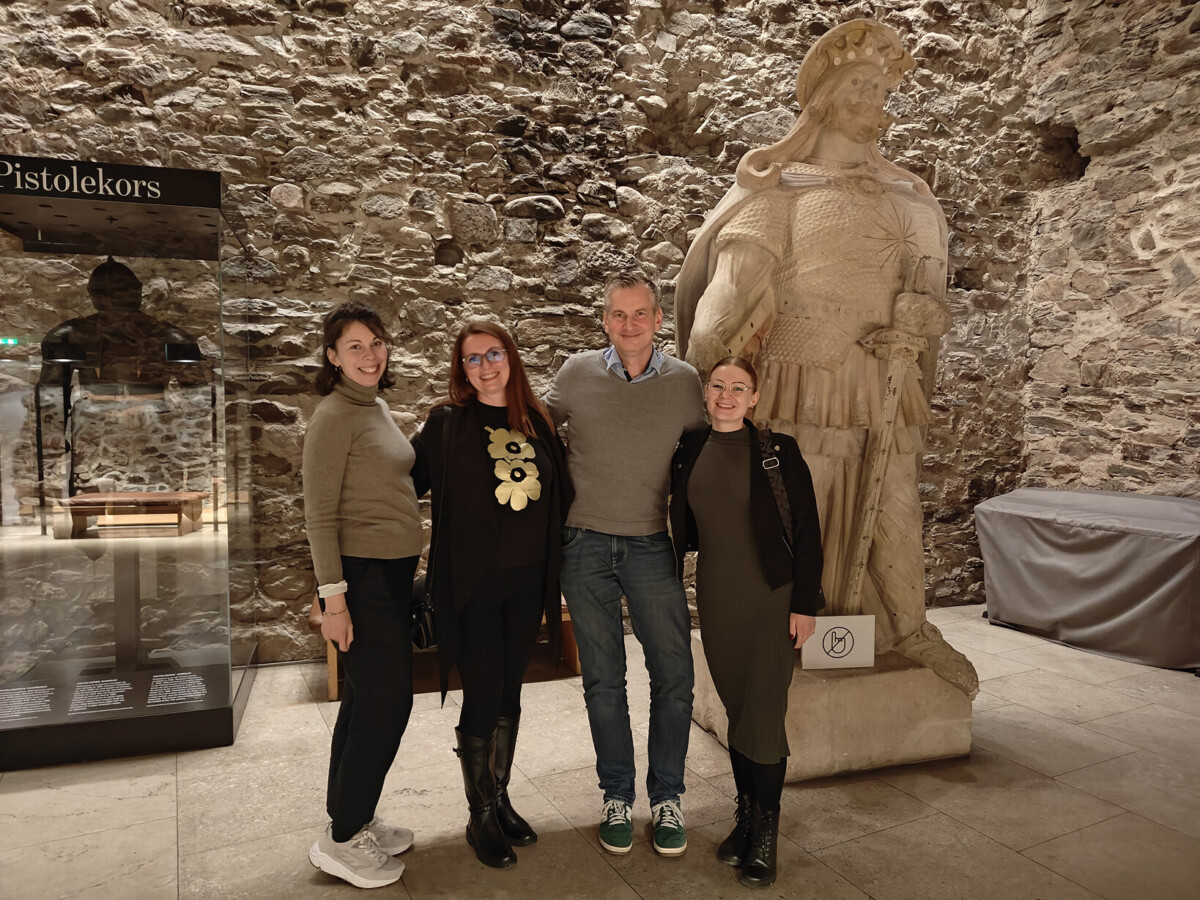
The Agri-Food Cluster also helped Xamk and the City of Iisalmi’s food services to launch their friendship city cooperation. The photo shows representatives from Xamk, Savonia / the Agri-Food Cluster, Savonlinna Development Agency, and Hamburg.
Writers:
Ardita Hoxha-Jahja, Research Manager, Food System Research Unit
Jade Hirvonen, RDI Specialist, Food System Research Unit
Photographer for the main picture: Ronnit Hansson.